


Published on: September 13, 2025, at 11:10 AM.
Updated on: September 13, 2025, at 11:10 AM.

- The WAGER Act aims to eliminate the federal excise tax on sports wagering
- Sponsored by Senator Catherine Cortez Masto of Nevada
- Legal sportsbooks incur a 0.25% excise tax on every wager
U.S. Senators Catherine Cortez Masto (D-NV) and Cindy Hyde-Smith (R-MS) have reintroduced a bill aimed at abolishing the federal excise tax on sports betting, as well as the annual per-employee fee that licensed sportsbooks are obligated to pay.
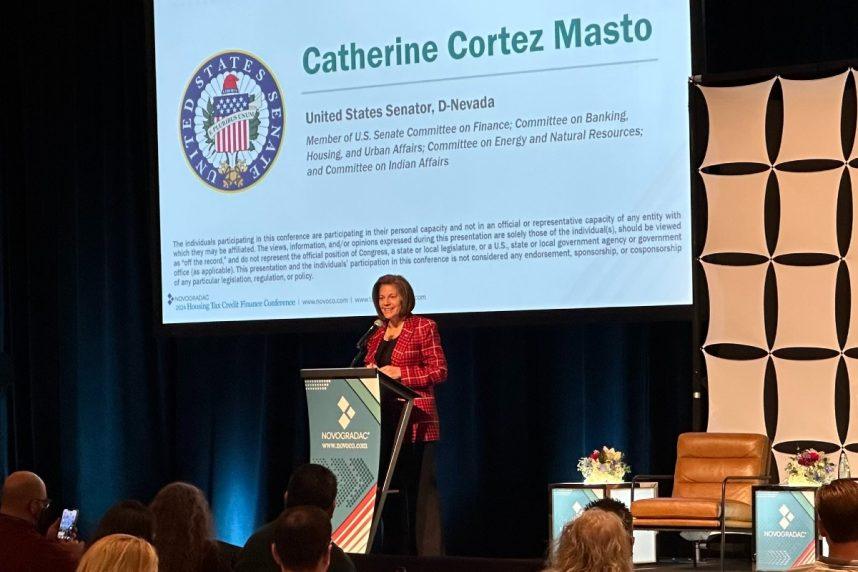
The Withdrawing Arduous Gaming Excise Rates (WAGER) Act intends to free legal and regulated retail and online sportsbooks from an IRS rule established in 1951, which mandates they pay a 0.25% tax on every wager placed. Additionally, the bill aims to eliminate the $50 annual “head” tax that sportsbooks currently pay for each employee involved in the sports betting industry.
“In Nevada, legitimate sports betting is a booming sector that enhances the overall experience of watching our premier professional sports teams,” stated Cortez Masto. “It’s high time we exempt legal sports betting from antiquated taxes that end up encouraging illegal operations.”
“Casinos and resorts in Mississippi are crucial for tourism, job creation, and local investments along our Gulf Coast. This outdated federal tax on sports betting has hindered this industry for too long, while giving illegal offshore operations, as well as new out-of-state prediction markets, an unjust advantage over our traditional Mississippi casinos and others,” added Hyde-Smith.
Aged Regulations
In 1951, Congress revised the Internal Revenue Code to add an excise tax and a head fee on legal sports betting, which was exclusively limited to Nevada at that time.
This tax was intended to fund federal law enforcement efforts aimed at combating illegal bookmakers operating nationwide. Many of these underground betting operations were allegedly linked to organized crime.
Fast forward 74 years, and with the U.S. Supreme Court having overturned the federal ban that restricted legal single-game sports betting to Nevada, Cortez Masto and Hyde-Smith argue that these IRS regulations for sports betting are now outdated. Ironically, the very illegal operations the tax rules aimed to target are said to be thriving under them, as the excise tax and employee fees create overhead that does not affect offshore online sportsbooks, illegal local bookmakers, or prediction betting exchanges.
Reduced operational costs enable illegal bookmakers to offer marginally better odds and more attractive promotions, according to advocates for removing the excise and head taxes.
Accumulating Fees
A sportsbook like DraftKings, when handling a $100 wager, must allocate 25 cents to the federal government. While that may appear negligible, when considering that legal sports bets in New York reached $22.6 billion last year, this 0.25% tax quickly adds up.
According to the American Gaming Association, legal sports betting reached a total of $147.9 billion in 2024, resulting in approximately $369.75 million in federal excise tax fees across the 38 states and Washington, D.C., where sports wagering is regulated.
U.S. Representative Dina Titus (D-NV), who introduced her own bill aiming to repeal the 0.25% sports betting excise tax in February, mentioned that she once asked IRS officials where the revenue from this tax was allocated in the federal budget, and they were unable to provide an answer.
The U.S. Treasury states that such funds are deposited into its general fund.