


Published on: September 21, 2025, 09:40h.
Updated on: September 21, 2025, 09:40h.

- Macau’s economy is flourishing, contrasting with China’s struggles
- Gaming recovery is on the rise, alongside record visitor numbers
- Unemployment rates are low, with robust GDP growth
Macau’s economic landscape is vibrant, with a gross domestic product increase exceeding 5% in the second quarter of 2025. Visitor numbers have reached unprecedented levels, and casino gaming revenue—crucial to the economic heartbeat of this Chinese Special Administrative Region (SAR)—is swiftly approaching pre-pandemic metrics.
In July and August, Macau recorded remarkable gross gaming revenue (GGR) figures that surpassed previous post-pandemic highs. Casino patrons generated net winnings of $2.76 billion in July, followed by $2.77 billion in August.
So far this year, casino revenue in Macau has increased by 7.2% compared to last year, totaling $20.36 billion—more than 82% of the gaming revenues achieved by the six major casinos in 2019 through August.
Gaming analysts and financial firms are positively revising their full-year GGR forecasts, noting that the city’s casinos have effectively shifted focus from VIP high rollers to appealing to mass market and premium mass segments, alongside leisure and business travel influencers.
Record Visitor Numbers
Macau’s gaming establishments can no longer depend solely on high rollers for sustainability. The presence of VIP junket groups has diminished significantly, as these travel coordinators are now targeting other Asian gaming markets outside of China’s influence.
As the richest gaming hub globally in terms of casino revenue, Macau has committed substantial investments into non-gaming experiences. A notable transformation has been its rapid incorporation of K-pop culture, showcasing prominent performances in its expansive theaters, including events like the Fact Music Awards at the newly inaugurated Outdoor Performance Venue.
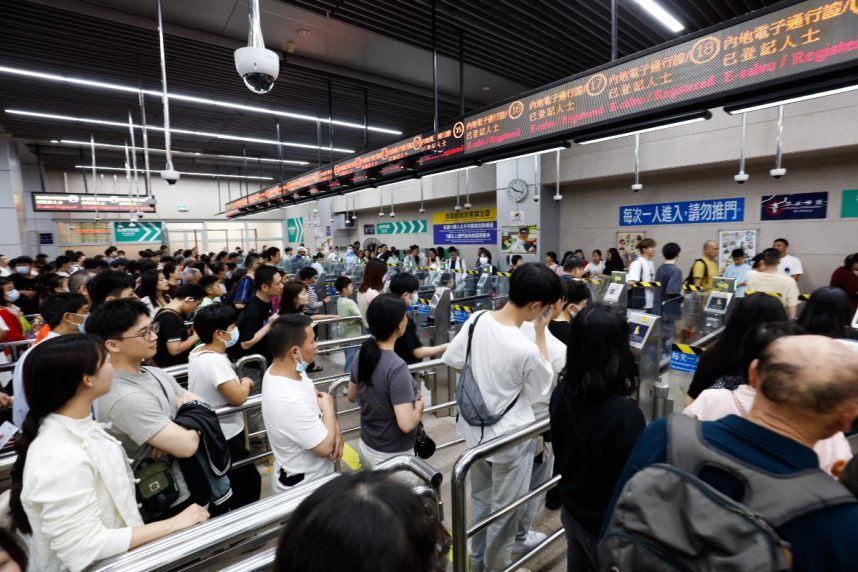
Reports from the Macau Statistics and Census Bureau indicate that in August, visitation soared to an impressive 4,219,034—an 18.4% increase year-over-year—and bringing year-to-date visitor counts close to 26.7 million, marking a 15% rise from the previous year.
Economic Indicators
Key economic indicators reflect a robust Macau economy. Inflation in July was a mere 0.12%, and the unemployment rate for nearly 686,000 citizens is just 2.6%.
The median income has climbed to $2,222 monthly, nearly $100 more than figures reported in December 2019, while the hotel occupancy rate in July stood at 91%, comparable to pre-pandemic levels.
In contrast to China’s faltering economic recovery post-pandemic, characterized by slowing industrial output in August, Macau’s situation tells a different story.
During the global health crisis, Macau initiated a diversification strategy aimed at reducing its heavy reliance on casino revenues, which previously accounted for over 80% of the local government’s tax income. The region has invested in integrated tourism and is now focusing on hosting large-scale corporate events and conventions, along with promoting “health tourism.”
Moreover, Macau is effectively integrating its economy with the Greater Bay Area, with government efforts to draw in companies involved in technology and trade sectors. A free trade zone has also been established on neighboring Hengqin Island, which provides ample land for ongoing economic projects.
Access to Macau has never been easier, with an unprecedented number of Chinese mainland cities qualifying for Individual Visit Scheme visas, allowing for independent travel to and from Hong Kong and Macau. The 34-mile Hong Kong-Zhuhai-Macau Bridge, established in 2018, has further enhanced connectivity between Macau and Hong Kong.