


Published on: September 24, 2025, 01:40h.
Updated on: September 24, 2025, 01:40h.

- Gen Z and millennials are more inclined to use crypto trading platforms
- Many are in pursuit of “significant returns” in the stock market, as well
- Younger bettors are increasingly attracted to online sports betting while showing less interest in visiting casinos
Millennials and Gen Z are spearheading the expansion of online sports betting, as these groups showcase a penchant for risk-taking to enhance their financial situations.

The recent TransUnion US Betting Report indicates that millennials and Gen Z players who gamble at least $50 monthly predominantly reside in urban areas. The older group tends to be homeowners with children, while the Gen Z segment is primarily made up of renters without children. The report also finds that younger sports bettors are likely to engage in alternative forms of speculation, such as cryptocurrency investments.
“Our analysis has shown that these demographics have a significantly higher likelihood of using cryptocurrency trading applications compared to other groups,” notes TransUnion. “In addition to mobile betting, these individuals are likely involved in trading and other entertainment ventures through cryptocurrency platforms.”
Younger sports bettors are characterized by their inclination to invest in stocks, tendencies for impulsive spending, and seeking adventure travel experiences.
Are Sportsbook Operators Too Reliant on Young Gamblers?
Since the Supreme Court’s judgment on PASPA in 2018, sportsbook operators have seen a shift towards a younger, predominantly male clientele. However, companies may need to consider diversifying their focus beyond this youthful audience.
While some findings indicate that online sports betting doesn’t directly lead to financial stress, it is evident that millennials and Gen Z are grappling with escalating debt levels. According to TransUnion, millennial and Gen Z debt has surged by 10% and 22% respectively since the beginning of 2023, whereas Gen X’s liabilities have only seen a 1% increase. The proportion of monthly expenditure younger bettors allocate toward debt repayments could pose a challenge for gaming companies.
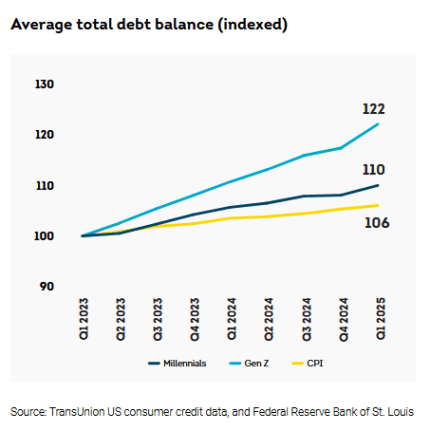
“Monthly debt payments for Gen Z and Millennials surged by 27% and 20% respectively,” according to TransUnion.
The research indicates that as younger consumers cut down on discretionary expenses to tackle their debt, this might negatively influence “betting participation rates over time, as they focus on meeting their growing financial obligations.”
Economic Conditions Could Impact Young Bettors
When considering Gen Z and millennial bettors, operators should be mindful of various economic trends that might indicate risks in depending heavily on these age groups for profit and revenue advancement.
TransUnion highlights that the federal government has reinstated student loan payments, and borrowers who fail to comply will be reported to credit bureaus, leading to diminished credit scores that could restrict access to loans.
“A TransUnion analysis from February 2025 revealed that 40% of student loan borrowers had not made a payment for over 90 days. As these defaults get reported to credit agencies, credit scores will decrease, making it more challenging for these individuals to secure additional credit to address sudden financial disturbances,” as per the study.
The research also suggests that fluctuating US trade policies could negatively affect consumer confidence, potentially driving some bettors to reduce their gambling expenditures. Furthermore, decreased promotional budgets may become a concern, as many young gamblers, including college students, rely on “free” cash incentives to sustain their betting habits, especially if they are not yet in stable employment.