


Published on: October 20, 2025, 02:41h.
Updated on: October 20, 2025, 02:41h.

- Supporters of skill games in Pennsylvania advocate for regulations alongside a fair taxation system
- Opposition arises from Pennsylvania’s strong casino sector against these unregulated games
Advocates for skill games in Pennsylvania are pushing for a regulatory framework for the slot-like machines, urging lawmakers in Harrisburg against imposing a burdensome tax that could negatively impact the numerous small businesses benefiting from these games.
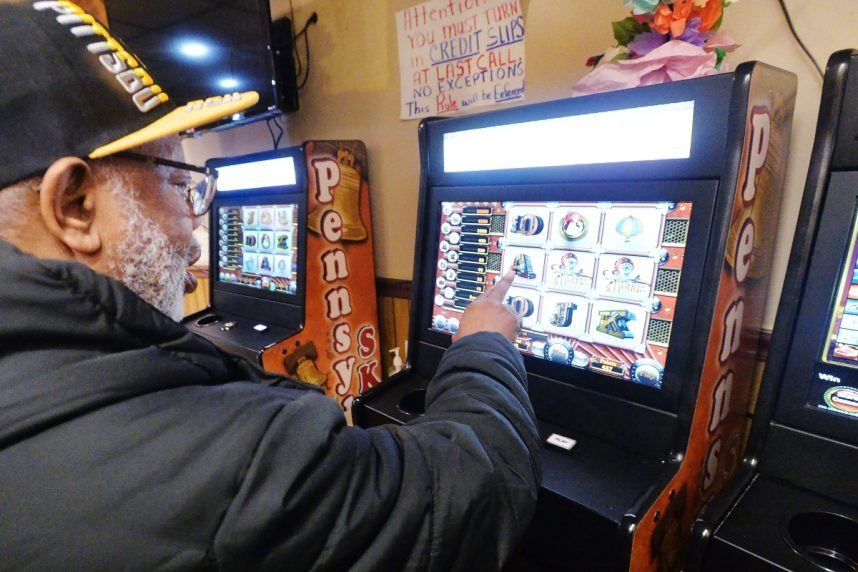
Pace-O-Matic (POM) leads the charge in promoting skill games across Pennsylvania. This Georgia-based software company collaborates with Miele Manufacturing, a local firm, to produce and distribute these tabletop and cabinet terminals statewide. Moreover, POM supports PA TAP, the Pennsylvania Tavern and Players Association.
PA TAP encompasses a variety of establishments, including VFW posts, American Legions, and social clubs that operate skill games. Branded as Pennsylvania Skill, these games are designed similarly to traditional slot machines found in the state’s 17 physical casinos and various legal iGaming options.
Unlike standard slots, skill games afford players the ability to affect machine payouts by discerning winning paylines, resulting in non-predetermined outcomes.
Additionally, these games are not subject to regulation in Pennsylvania, and do not contribute a share of their gross revenue to the state. This has led many state lawmakers, including Governor Josh Shapiro (D), to advocate for changes.
Advocating for Fair Taxation
The skill gaming sector aims for taxation in Pennsylvania to ensure market stability, allowing businesses reliant on these games to confidently anticipate gaming revenues.
The heavily regulated casino industry opposes skill games, arguing that they encroach on their slot machine revenue. This claim may be valid, as revenue from traditional slot machines has plateaued in the last four years, even with the opening of new casinos.
Nevertheless, state casinos accrued over $2.44 billion in the fiscal year 2024/25, marking the second-highest revenue year, right after the record of $2.45 billion in FY22/23. The Pennsylvania Lottery also expresses concern about skill games, stating these unregulated machines have cost approx. “$200 million over the past five years.”
Governor Shapiro is amenable to authorizing skill games but has called for a 52% state revenue share, similar to the taxation rate on casino slots.
“Each time someone inserts a dollar into one of those unregulated machines, it undermines the lottery and the essential services it supports for our seniors, such as medication and meals,” Shapiro stated during his budget address in February.
Advocates for skill games contest this view, asserting the games provide essential supplemental income for small businesses, enabling them to remain profitable, combat inflation, and sustain employment.
“Skill games bolster Pennsylvania’s small businesses and fraternal organizations, offering vital revenue that supplements their traditional income streams. For many, these games have facilitated recovery from pandemic-related income losses, manageable inflation, and increased wage pressures during the present labor shortage,” according to PA TAP.
State Senator Chris Gebhard (R-Lancaster) has proposed a bill imposing a 35% tax on the gross gaming revenue (GGR) from skill games. Senators Gene Yaw (R-Bradford) and Elder Vogel (R-Beaver) have backed a proposal aiming for a 16% tax, alongside significant annual and machine fees. However, neither proposal has progressed beyond the Senate Community, Economic, and Recreational Development Committee.
At a recent rally hosted by PA TAP, participants indicated a preference for a reasonable tax rate around 15% to 20%.
Distribution of Skill Gaming Revenue
According to PA TAP’s website, the existing distribution model for GGR generated from skill games is typically as follows.
As outlined by the association, host businesses retain about 40% of the revenue, while 50% is directed toward the Pennsylvania-based gaming manufacturer and distributor, leaving POM with 10%.
It is estimated that nearly 80,000 skill games are currently operational in Pennsylvania.