


Published on: November 14, 2025, 07:21h.
Updated on: November 13, 2025, 07:08h.

EDITOR’S NOTE: “Vegas Myths Busted” brings fresh insights every Monday, plus an engaging Flashback Friday segment. Today’s feature is a revisit from February 25, 2025.
In the late 1930s, specifically around 1938 or 1939, Thomas Everett Hull—owner of the Hollywood Roosevelt Hotel and two El Rancho motels in California—found himself in a predicament while driving on Highway 91 (now the Las Vegas Strip). His vehicle broke down or suffered a flat tire (details vary).
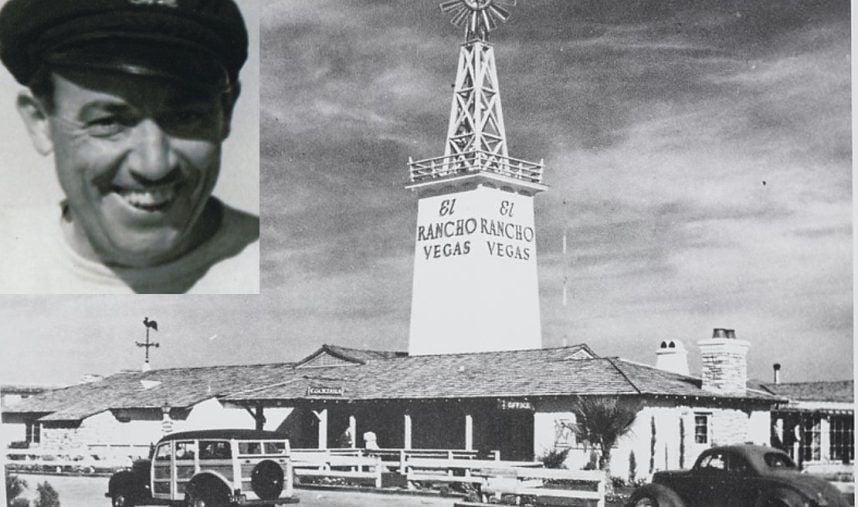
While awaiting roadside assistance in the sweltering heat near San Francisco (now Sahara) Avenue, Hull observed the traffic flow and concluded that establishing a third El Rancho—featuring a highway-visible pool—would attract many parched and weary travelers. (Note: This was a decade before most vehicles were equipped with air conditioning.)
Myth Revealed
If this account sounds familiar, it’s reminiscent of how car issues led Bugsy Siegel to the site where he envisioned the Flamingo. This tale was notably featured in the 1991 film “Bugsy,” despite the fact that those involved knew the truth: the Flamingo was primarily the brainchild of Hollywood Reporter publisher Billy Wilkerson, who named it but lost funding due to his gambling woes.
The true origin story of the Las Vegas Strip’s inaugural casino resort is far less glamorous than its Hollywood portrayals.
Interestingly, it wasn’t Hull who first proposed Las Vegas as a suitable location for a third El Rancho; that credit belongs to his friend and financial backer, San Diego entrepreneur Jack Barkley, who persuaded Hull to consider it, according to historian David Schwartz’s book, “Something for Your Money: A History of Las Vegas Casinos.”
Soon after, Hull partnered with Jim Cashman, a prominent Las Vegas Chamber of Commerce member, to find the ideal location.
Cashman proposed a site at the intersection of Sahara Avenue and Maryland Parkway, but Hull rejected it. He envisioned El Rancho Vegas closer to the main road into the city.
Decades prior to Steve Wynn’s similar vision, Hull desired to create an illusion of a mirage welcoming travelers from far away.
Securing the Rancho
He discovered a 33-acre plot on the southwest corner of Arrowhead Highway and San Francisco Avenue—an affordable option.
The land was owned by Mrs. Jessie Hunt, who had no inkling that she was about to partake in a pivotal real estate transaction in Las Vegas history. She likely would have asked for more than the $4,950 total (roughly $112K today) had she been aware.
Initially, Hull didn’t intend to include a casino in his plans since he was a hotelier at heart. According to an oral history recorded by UNLV, John Cahlan, then managing editor of the Las Vegas Review-Journal, noted that the casino idea arose as an afterthought suggested by several local acquaintances—most likely Cashman.
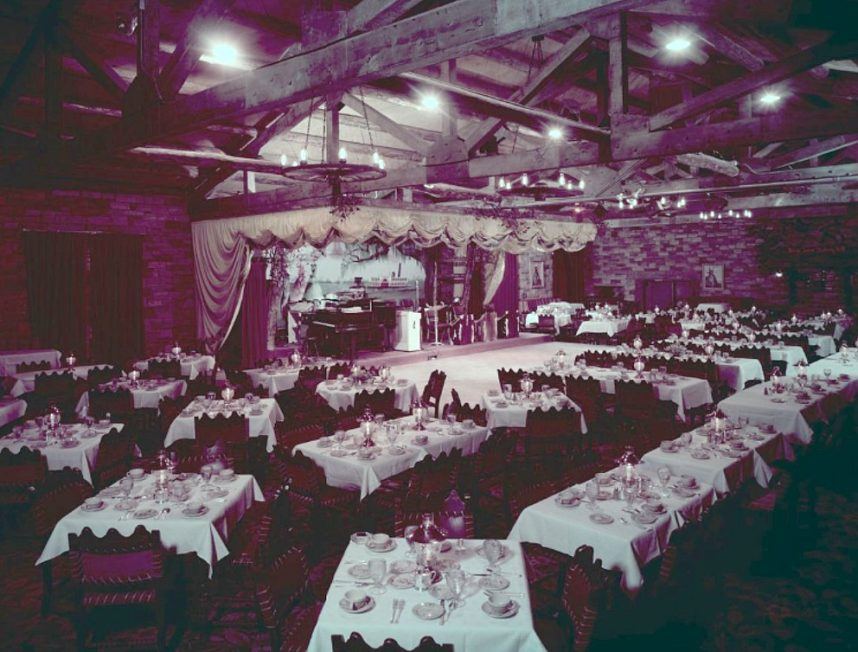
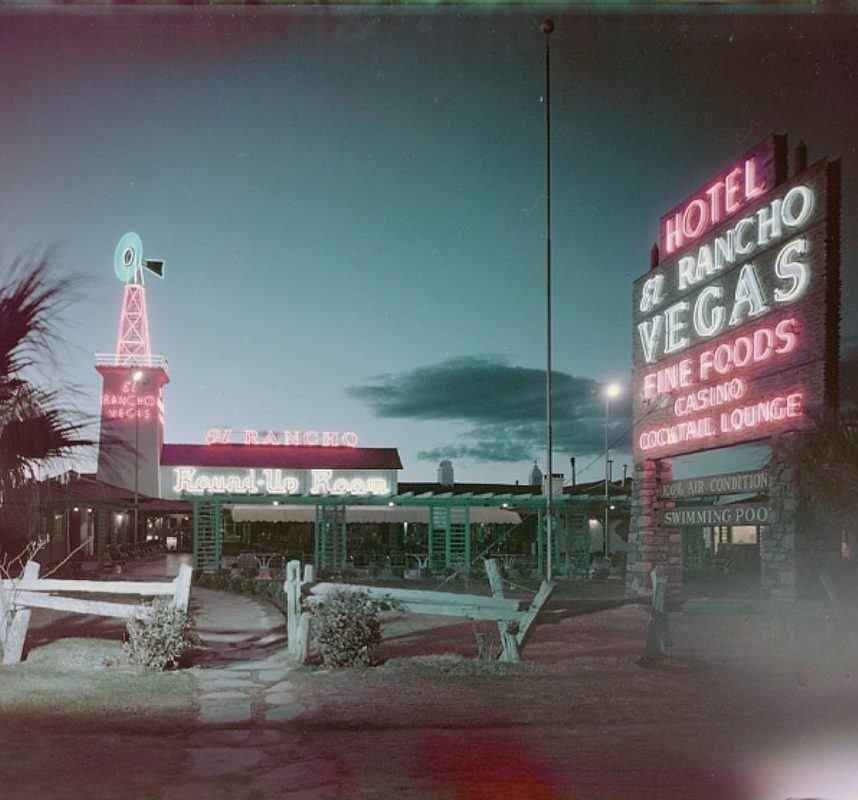
On April 3, 1941, the western-themed El Rancho Vegas made its debut. Other casino establishments had already emerged on Highway 91, such as The Red Rooster and Pair O’ Dice, which opened as restaurant/nightclubs in 1930 and added casinos post-legalization in 1931.
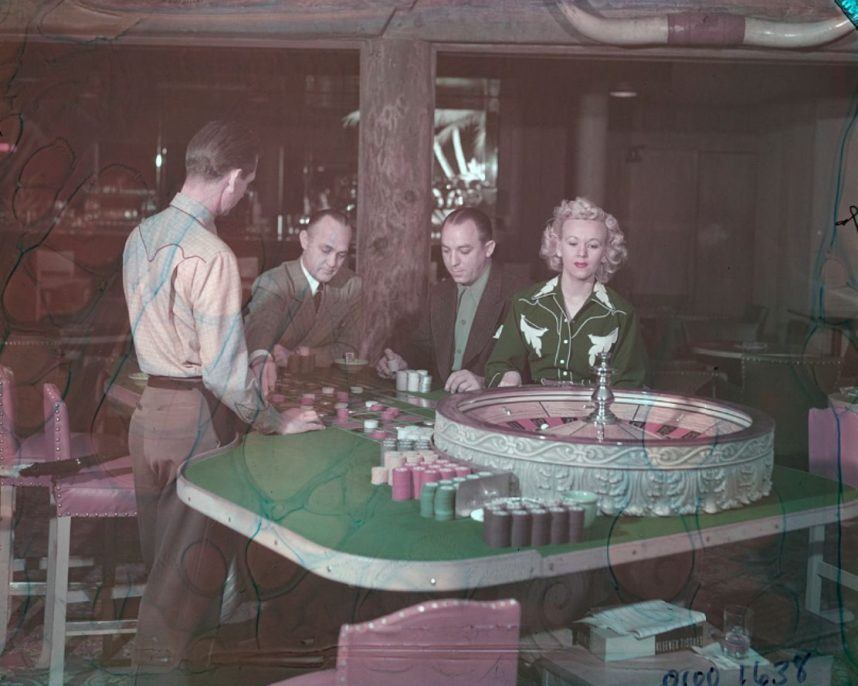
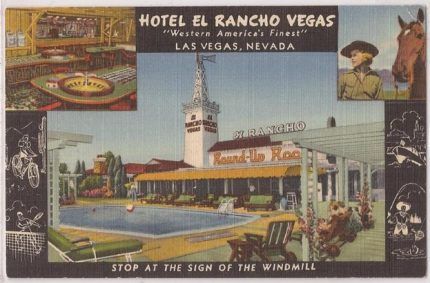
However, El Rancho Vegas boasted the most extensive casino, featuring 70 slot machines, two blackjack tables, one roulette wheel, and a craps table. Its 63-cottage hotel, known for its legendary swimming pool, secured its status as the Strip’s first true casino resort. (And just to clarify, the Flamingo opened later, in 1946, making it the third such resort after El Rancho and the Last Frontier, which surfaced in 1942.)
El Rancho’s Glamour
Once opened, Hull’s resort featured a premier dining area and a 300-seat auditorium. Bandleader Garwood Van and his orchestra were the opening act, performing for a month that extended into 13. A troupe of showgirls donned scant western outfits for the performances.
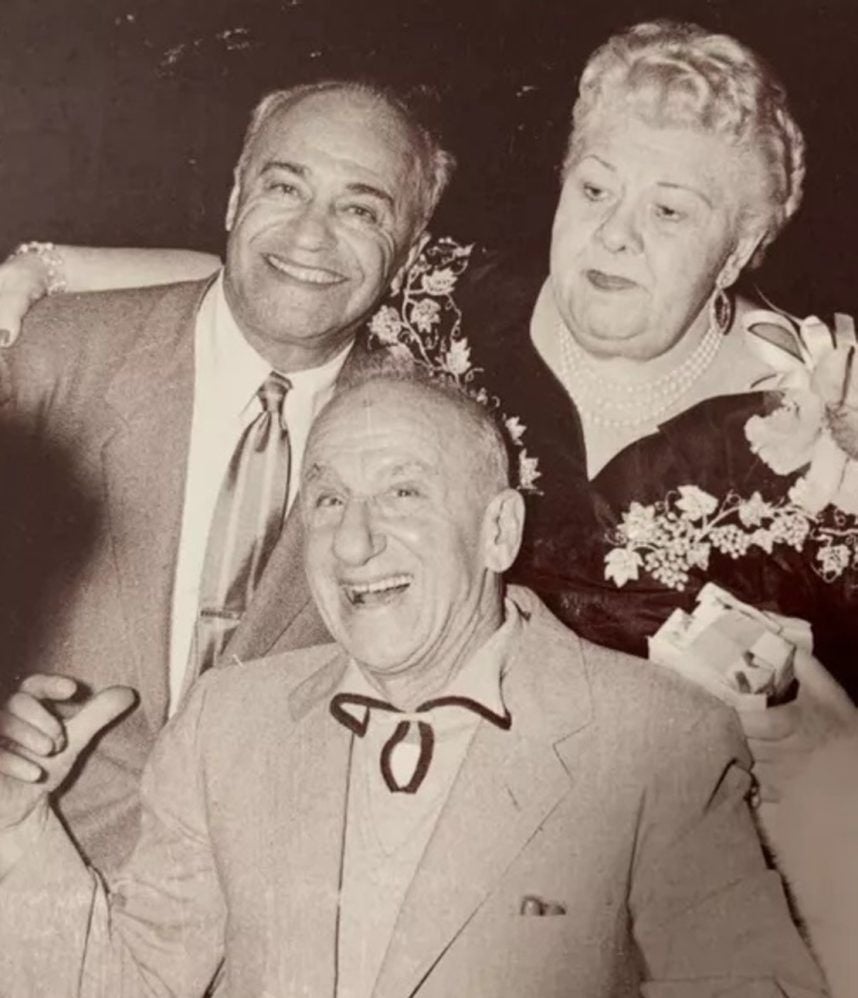
Ultimately, leveraging his Hollywood affiliations, Hull brought in more renowned entertainers such as Jimmy Durante, Guy Lombardo, Jackie Gleason, Sophie Tucker, and Peggy Lee. The shows were in such high demand that occasionally, even celebrities found it challenging to secure a table.
“I don’t want to see no goddamned show, I just want to have dinner!” protested Wallace Beery, 1931’s Best Actor Oscar winner, after being denied a table. ( per the Las Vegas Sun, he arranged a poolside dining experience for his family instead.)
In 1946, a landmark event occurred when Hull introduced the Chuck Wagon, later known as the Buckaroo Buffet, marking the debut of the first buffet in Las Vegas.
Fallen to Flames
In 1948, Hull entrusted the El Rancho to a consortium of investors, including Jake Katleman. Following Katleman’s passing in 1950, his nephew, Beldon Katelman, took over and executed his uncle’s option to buy the property a decade later.
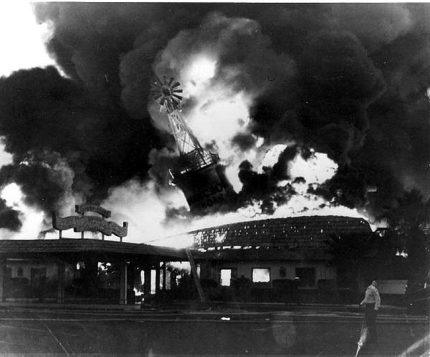
The El Rancho met its demise due to a significant fire on June 17, 1960. The blaze erupted at 6:30 a.m. and rapidly consumed the casino, showroom, and dining establishments. Thankfully, there were no fatalities, and all occupants, including movie star Betty Grable, who had just conducted a rehearsal for a grand show, were safely evacuated.
Notably, singer Pearl Bailey inadvertently backed her car into a tree while attempting to flee from the thick smoke after giving an interview to Channel 13, which was then situated behind the El Rancho.
Thomas Hull passed away four years thereafter. Despite initial reports speculating that Beldon Katleman intended to reconstruct the El Rancho on an even grander scale, such plans fell through, as often happens in Vegas ventures. The now-abandoned cottages meandered through time as makeshift storage areas until they were ultimately demolished in the 1970s.
No new casino resort has ever graced the original site, which today is home to billionaire Phil Ruffin’s Las Vegas Festival Grounds.
Catch “Vegas Myths Busted” every Monday on Casino.org. For previous episodes of busted Vegas myths, visit VegasMythsBusted.com. Have a Vegas myth suggestion? Reach out at [email protected].