


Published on: November 17, 2025, at 07:21h.
Updated on: November 16, 2025, at 09:47h.

Last week’s most talked-about video from Las Vegas showcased a man unveiling a complicated network of sensors hidden underneath a blackjack table that had its felt removed.
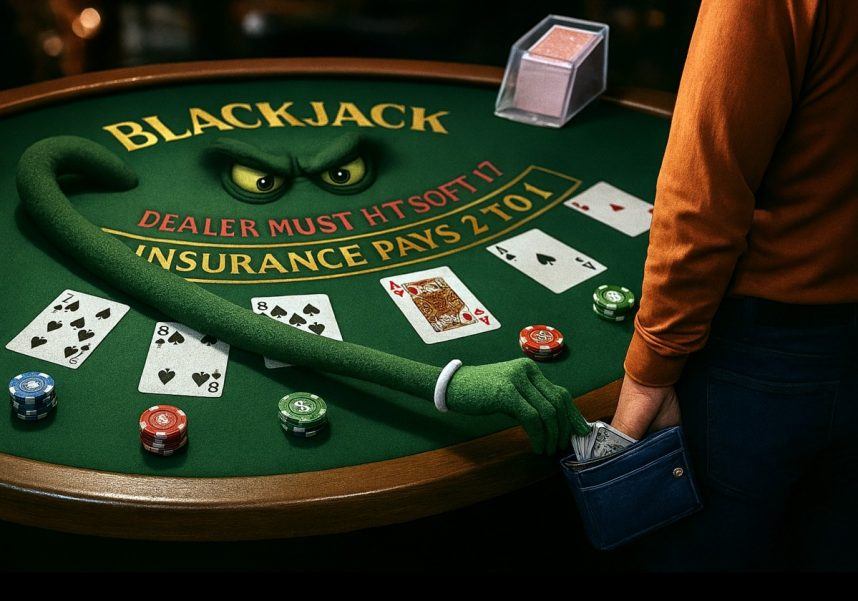
In the clip shared by X user @JOKAQARMY, he boldly states, “This is why I choose not to gamble,” adding under the title: “Here’s how casinos swindle you at these gaming tables.”
“So, interested in playing 21?” the voiceover mimics a dealer, pretending to distribute cards around the table. “Let’s place your cards here, here, here, and here. And guess what?”
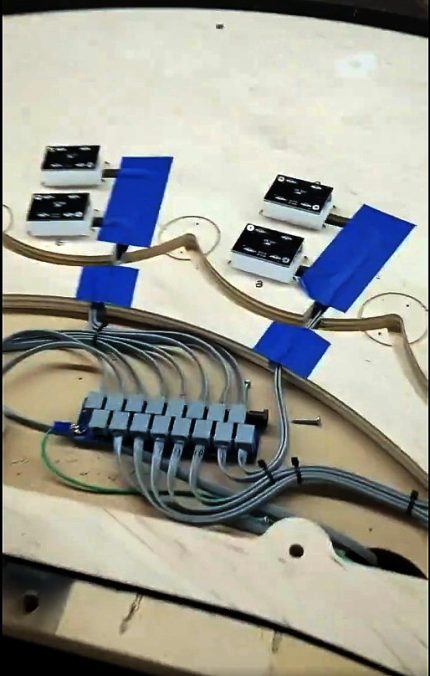
This video, which gained over a million views in just one day, allegedly reveals the electronic devices that the narrator claims casinos employ to manipulate blackjack outcomes.
“The table keeps track of who has what!” he insists. “The card shuffler is distributing the cards to intentionally cause busts!”
His suggestion implies that automated shufflers are rigging card distribution against players, reminiscent of the Mafia-influenced private poker games implicated in the recent FBI sports betting scandal.
However, this assertion falls apart when examined under basic blackjack rules.
Here’s the truth: in blackjack, the cards are dealt face up. Unlike poker, everyone knows what cards are in play. No casino game involves competing against the house with concealed cards.
“Come on, I’m not naive!” the voiceover asserts.
Well…
Distorted Understanding
Casinos don’t need to cheat; their existence alone is based on statistical advantage. The odds are heavily stacked in their favor — both statistically and legally.
The companies managing these establishments, especially the corporate giants dominating the Strip for the last four decades, wouldn’t jeopardize their gaming licenses, face financial downfall, or risk their CEOs going to prison over cheating one player when the legitimate method consistently profits.
They might, however, overlook illegal betting by shady bookies. (Apologies to Resorts World, Wynn Resorts, MGM Resorts International, and, as of last week, Caesars Entertainment for this detour!)
Anticipating anything more from a casino table game than an enjoyable experience while gradually losing your funds is hardly brilliant strategizing.
Post-pandemic, the casinos’ legal advantage has only widened:
- 6/5 blackjack: A standard on the Strip that boosts the house edge by 1.39% compared to the classic 3/2 payout.
- Triple-zero roulette: Adds 2.43% to the house edge over double-zero variants, and an astonishing 4.99% over the now-defunct single-zero version.
- Increased table minimums: Ensures that low-stakes players lose more quickly, leading to less play, fewer comps, and diminished enjoyment.
The saying often attributed to Thomas Jefferson, “The only way to win money from a casino is to own one,” is actually a myth — he never said that.
What Was Actually Under That Blackjack Table?

What’s concealed beneath that blackjack table is a Radio Frequency Identification (RFID) system — equipped with sensors and antennas designed to track chips, not cards.
RFID tables serve several legitimate, non-deceptive purposes:
- Accurate Player Rating: Scanning chips to monitor wager amounts, hands played, and average bet sizes—eliminating guesswork for pit bosses and providing reliable comp data.
- Enhanced Security: Detecting counterfeit or stolen chips, mid-hand bet manipulations, suspicious betting patterns, and dealer theft in real time.
- Operational Optimization: Tracking dealer efficiency, table productivity, chip counts, and profitability. Facilitates cashless transactions and integrated analytics.
- Responsible Gaming Monitoring: Connecting chips to player cards to identify excessive play and assist in problem gambling identification.
So yes, the table is discreetly observing. However, it’s monitoring your bets, not your cards.
Regarding the claim of not being foolish… If you wish to preserve your funds, any rationale you choose for avoiding gambling in a casino is indeed a wise decision.
Catch “Vegas Myths Busted” every Monday on Casino.org. Visit VegasMythsBusted.com for past myth-busting articles. Have a Vegas myth you’d like to see debunked? Send an email to [email protected].