


Published on: November 21, 2025, at 06:45h.
Updated on: November 20, 2025, at 05:39h.

EDITOR’S NOTE: New entries for “Vegas Myths Busted” are published every Monday, with a bonus Flashback Friday edition. Today’s installment in our ongoing series was originally published on March 18, 2024. We are revisiting it to commemorate the 45th anniversary of a significant tragedy in Las Vegas.
This myth is undeniably among the most disgraceful we’ve encountered. Many valuable insights emerged from the MGM Grand Hotel fire, which resulted in 87 fatalities on November 21, 1980. To assign blame to some of these individuals for their deaths is deeply offensive.
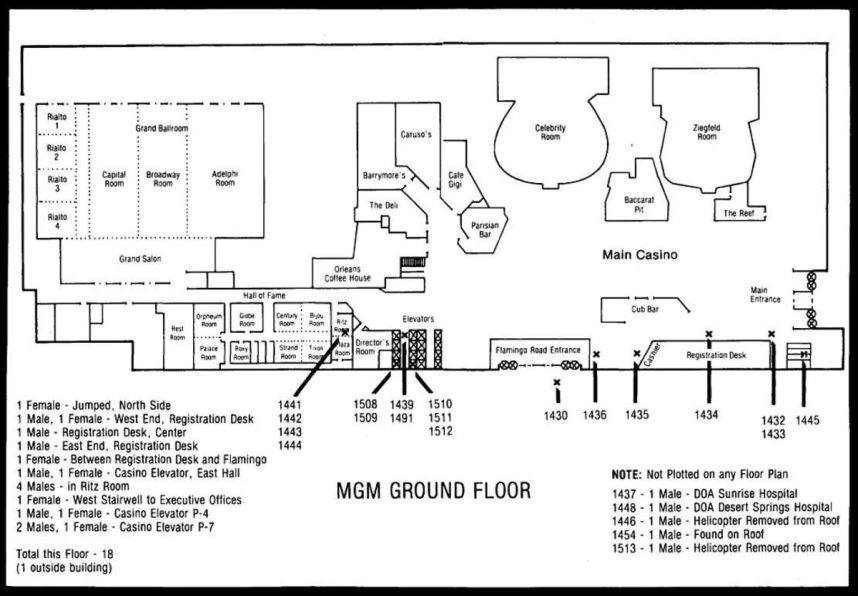
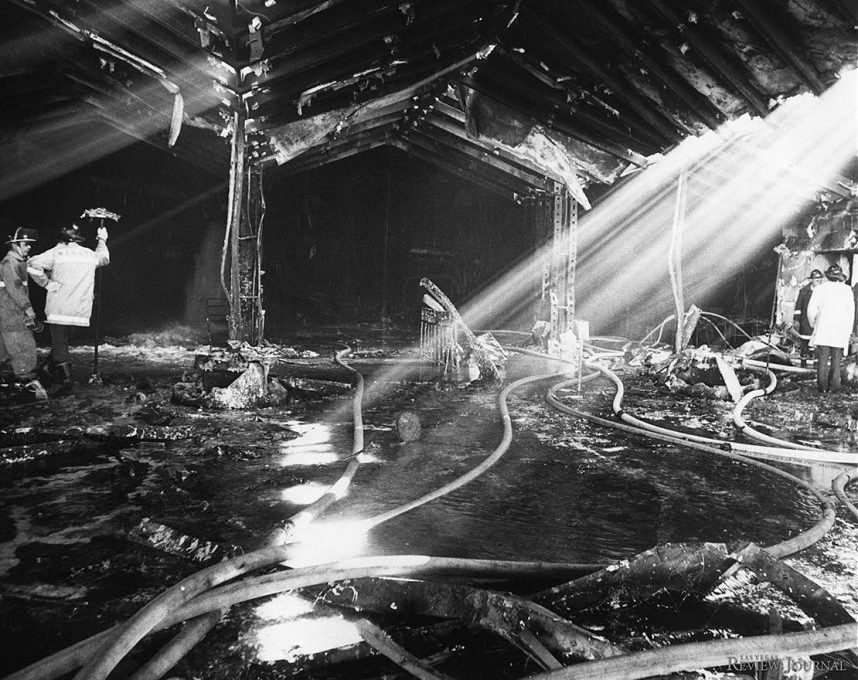
“Gamblers who refused to leave their slot machines during the MGM fire perished when a fireball surged through the casino, scorching everything in its path,” stated a quiz shared on vegasslotsonline.com.
A Reddit user reacted to this quiz link stating: “It’s shocking that some lost their lives in the MGM fire because they wouldn’t abandon their slots! Greed is deadly.”
However, the truth is that no victim of this tragic event died due to remaining at their gaming positions. That Reddit user, however, was correct about one thing…
Greed Is Deadly
Greed was a key factor contributing to the tragedy.
Kirk Kerkorian and Fred Benninger, MGM’s owner and chairman during the hotel’s construction in 1972-73, resisted installing automatic sprinklers. This was despite the urging from Clark County’s fire marshal and a warning from Orvin Engineering Company, their own consultant, that emphasized the risks of unsprinklered areas.
The total expense for constructing the MGM Grand amounted to $106 million. Yet, a mere additional $192,000 for sprinklers seemed excessive to Kerkorian and Benninger, prompting them to seek a variance from the Clark County Building Department.
Sadly, they succeeded. Building Department director John Pisciotta determined that sprinkler regulations did not pertain to the MGM due to its 24/7 operation.
“Had there been sprinklers, it would likely have been a minimal fire—one or two sprinklers would have contained it, and we wouldn’t be discussing it now,” stated David Demers, an investigator for the National Fire Protection Association, in a report from 1982.
Understanding the Myth
This misconception originated from a sentence in a Washington Post article published on November 23, 1980.
The fire left two victims found paralyzed in front of slot machines, as reported by a witness to Kathy Sawyer.
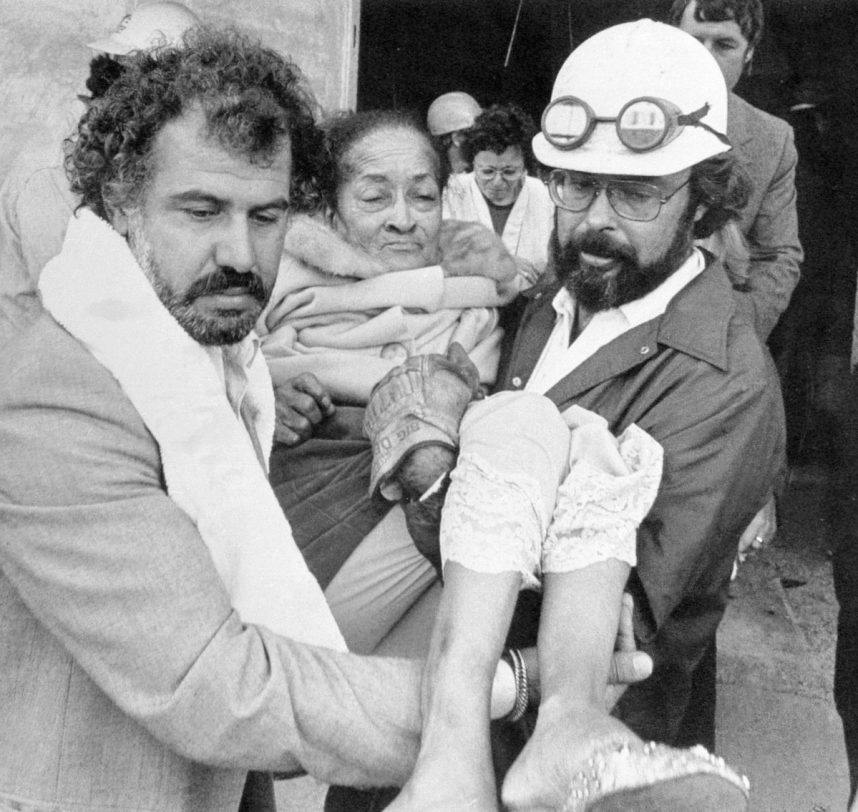
Sawyer’s article did not claim that the victims were positioned at slot machines, only that they were “frozen in their tracks.” However, that account was inaccurate, as per the official report by the Clark County Fire Department. Out of 17 bodies discovered on the first floor, none were located in the casino area.
“No one perished at a gaming table or slot machine,” stated Clark County Fire Captain Jon Sabol, the last firefighter who engaged in battling that infamous blaze, in a conversation with the Las Vegas Review-Journal in 2015. “Evacuations were slow, but everyone had moved away from the tables before the fireball surged in.”
A Legacy Reduced to Ashes
Following the fire, the MGM Grand reopened eight months later, now fitted with automatic sprinklers and a comprehensive fire alarm system due to new legal requirements following another hotel fire at the International in February 1981.
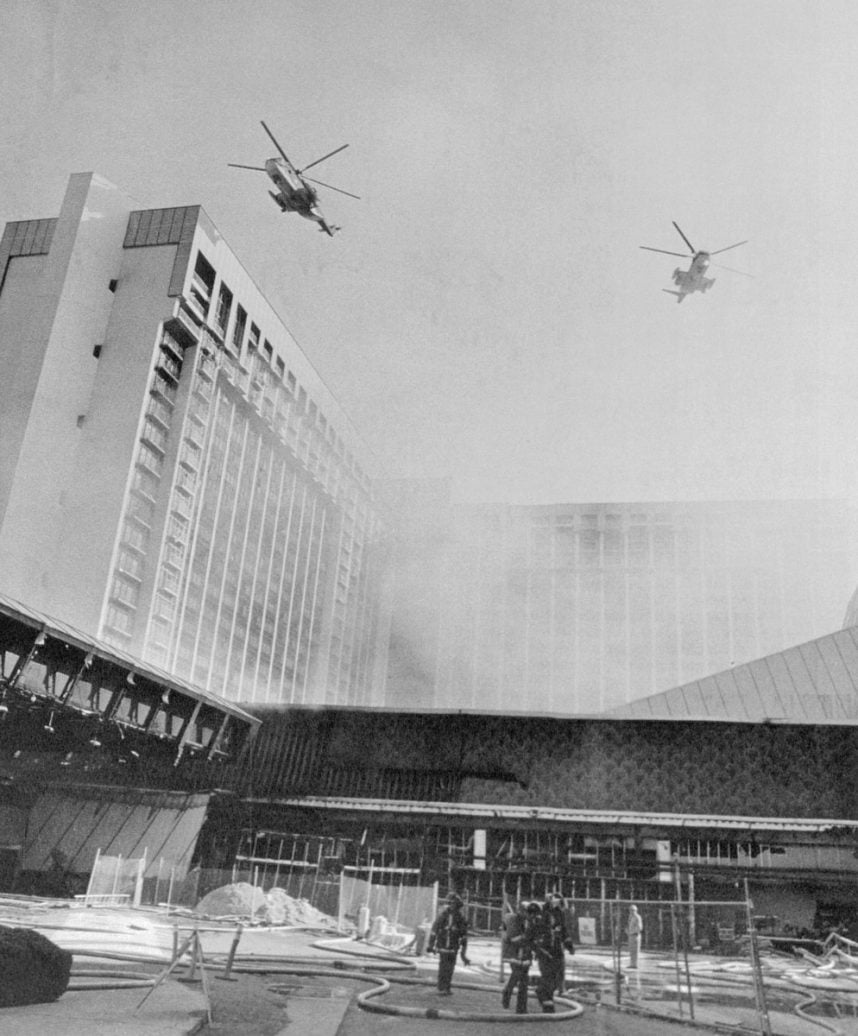
A $50 million renovation added another 26-story tower later in 1981. However, visitor numbers plummeted due to negative publicity from the fire coupled with years of ensuing litigation.
More than 1,350 lawsuits arose from the injuries and fatalities of the fire, with MGM Grand eventually settling for $223 million. At that time, Las Vegas lacked the legal resources to manage the overwhelming number of legal claims.
Disillusioned by the burden of operating this colossal reminder of failure and loss, MGM sold the hotel along with MGM Grand Reno to Bally Manufacturing, a maker of pinball machines and slot machines, in April 1986. Last year, Caesars Entertainment rebranded the property, changing its name from Bally’s to Horseshoe.
Meanwhile, Kerkorian quietly began acquiring land to construct a new MGM Grand a mile south of the original site. The new hotel opened its doors in 1993 and is still in operation today, debunking another common myth—that the original MGM Grand was leveled after the fire and that the current location stands on the same land.
Stay tuned for “Vegas Myths Busted” every Monday on Casino.org. To explore previously debunked Vegas myths, visit VegasMythsBusted.com. If you have a Vegas myth suggestion for us, please reach out at [email protected].