


Published on: November 24, 2025, 07:21h.
Updated on: November 23, 2025, 07:19h.

It’s puzzling to construct a monorail in the nation’s second-largest tourist attraction that doesn’t connect to the airport. Yet, Las Vegas embarked on exactly that over twenty years ago. Since then, both visitors and residents have often pointed fingers at the obvious culprit: the taxi and limousine industry.
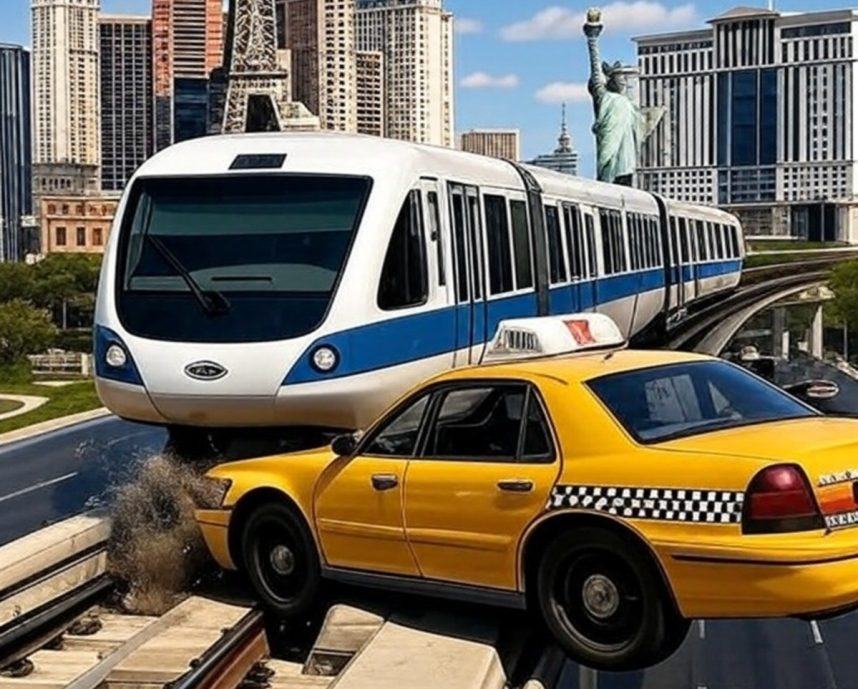
The prevailing narrative suggests that greedy taxi and limousine companies hindered the monorail’s airport access to safeguard their lucrative fares from baggage claim to the Strip. However, the reality is more nuanced.
Understanding the Monorail Saga
The original concept for a Las Vegas monorail aimed to establish a public transportation link between the airport and downtown via the Strip. Spearheaded by Clark County and the Regional Transportation Commission of Southern Nevada during the 1990s and early 2000s, it was envisioned as a vital transit corridor for both visitors and locals.
This initiative underwent numerous feasibility analyses and route discussions from the 1970s until the early 2000s. However, it faced significant delays mainly due to exorbitant projected costs (up to $1 billion), lack of federal backing, and fragmented regulatory jurisdictions.
The Las Vegas Monorail that came to fruition in 2004 was a privately financed endeavor with a significantly limited focus. It primarily catered to transporting tourists between casinos and the Las Vegas Convention Center. While the casinos did not cover its $650 million price tag, the business model relied heavily on fare income from visitors, particularly in the densely populated casino corridor.
An airport extension was always envisioned for future development; the initial discussion regarding such an extension arose in 2005, merely a year after the monorail’s debut.
Concerns were voiced in public meetings by the Nevada Taxicab Authority, which oversees the taxi sector, and the Limousine Operators Association of Nevada. Both organizations are influential and have a history of effecting change, as evidenced by their successful efforts to restrict pedicabs and impose strict rules on rideshare services like Uber and Lyft entering Las Vegas in 2015.
However, there’s scant evidence that their objections played a decisive role—or were even essential.
The Actual Events
Federal transit authorities had already rejected the extension, and without their financial support, the project couldn’t manage its estimated $400 million budget.
Those authorities cited weak projections for ridership and financial vulnerability. Their concerns were justified, as the Las Vegas Monorail filed for bankruptcy in 2010 and again in 2020, after which the Las Vegas Convention and Visitors Authority purchased it for just $24.3 million—a mere 26.7% of its original investment.
Officials from the Clark County Aviation Department raised concerns as well, pointing out that the monorail’s design, resembling Disneyland-style cars, did not feature luggage racks, rendering it ineffective for airport transportation. This was another valid point raised.
The proposed airport extension was brought back to the table in 2006 (with a projected cost of $450 million) and again in 2008 ($500 million). Taxi and limousine representatives reiterated their opposition during these discussions.
Yet, the proposal’s ongoing stagnation was solely due to one persistent issue: chronic funding shortages.
While “The taxi mafia did it!” makes for a compelling narrative, the truth is this proposal succumbed to financial deprivation, not an orchestrated plot.
Be sure to check out “Vegas Myths Busted” every Monday on Casino.org. Head over to VegasMythsBusted.com for more myths that have been debunked. If you have a Vegas myth suggestion, feel free to reach out at [email protected].