


Published on: November 30, 2025, 09:59h.
Updated on: November 30, 2025, 10:03h.

- President and CEO of CGA addresses Senate demands for a ban on sports betting advertising.
- Proposed legislation for a nationwide advertising framework moves closer to enactment.
- CGA asserts that provincial measures are already in effect, illustrated by Ontario’s regulations.
Paul Burns, the President and CEO of the Canadian Gaming Association, indicates that the recent news regarding 40 Canadian Senators urging Prime Minister Mark Carney for a complete ban on sports betting ads has been anticipated.
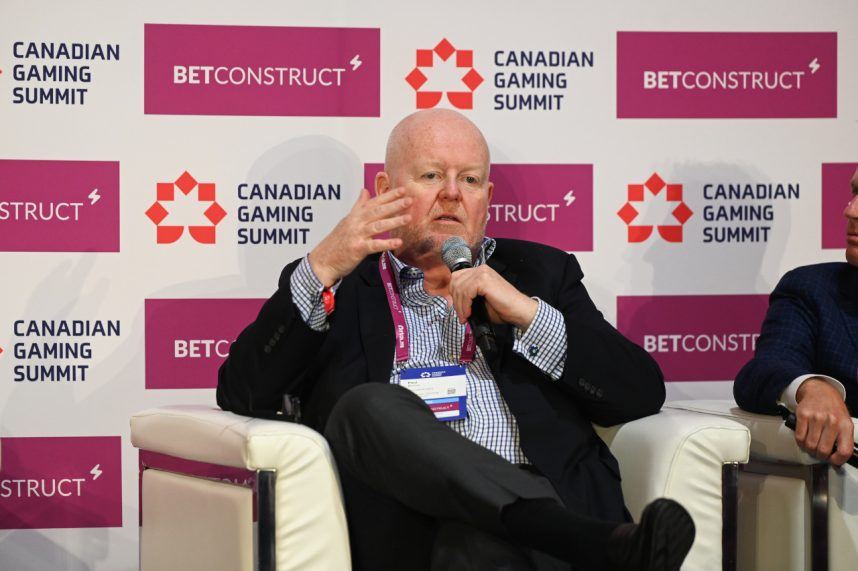
Burns isn’t astonished, given that many of these Senators have historically advocated for an outright ban. Senator Marty Deacon is leading the charge on Bill S-211, the National Framework on Sports Betting Advertising Act, which is currently progressing through the House of Commons.
The advertising of online gaming has been prevalent across Canada for years, long before Ontario launched its regulated market in 2022, which now boasts 48 licensed operators, Burns noted.
CGA: Decline in Gaming Advertisements
This development is unlikely to deter many Senators, as Senator Deacon’s proposed bill aims to establish stricter guidelines for advertising, creating a standardized national framework. The Minister of Canadian Heritage is set to collaborate with provincial governments, Indigenous groups, and other stakeholders to develop restrictions on sports betting promotions.
Senators Deacon and Percy Downe are looking to enhance this initiative even further. This aligns with Deacon’s longstanding preferences, according to Burns.
“I assert that the provinces possess ample authority and regulations through their gaming regulators,” Burns stated. “They are best equipped to oversee this matter.”
Ban on Tobacco-Style Advertising
For instance, the Alcohol and Gaming Commission of Ontario introduced new regulations concerning online gaming advertising in February 2024, nearly two years after the province’s regulated market was established. Operators are now prohibited from utilizing cartoon characters, celebrities, influencers, or entertainers who are likely to appeal to minors.
Furthermore, both active and retired athletes are barred from participating in online gaming advertisements, except when promoting responsible gambling initiatives. Burns emphasized that leagues and broadcasters have also developed policies in response.
“There are considerable regulations governing advertising practices. However, research on the effects of advertising within Canada is scarce,” he remarked. “Comparative studies from other regions may provide insights, but they do not fully represent our unique market conditions, as each jurisdiction has distinct characteristics.
“The amount of advertising has stabilized and even decreased,” he continued, citing CGA research indicating that online gaming constitutes merely two percent of all television advertising. For NHL broadcasts, online gaming ads once accounted for six percent but have now dropped to four percent. During the recent Blue Jays MLB World Series, the proportion fell to four percent of game-time TV ads, tapering off to two percent for Game 7, according to Burns.
CGA: Provinces are Most Suitable for Regulation
The goal is to direct users towards platforms that offer adequate protections and oversight, Burns added. Senator Downe argues that individuals of all ages are inundated with ads, effectively transforming their devices into “pocket-sized casinos.” The letter references a report from CBC Marketplace indicating that sports fans spend 20 percent of their viewing time during broadcasts on gambling advertisements, including logos on hockey boards and basketball courts, contributing to the “normalization of gambling.”
“I believe operators maintain responsible advertising practices,” said Burns. “The entire regulatory framework plays a vital role in safeguarding players. Addressing problem gambling isn’t simply a matter of banning advertisements—this perspective is overly simplistic.”
Implementing age verification to prevent minors’ access, continuously monitoring players for risky behaviors, and prohibiting advertisements that promote bonuses are all components of a protective infrastructure, according to CGA and industry advocates.
Upcoming Advertising Standards with Bill S-211
“That’s what we want everyone to examine, considering the demographics of audiences… there is still not as much advertising as many claim,” Burns said. “We are receptive to dialogue. We worked collaboratively with the AGCO. Ontario promptly responded, and together we devised a solution. This (Deacon’s) bill represents an additional layer of oversight atop the robust measures provinces have employed for decades.”
“We are fundamentally different from cannabis, alcohol, or tobacco as products. The regulations governing those substances originate from Health Canada… these are items consumed by individuals. It’s inaccurate to equate gaming with tobacco; people engage with gaming regularly without harm. This situation inserts the federal government into an area where they lack both capacity and expertise.”
Consequently, it appears to be political maneuvering.
Burns and the CGA assert that numerous rules and oversight mechanisms are already in place. However, national politicians and Senators believe more is required to protect vulnerable youths and adults. Further clarity regarding the direction of this issue will emerge as Bill S-211 advances into law.