


Published on: December 22, 2025, 07:21h.
Updated on: December 21, 2025, 10:12h.

Despite our efforts to debunk the myths surrounding Las Vegas, some of them persist. While many of these repeated tales are simply untrue, proving them wrong can be quite a challenge. This is part 1 of our ongoing series.
The Palazzo Shadow Over Laid-back Wynn Poolside
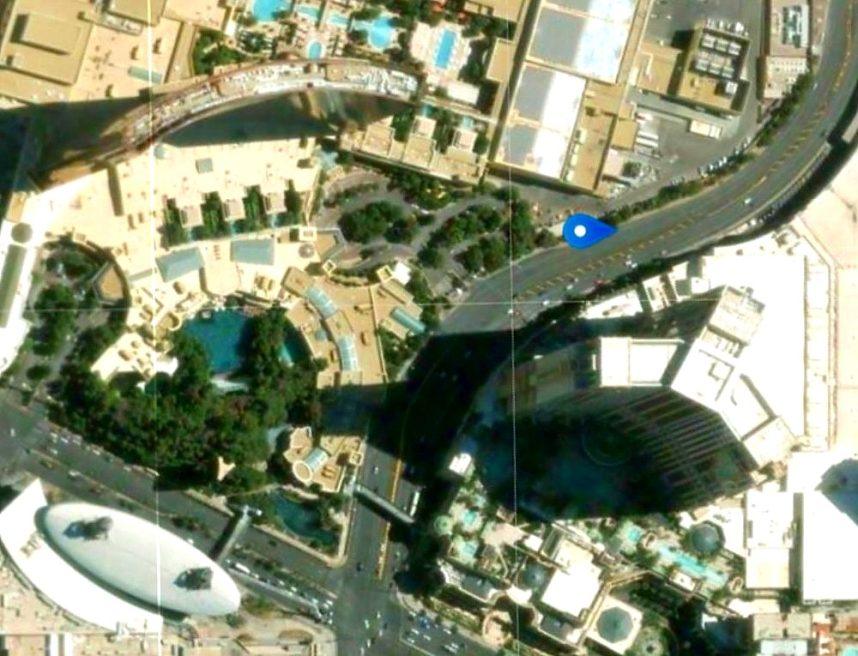
The influence of Sheldon Adelson is still palpable across the Las Vegas Strip, five years following his passing and the subsequent sale of the Venetian and Palazzo by his family. This impact is both metaphorical and literal.
“From time to time, rumors suggest that when Adelson inaugurated the Palazzo in 2007, its design was strategic enough to cast a shadow over the Wynn when the sun was perfectly positioned,” University of Nevada-Las Vegas history professor Michael Green disclosed to the Las Vegas Advisor in 2024.
Our investigation reveals that a portion of this claim holds merit. Daily, Adelson’s second Las Vegas establishment partially obstructs sunlight from reaching the Wynn’s pool area.
“That certainly sounds like something Sheldon would consider,” Green conjectured. “He could be both vindictive and generous — as demonstrated by maintaining the payroll for all Venetian/Palazzo employees during the COVID closure, even as other casino owners slashed wages left and right.”
However, it’s unclear whether Adelson intentionally designed this effect. He never confirmed it during his lifetime, and if it was accidental, he likely enjoyed that his competitors perceived him as capable of such calculated rivalry.
Regardless, the Palazzo’s shadow doesn’t reach the Wynn pool until approximately 5:30-6 p.m. in summer and around 4:45-5:15 p.m. in spring and fall — significantly later than sun-seekers would find it bothersome. So, even if this phenomenon was deliberate, it wasn’t particularly effective.
Queho: The Notorious Las Vegas Serial Killer
Determining whether Queho was Las Vegas’ first serial killer or merely a victim of biased reporting is complicated.
Queho was a killer, like many men of the 19th century, especially in frontier territories where the concept of “justifiable homicide” prevailed. Yet, Queho was a Native American who targeted white victims, which made his actions indefensible in an era controlled by white authority.
“Piute Savage Goes on Warpath,” exclaimed the Lafayette Weekly Courier on December 2, 1910, describing how “the Indian apparently quarreled with fellow tribe members and embarked on a solo rampage against whites.”
According to a Reno Gazette-Journal article dated February 15, 1919, Queho was labeled an “insane half-breed.” (Reports suggest his father was of European or Mexican descent, and his mother belonged to one of several Native American tribes, including Pauite, Cocopah, or Apache.)
The first murder attributed to Queho occurred in 1910, when he killed his half-brother, Avote. This was followed by the killing of J.M. Woodworth, for whom Queho reportedly harvested timber near Searchlight, NV. He then murdered California physician L.W. Gilbert, along with a night watchman at the Gold Bug mine nearby Eldorado Canyon.

The total alleged death toll attributed to Queho ranged from 13 to 23 — virtually every suspicious fatality in the sparsely populated Southern Nevada from 1910 to 1919.
While no substantial evidence linked him to the majority of the crime scenes, newspapers relentlessly pursued his capture. Sheriffs spent decades searching the desert for him, and parents cautioned their children to behave or risk encountering Queho.
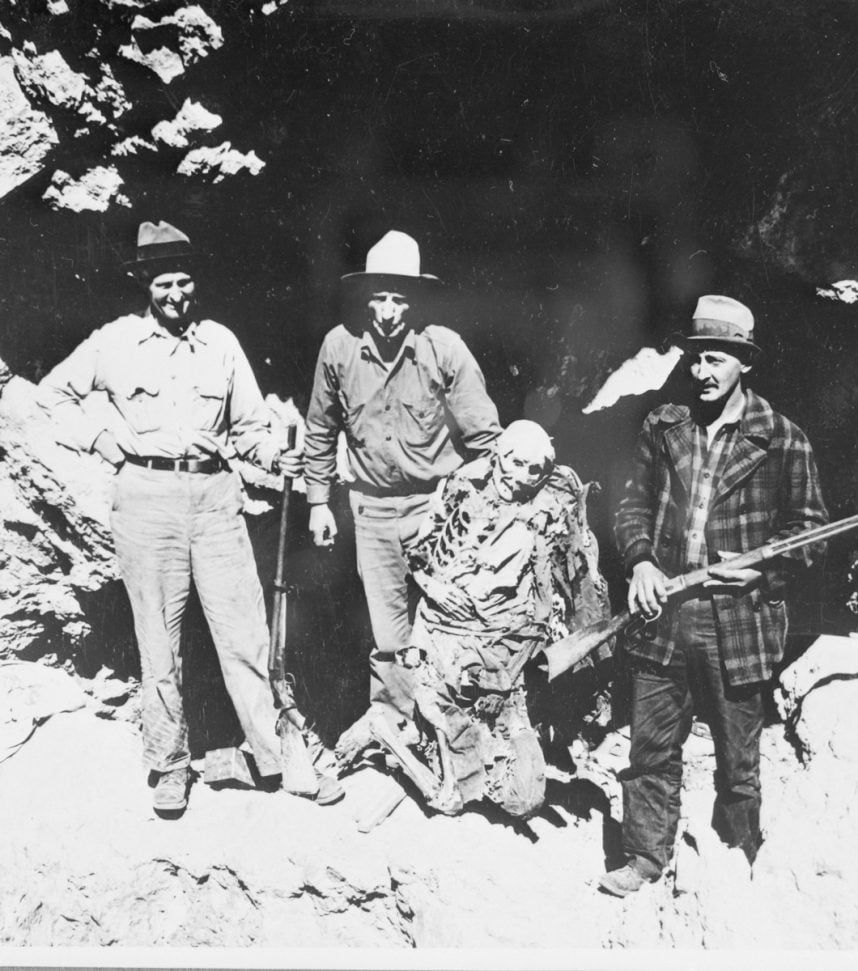
In 1940, 21 years after the last murder ascribed to Queho, prospectors stumbled upon a cave situated 2,000 feet above the Colorado River, 10 miles below Hoover Dam. Inside, they found a booby trap, stolen dynamite, a mummified body, and the watchman’s badge.
The presumed cause of death was likely a rattlesnake bite.
Clark County Sheriff Frank Wait, who had dedicated 20 years to tracking Queho, reportedly kicked his remains when discovered.
The Las Vegas Elks Club later bought Queho’s remains, displayed them in a disrespectful manner during the annual Helldorado parade that year, before they were stolen, recovered, and finally interred near Cathedral Canyon in the Nevada desert close to Pahrump.
So who exactly was Queho? At this stage, the trail leading to the truth of his story has become virtually non-existent.
Check out “Vegas Myths Busted” every Monday on Casino.org. Visit VegasMythsBusted.com for previously debunked Vegas myths. Have a Vegas myth suggestion that needs addressing? Reach out to [email protected].