


Published on: January 13, 2026, 07:42h.
Updated on: January 13, 2026, 07:43h.

- Legislators from Nevada are leading efforts to reinstate the gambling losses deduction to its full amount.
- The One Big Beautiful Bill reduced the gambling deduction from 100% to 90% for taxpayers.
Congress has introduced a new bill aiming to reinstate the gambling loss deduction to 100% for those itemizing deductions.
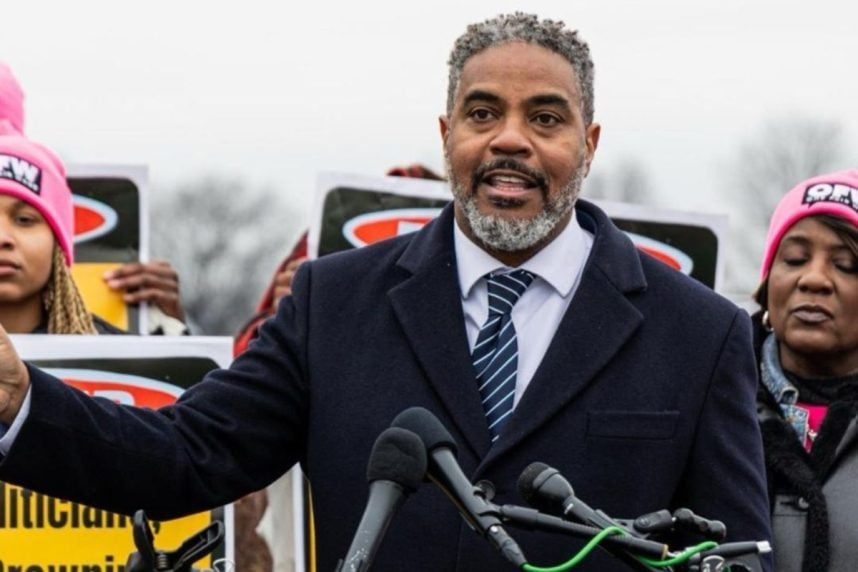
On Monday, US Representatives Steven Horsford (D-NV) and Max Miller (R-OH) introduced bipartisan legislation to amend a tax clause affecting the gaming industry within the One Big Beautiful Bill Act. A late modification added by Senate Republicans stipulates that from the 2026 tax year onwards, federal taxpayers who itemize can only deduct up to 90% of their gambling losses against their winnings.
“Taxing people on income they haven’t actually made is inherently unjust and detrimental to Nevada’s economy,” expressed Horsford. “There is a consensus across party lines that this provision was an error that Congress urgently needs to rectify.”
The 90% limitation on gambling deductions was introduced during deliberations of the One Big Beautiful Bill in the Senate Finance Committee. Advocates of this gambling deduction cap argue that it ensures high-volume gamblers contribute to federal taxes.
An Abundance of Legislation, Yet Limited Progress
Horsford and Miller are advocating for the FULL House Act, or the Facilitating Useful Loss Limitations to Help Our Unique Service Economy Act. Officially designated as House Resolution 6985, this legislation mirrors a similar proposal in the Senate introduced by Senators Catherine Cortez Masto (D-NV) and Ted Cruz (R-TX) in July.
“Losses from gambling activities will be deductible solely to the extent of the winnings from such activities,” the bill states.
The FULL House Acts complement Representative Dina Titus’ (D-NV) FAIR Bet Act, which also aims to restore the gambling loss deduction to 100%. The FAIR Bet Act enjoys considerable support among the three, boasting 23 co-sponsors, including 13 Democrats and 10 Republicans. Horsford and Miller are among its advocates.
House Ways and Means Committee Chair Jason Smith (R-MO) has faced criticism for delaying the deliberation of the FAIR Bet Act.
“Since the Senate included a provision in the Big, BS Budget Bill to reduce the gambling loss deduction to 90%, I have led a bipartisan and bicameral campaign to amend this unfair tax policy, ensuring that gamblers are not taxed on fictitious income. I again prompt Rep. Jason Smith to take the necessary steps and incorporate a solution in the upcoming Ways and Means Committee markup that safeguards many jobs,” Titus shared on social media.
Although the FAIR Bet and FULL House Acts have attracted significant media attention, neither has been brought to a committee vote. The FULL House proposal by Horsford and Miller is also awaiting consideration by the House Ways and Means Committee.
Prospective Retroactive Adjustment
If the FULL House or FAIR Bet legislation passes through Congress and receives President Donald Trump’s signature, the reinstatement of the gambling losses deduction to 100% would be applied retroactively, affecting the IRS tax code for the 2026 tax year to allow the complete deduction.
“The FULL House Act stands for fundamental fairness in the tax system,” asserted Miller. “Americans shouldn’t be taxed on money that they haven’t actually received. By reinstating the full deduction for gambling losses, this legislation ensures that the IRS treats taxpayers with integrity and fairness.”