


Published on: January 15, 2026, 09:10h.
Updated on: January 15, 2026, 09:10h.

- New gaming legislation is anticipated in South Carolina this year
- Religious leaders are mobilizing to resist any gambling expansion
- Currently, South Carolina only permits lottery games
The beginning of a new year brings renewed efforts to introduce gambling in South Carolina, met with strong opposition from religious factions.
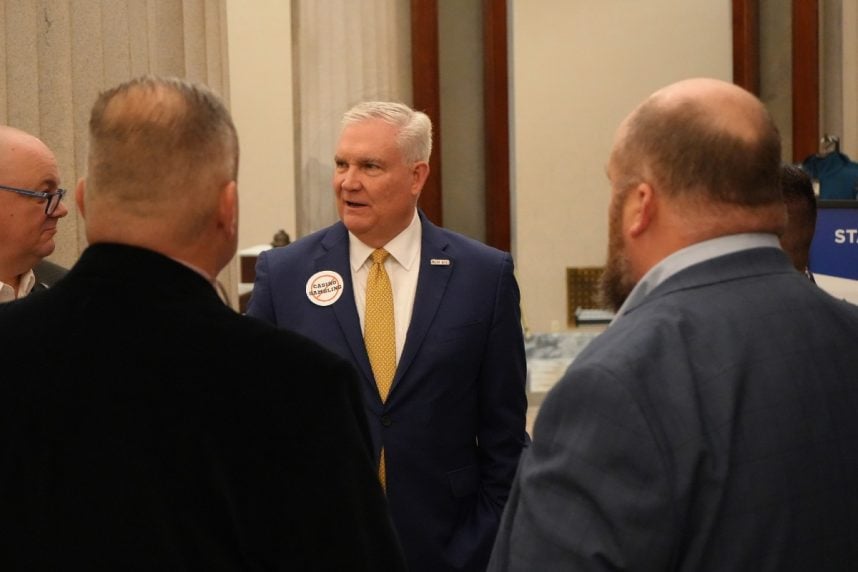
On Wednesday, a coalition of church leaders and religious groups hosted their annual “Pastor’s Day at the Capitol” in Columbia, coinciding with the start of the state’s legislative session.
Although no gaming proposals were presented in the first two days of the session, some lawmakers have indicated plans to introduce measures to legalize casino gambling and sports betting in South Carolina. Faith Wins, an organization aimed at mobilizing faith leaders in politics, reported that over 175 pastors from 11 different denominations gathered to oppose the introduction of casinos.
“Faith communities will resist policies that take advantage of vulnerable populations and undermine family structures,” stated the organization. “When faith leaders unify to advocate for their communities and speak with conviction, faith prevails.”
With the exception of the state-run lottery, all other forms of gambling are prohibited in South Carolina, including charitable gaming, parimutuel betting, video lottery terminals, casinos, racinos, online gaming, and sports wagering.
Proposed Casino Legislation
Representative Bruce Bannister (R-Greenville) is preparing to introduce a bill that would establish a Las Vegas-style casino resort along Interstate 95, which crosses the state from North Carolina to Georgia. The legislation would propose a 35% tax on gaming revenues, with funds mostly allocated for land and environmental conservation.
Wallace Cheves, a notable entrepreneur and significant Republican donor, has long advocated for bringing casino gaming to South Carolina. Following objections to his plans for a tribal casino with the Catawba Indian Nation, Cheves and the tribe shifted their project to Kings Mountain, NC. However, federal authorities later instructed Cheves to exit the project after determining that the Two Kings Casino primarily benefited him rather than the tribe.
Bannister has suggested placing a casino in the “Corridor of Shame,” an economically challenged area along the interstate encompassing parts of Orangeburg, Dillon, and Marlboro counties. Cheves believes this casino could generate over $100 million in yearly tax revenue, with $35 million set aside annually for land and forest conservation.
Out of the 35% designated for conservation, an additional 30% would be allocated to the Veterans’ Trust Fund, 26% would go to the state’s General Fund, 5% would remain with the county hosting the casino, and the remaining 4% would be distributed to qualifying counties along the I-95 corridor.
Religious Opposition
In addition to faith leaders and lawmakers who adhere to their religious beliefs, Bannister’s proposed casino legislation is also opposed by Governor Henry McMaster (R), who continues to firmly reject the legalization of casinos and sports betting.
According to a 2025 report by Pew Research, South Carolina ranks as the second most religious state in the nation, just after Mississippi, with approximately 46% of adults identifying as “highly religious” and 57% claiming to pray daily.