


Published on: January 29, 2026, 12:48h.
Updated on: January 29, 2026, 12:48h.

- Pentagon has withdrawn loot box vending machine amid online backlash
- Device ignited discussions about gambling mechanics within military premises
- Reddit users ridiculed the gadget as unsuitable for a national defense establishment
The United States Department of Defense has taken down a “Lucky Box” vending machine from the Pentagon, “pending further evaluation,” as stated by a spokesperson, following concerns raised about the appropriateness of placing a chance-based loot box device within the core of American military authority.
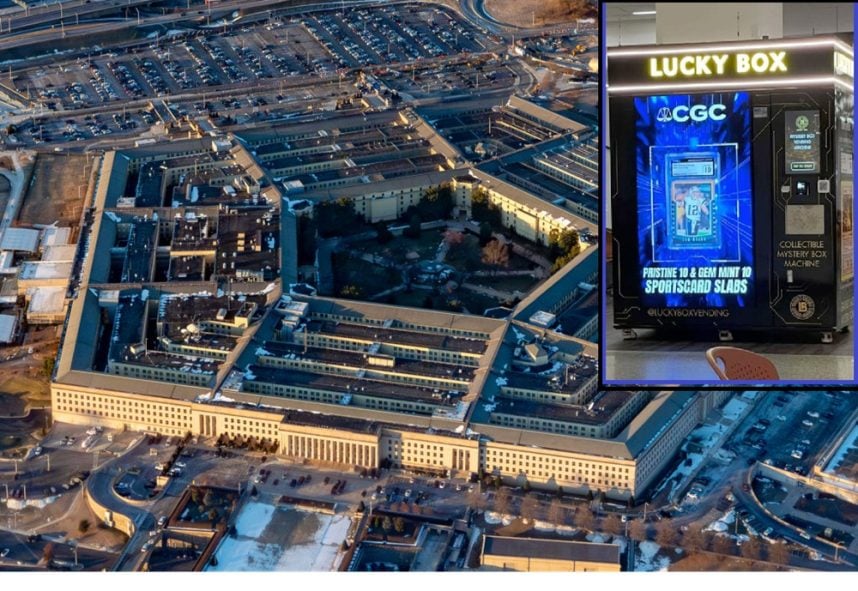
On Christmas Eve, Lucky Box Vending expressed pride on social media about installing one of its devices at the DoD headquarters, which they described as “a place built on legacy, leadership, and history – now experiencing the thrill of Lucky Box firsthand.”
Although the post was quickly deleted, images of the machine, located in the main Pentagon cafeteria, soon surfaced on the r/army subreddit and proliferated across various military-focused subreddits. Many individuals felt the vending machine was humorously incongruous in a setting dedicated to national security and military order.
What is a Lucky Box Machine?
Lucky Box machines are reminiscent of the popular “gacha” games from Japan and the loot boxes that are common in many contemporary video games, wherein users pay to receive items with randomized content rather than a guaranteed reward.
Inside a Lucky Box, customers can expect items like trading cards, branded merchandise, figurines, toys, and other collectibles, with the assurance that each box holds at least the value of the payment (according to the operator’s stated retail pricing).
Only occasionally, one might receive high-value items such as autographed sports jerseys, advanced gaming consoles, premium graded trading cards, or other rare collectibles. The Pentagon’s Lucky Box promised a chance to win a Pokémon card valued over $100,000.
Gambling activities are banned on all US military installations, including the Pentagon – however, slot machines are commonly found on US bases overseas. Yet, Lucky Box games are not classified as gambling under current law, despite their apparent similarities to gambling mechanics.
A Prize Guaranteed Every Time
While two out of three traditional components that define gambling—consideration (stake) and chance—apply here, there is no losing outcome in the strict legal sense as users are guaranteed to receive an item of claimed value with each transaction.
Nevertheless, Redditors expressed their skepticism.
“Wtf? Why is the Pentagon supporting a scam box operation?” questioned one user.
I never imagined witnessing a day where a LTC (Lieutenant Colonel) might actually contemplate selling secrets for a shot at a Pikachu card from the Pentagon cafeteria,” quipped another.
It should be noted that the DoD isn’t entirely against military personnel engaging in gambling. In fact, it serves as a major gambling operator itself, overseeing over 3,000 slot machines globally, especially on US Army bases in Japan and Germany, as well as Naval bases in Korea, Italy, Spain, Diego Garcia, Greece, and Singapore, according to the National Council on Problem Gambling (NCPG). This operation yields over $100 million annually for the department.