


Published on: February 10, 2026, 02:01h.
Updated on: February 10, 2026, 02:01h.

- The Quebec Online Gaming Coalition advocates for private operators seeking an Ontario-style igaming framework in the province.
- The group has presented a brief to the Ministry of Finance outlining four strategies for advancement.
- Loto-Québec remains the sole legal online betting platform in the province.
Loto-Québec has established a new partnership to integrate Incentive Games’ real-money and free-to-play offerings into its platform, enhancing its services. However, this progress has not deterred proponents of a competitive Ontario-style igaming market in Quebec from amplifying their demands.
The day following the Super Bowl, an event that generates substantial sports betting activity in the province, the Quebec Online Gaming Coalition submitted its recommendations to the Ministry of Finance.
Founded in May 2023, the Quebec Online Gaming Coalition includes representatives from Betway, Bet99, DraftKings, Entain, Flutter, Games Global, Rush Street Interactive, and Apricot Investments. Their goal is to collaborate with the Quebec government and local stakeholders to develop a competitive regulatory framework against the government-operated Loto-Québec.
Loto-Québec remains the only legal online betting option available to residents.
Coalition Calls for Market Reform
The Coalition emphasizes the urgent need to regulate about 2,000 grey market websites providing sports betting, casino, and poker games to Quebec players, often with varying quality and minimal responsible gambling safeguards.
The Coalition argues that the Quebec government is unnecessarily endangering vulnerable individuals while missing out on potential tax revenues exceeding CAD $300 million annually. By concentrating solely on physical gaming options, including Loto-Québec’s gaming salons, video lottery terminals, and bingo events, Quebec is falling behind in the online gaming sector.
“Why restrict the regulation of online gaming to just Loto-Québec sites, when the online options are far more diverse?” asked Ariane M. Gauthier, spokesperson for the Quebec Online Gaming Coalition.
“Quebec can readily implement comprehensive regulations for private online gaming platforms covering advertising, age verification, and accountability. This would effectively channel most online gaming into a stable, regulated framework, benefiting everyone involved.”
Ontario’s Successful Market Model
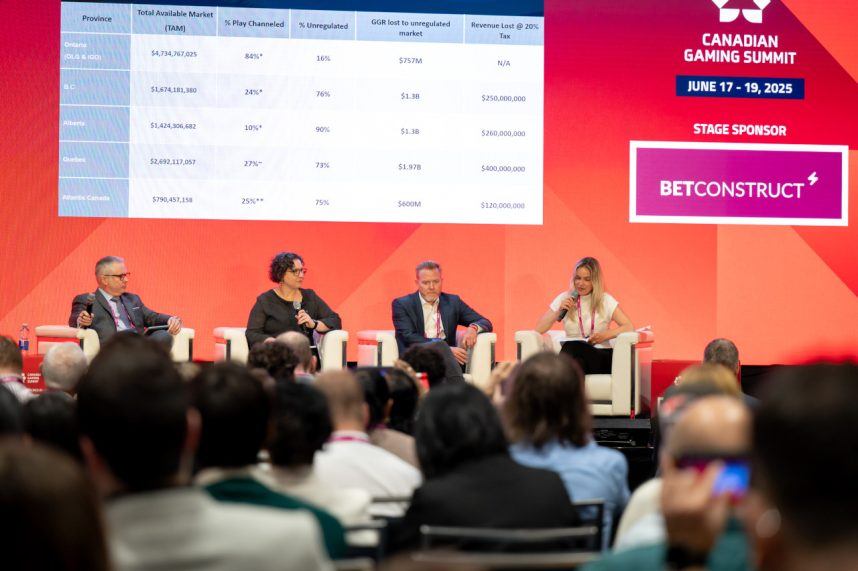
A presentation by TRM Public Affairs during last summer’s Canadian Gaming Summit unveiled the financial losses Quebec faces in gross gaming revenue, amounting to CAD $1.97 billion, ahead of Alberta and B.C. at CAD $1.3 billion, Ontario at CAD $757 million, and Atlantic Canada at CAD $600 million.
Drawing from insights of public health experts and the successful Ontario model—a market approaching its fourth anniversary with 48 licensed operators that generated over CAD $4 billion in gross gaming revenue in 2025—the Coalition proposed four key recommendations to the provincial government.
In Ontario, 20% of the revenue from private operators is redirected to the government as tax.
Coalition’s Recommendations for Canadian Gaming
- Establish an independent regulatory body to oversee all online gaming operators, both public and private.
- Collaborate with stakeholders to create Quebec-specific standards for regulating online gaming.
- Define licensing requirements and agree to revenue-sharing with the Quebec government.
- Allocate a portion of private online gaming profits to community support and enhance prevention funding.
Gauthier’s group has also pointed to the upcoming Alberta private igaming market model set to launch this spring or summer. In this scenario, Alberta Gaming, Liquor & Cannabis (AGLC) will manage registration, followed by the new Alberta iGaming Corporation finalizing agreements with operators.
The cost for an iGaming Operator license in this model will include a $150,000 annual fee and a one-time application fee of $50,000.