


Published on: March 9, 2026, 07:21h.
Updated on: March 8, 2026, 09:30h.

- Accoladed Vietnam War veteran Bo Gritz, who passed away on February 27, 2026, asserted that he was the inspiration behind Stallone’s Rambo character.
- Author David Morrell, who created Rambo well before Gritz became notable, indicated that he was primarily inspired by a WWII soldier.
- Gritz leveraged the “Real Rambo” moniker to bolster his political and conspiratorial endeavors.
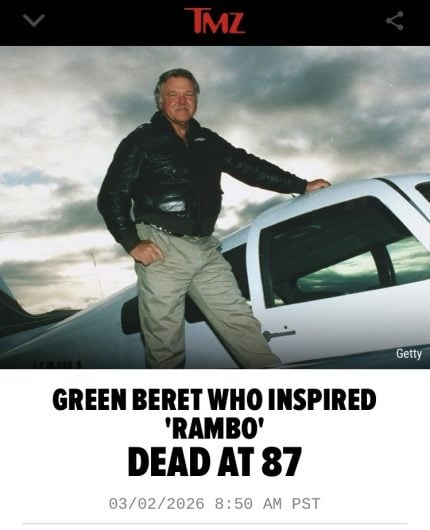
The passing of decorated Vietnam War veteran James “Bo” Gritz on February 27, 2026, sparked renewed assertions that he was the muse for Sylvester Stallone’s Rambo, a character second only to Rocky Balboa in Stallone’s portfolio. This claim is unfounded. Nonetheless, in a show of either respect or a lapse in journalistic diligence, local obituaries, as well as publications like TMZ, perpetuated the myth that the 87-year-old Las Vegas figurehead had championed for years.
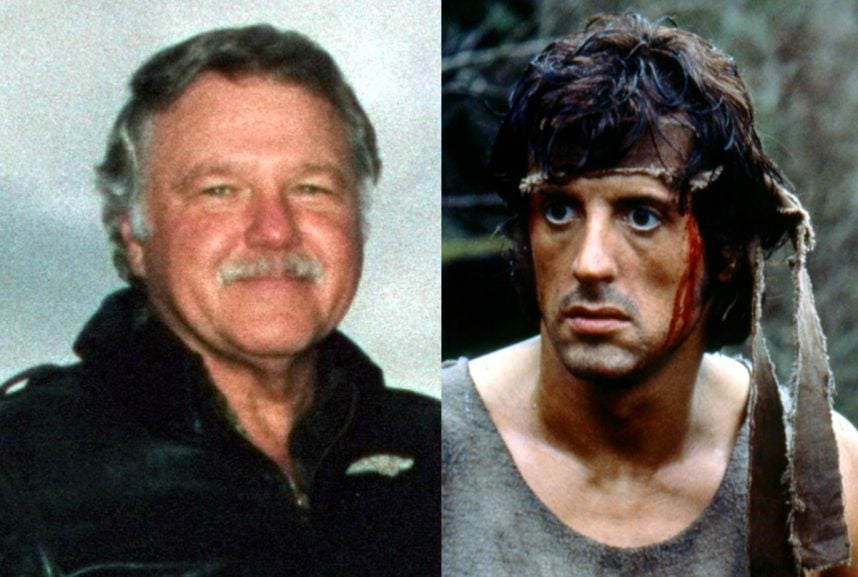
“I was the model for John Rambo as originally envisioned,” Gritz (pronounced “rights”) claimed in Andrea Luka Zimmerman’s 2017 documentary Erase and Forget. “They based the character on my experiences, yet offered neither credit nor compensation.”
Origin of Rambo
The individual who truly knows the inspiration behind Rambo is the character’s creator. Author David Morrell contested Gritz’s self-promotion in the introductions to the 2000 and 2014 editions of his classic novel First Blood.
“While penning the book in the late ’60s and early ’70s, I had not heard of Bo Gritz,” Morrell explained. “At that time, he was still on active duty and not a public persona.”
Morrell regarded Rambo as being primarily inspired by Audie Murphy, America’s most decorated WWII soldier, as well as Vietnam veterans from his graduate seminars.
Intrigued by the psychological impact of Murphy’s remarkable combat feats, Morrell sought to delve into the “Season in Hell” (a nod to poet Arthur Rimbaud, whose name partly inspired Rambo’s) faced by veterans upon returning home.
The emotional foundation of Rambo’s character stems from Murphy’s struggles with PTSD, including his tendency to sleep with a loaded firearm and his efforts to adapt to civilian life amid wartime traumas.
These components are the authentic origins of John Rambo. After the 1982 film adaptation emerged as a blockbuster success, Gritz capitalized on it with numerous media appearances, prominently suggesting that Stallone’s character drew heavily from his own covert missions and tactics.
Common Threads
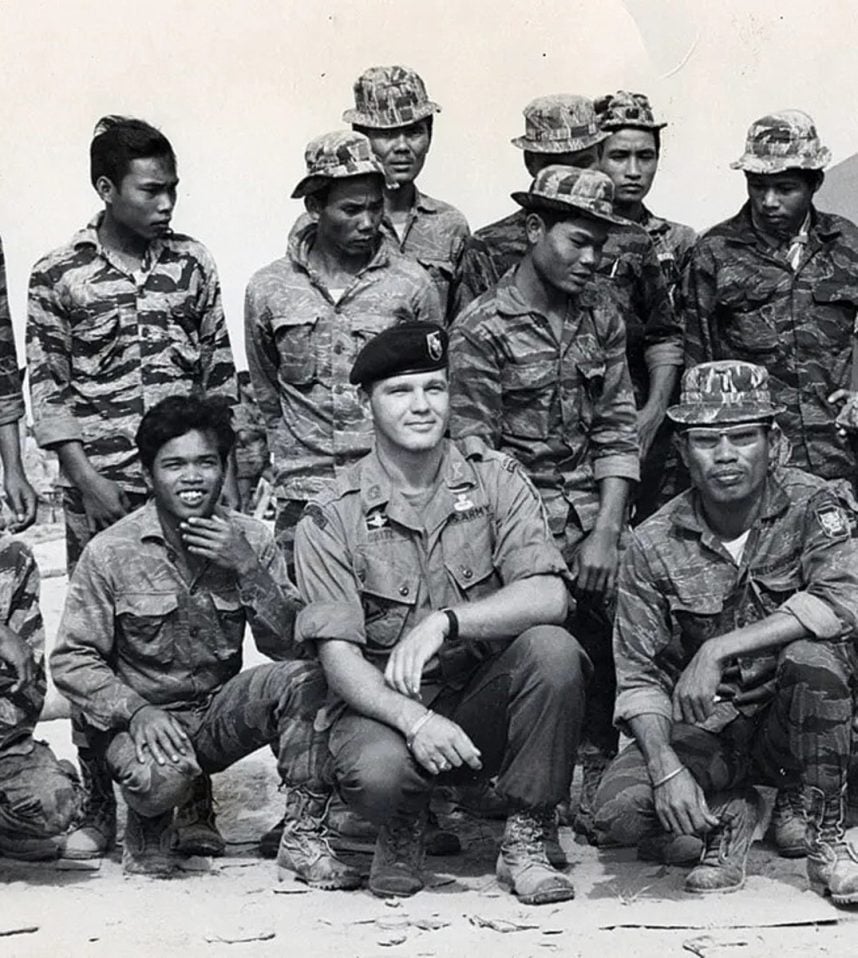
Gritz had a notable military track record, serving in the Vietnam War with the elite 5th Special Forces Group (Airborne). General William Westmoreland described some of his operations as “Mission Impossible-type adventures.” For instance, Gritz once commanded 250 Cambodian mercenaries on a mission to retrieve a highly classified black box from a crashed U-2 spy plane located deep in Cambodia.
Additionally, he is remembered for facilitating the resolution of the Ruby Ridge standoff in 1992, convincing another Special Forces veteran, Randy Weaver, to surrender after an 11-day siege resulted in the deaths of Weaver’s wife and 14-year-old son.
However, the clearest correlations between Gritz and Rambo are rooted in his unsanctioned commando missions into Laos in 1983, undertaken after the release of First Blood. These operations were primarily aimed at locating American POWs believed to have been abandoned.
Known as Operation Lazarus, Gritz’s missions attracted financial backing from Hollywood actors Clint Eastwood and William Shatner, who funded him with $30,000 and $10,000 respectively for story rights.
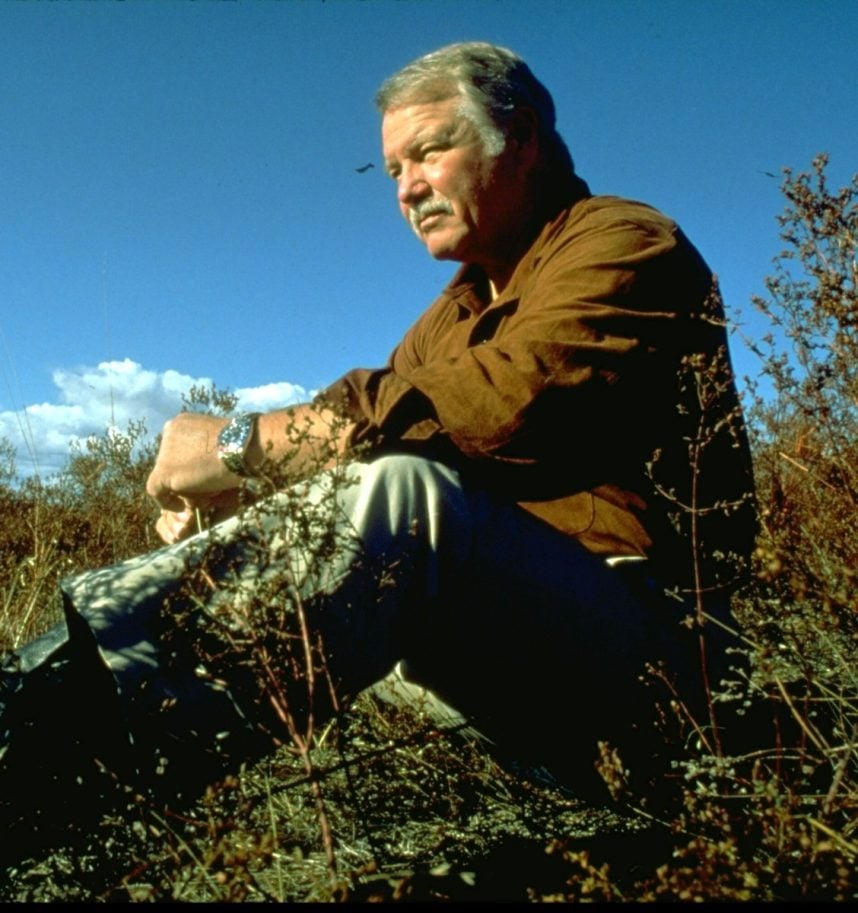
Gritz asserted that the plot for 1985’s Rambo: First Blood Part II was drawn directly from media reports of his operations, even though, in reality, Gritz did not retrieve any POWs, and his initial mission was thwarted by an ambush within days, which led to a $17,500 ransom payment to extricate one of his mercenaries.
He also alleged that Stallone—who developed the scripts for all five Rambo films—met with him covertly in early 1983 to observe his equipment, mannerisms, and appearance. Gritz claimed this meeting inspired Rambo’s recognizable red headband.
Aside from Gritz’s claims, there is no substantiated evidence of such a meeting. Stallone has continually credited James Cameron’s initial script treatment from 1983 as the basis for the sequel’s storyline. Neither Gritz nor Cameron has ever mentioned any direct communication.
Gritz often coupled his assertions about his involvement with First Blood: Part II with grievances regarding lack of compensation or acknowledgment for his contributions. Strangely, when the film surpassed its predecessor’s success, Gritz did not pursue legal action.
Instead, he branded himself as “The Real Rambo,” utilizing this identity for fundraising, book sales, and political campaigning (including a presidential run on the Populist Party ticket in 1992).
While there are undeniable similarities between Gritz’s activities and Rambo’s escapades in the First Blood sequels, the evidence supports a narrative of art reflecting life—and subsequently capitalizing on that art for monetary and political advantages.
Decoding the Myth
To fully comprehend who Bo Gritz was, it’s essential to realize that he was not just a celebrated war hero whose post-combat actions mirrored those of a fictitious character. He was a recognized figure in the anti-government conspiracy realm, hosting his own popular radio show.
Gritz launched The American Voice in 1994 from his secluded home in Idaho through the radical right-wing Talk America network. After relocating to the desert near Las Vegas in 1998, he transitioned between similar networks before establishing his prominent daily show, Freedom Call, on the American Voice Radio Network in 2005.
On his program, Gritz promoted various conspiracy theories, including:
- The 1995 Oklahoma City bombing was orchestrated by the government
- UN peacekeeping forces were set to invade the United States
- The CIA operated as the world’s largest drug trafficker
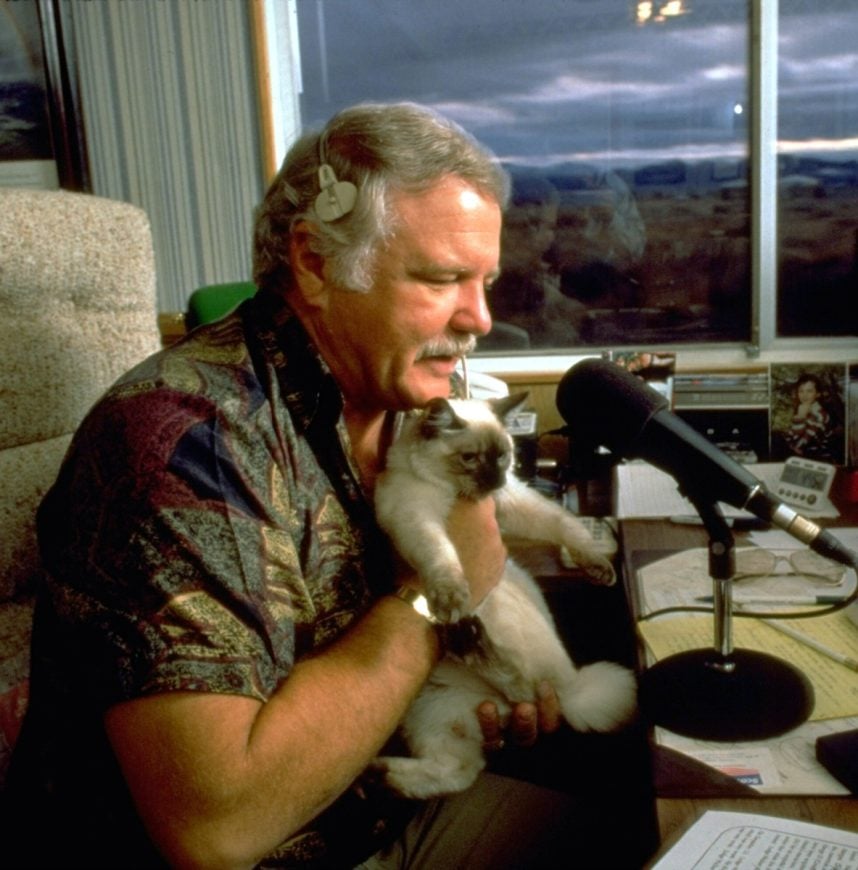
Gritz intertwined his personal narrative into his conspiracy theories, contending that the Rambo series was a government-funded psychological operation designed to distort his real-life experiences.
By framing his operations as blockbuster films, he argued, the government overshadowed his genuine findings regarding POWs and drug trafficking, delegitimizing them as mere cinematic fiction.
For those intrigued by such perspectives, it’s worth noting that Gritz has also claimed to have influenced Marlon Brando’s Colonel Kurtz in Apocalypse Now and George Peppard’s “Hannibal” Smith in The A-Team.
Perhaps we should have mentioned that sooner.
Stay tuned for “Vegas Myths Busted” every Monday on Casino.org. For more, visit VegasMythsBusted.com to explore previously debunked myths. If you have a Vegas myth that requires debunking, feel free to reach out at [email protected].