


EDITOR’S NOTE: Our series “Vegas Myths Busted” releases new installments every Monday, complemented by a special Flashback Friday edition. The current entry in our ongoing series first appeared on May 20, 2024.
Ultimately, the law of averages holds true over time. Various numbers, colors, and symbols in randomized casino games will occur based on their frequency. However, gamblers only operate within the short-term period, where predictions about future outcomes in these random games are unreliable.

Ignoring this truth is referred to as the gambler’s fallacy.
Nature’s Streaks
The tendency to perceive streaks in random occurrences is a trait embedded in our brains through evolution. We are programmed to identify patterns, even when they don’t truly exist.
Our ancestors’ ability to link rustling grass to the presence of a lurking predator served a crucial survival purpose. Those who honed this skill successfully evaded becoming a meal for a tiger, passing down their keen pattern-recognition ability through generations.
In fact, the stakes of mistaking a gentle breeze for a stalking tiger were minimal compared to the dangers of failing to identify real threats!
Biologists Kevin Foster and Hanna Kokko shed light on this phenomenon in their 2008 research paper, “The Evolution of Superstitious Behavior,” stating that human evolution favors strategies that generate numerous incorrect causal connections to secure those crucial for survival and reproduction.
The Cost of Errors
Making incorrect causal connections can prove significantly more expensive on the Las Vegas Strip, which explains the opulence of its establishments. Casino operators often exploit cognitive biases to support their extravagant ventures.
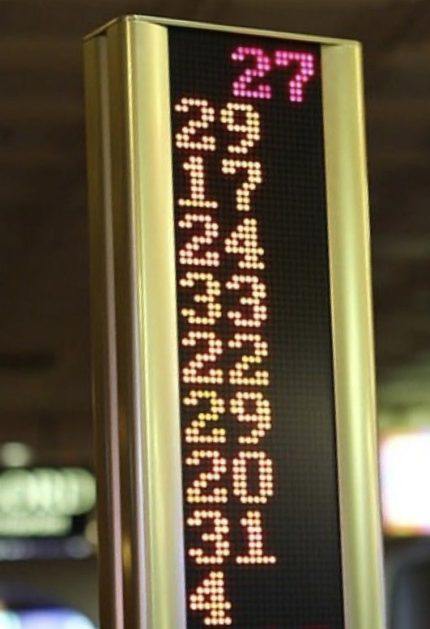
For instance, the digital displays on roulette tables showcase recent winning numbers and colors, leading players to erroneously assume and attempt to capitalize on non-existent patterns.
Some of these displays even highlight “hot” and “cold” numbers.
No matter how frequently a number or color has appeared previously, its chances of reappearing remain unchanged.
“As the saying goes, these patterns can only be discerned in hindsight,” noted gambling expert Anthony Curtis, publisher of the Las Vegas Advisor, to Casino.org. “You can only reflect on past outcomes, and thus cannot formulate a strategy to predict future ones.”
The gambler’s fallacy extends to patterns surrounding our personal wins and losses.
While many have encountered runs of good fortune or experienced nights filled with bad luck, these occurrences are often misconstrued—at least not in the way they seem.
“Streaks, both positive and negative, will occur due to the nature of probability, yet they cannot be anticipated,” Curtis emphasized. “Players often wish to harness a ‘hot’ streak, but they never truly achieve it. They merely experience normal fluctuations in their results, which cannot be controlled.”
Catch “Vegas Myths Busted” every Friday on Casino.org. Click here to explore previously debunked Vegas myths. Got a Vegas myth in need of debunking? Email [email protected].