


Published on: May 6, 2026, 06:17h.
Updated on: May 6, 2026, 06:17h.

- The CFTC is intensifying legal actions against states challenging prediction markets
- Speculation rises regarding Minnesota’s potential involvement
- Minnesota is advancing legislation against prediction markets
The Commodity Futures Trading Commission (CFTC) is ramping up its efforts to target states that are litigating against prediction market operators, with speculation that Minnesota may soon be in its crosshairs.
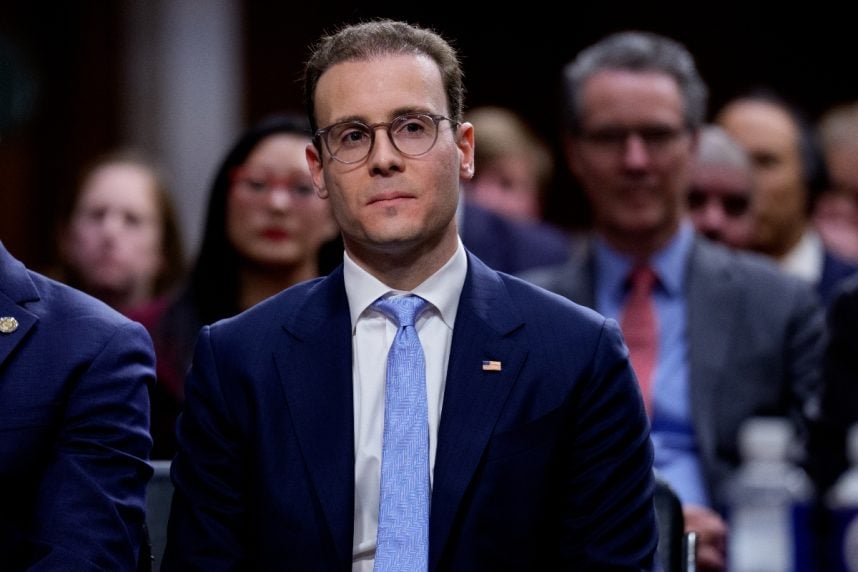
An anonymous source informed Semafor that Michael Selig, Chairman of the CFTC, is closely monitoring the efforts of states to either restrict or prohibit prediction markets, with Minnesota identified as a notable target. The CFTC oversees prediction markets at the federal level.
So far, the commission has taken legal action against Arizona, Connecticut, Illinois, New York, and Wisconsin, aiming to establish what it considers its exclusive regulatory power over exchanges that facilitate event contracts.
“States cannot bypass the explicit directives from Congress,” stated Selig in a press release concerning the Wisconsin case. “Our warning to Wisconsin is consistent with that given to New York, Arizona, and others: if you disrupt the federal regulations governing financial markets, we will take legal action against you.”
The rumor regarding CFTC’s interest in Minnesota emerged just two days following a federal judge in Arizona blocking the state’s prosecution against Kalshi, the leading operator of prediction markets.
Minnesota’s Response
In the context of prediction markets, the phrase “Minnesota nice” doesn’t hold true, as state policymakers are united across party lines in championing legislation that would significantly restrict or completely prohibit prediction markets.
Last Thursday, the Minnesota Senate passed a bill with a vote of 56-10 that would make it unlawful to advertise or manage a prediction market within the state. Subsequently, the Minnesota House revised a more extensive public safety bill to incorporate this new legislation.
With a population of 5.83 million and the absence of legal sports wagering, Minnesota represents an appealing landscape for prediction markets. Additionally, this creates a logical adversary against yes/no betting exchanges, as gaming regulation in the state is primarily controlled by tribal casino operators.
National and state tribal gaming associations have persistently argued that the prediction markets’ attempts to provide contracts on sports events, which critics argue are simply a variant of sports betting, infringe on state gaming regulations and threaten tribal sovereignty.
CFTC Asserts Regulatory Control
The ongoing legal conflicts at the state level surrounding prediction markets primarily stem from these companies offering sports event contracts in regions where they lack gaming licenses and where sports wagering is prohibited.
The prediction markets industry contends that these regulations do not apply to them, as they are governed by a federal authority—the CFTC—and not state gaming commissions. While recent court decisions have generally favored the states, there is emerging momentum for the industry, indicating that the CFTC is intent on asserting its perceived rightful authority in this regulatory space.
“Congress has assigned exclusive jurisdiction over the regulatory oversight of various derivatives to the CFTC, including event contracts traded on designated contract markets (DCMs),” the commission asserts. “Yet, some states have tried to impose their own regulations on prediction markets using state gambling laws.”