


Published on: May 29, 2026, 07:21h.
Updated on: May 28, 2026, 11:59h.

EDITORIAL INSIGHT: “Vegas Myths Busted” releases new segments every Monday with an extra Flashback Friday edition. Today’s feature in our ongoing saga originally appeared on January 27, 2025.
“The narrative detailing how the singular successful roulette strategy was unveiled and the individual behind it won $1.5 million continues to fascinate both novice and seasoned casino enthusiasts,” as highlighted in the Times of Malta dated April 21, 2022.

If you’re familiar with roulette, you surely know about Gonzalo Garcia-Pelayo. This Spanish filmmaker harnessed his unique system to achieve remarkable wins. Afterward, casinos worldwide issued bans against him. His experiences are documented in his 2003 book, “The Fabulous Story of the Pelayos,” which was adapted into an episode of the History Channel’s series “Breaking Vegas” in 2005.
As Garcia-Pelayo recounts, his approach was entirely original at the time, a claim that borders on self-mythology.
Fortune’s Wheel
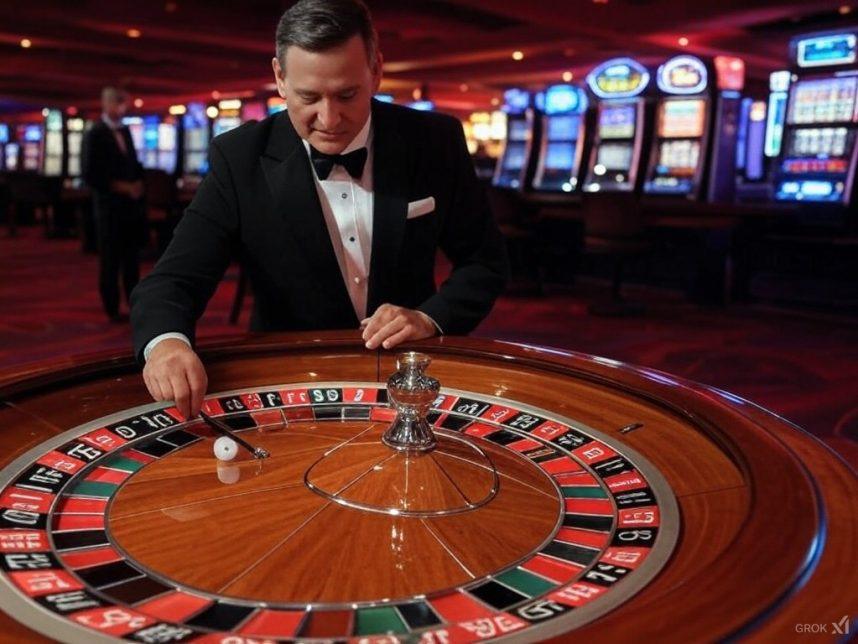
In the early ’90s, Garcia-Pelayo engineered a software program designed to capitalize on undetectable biases in roulette wheels. He and his family meticulously recorded data from the wheels at Casino Gran Madrid, after which his program analyzed the data for discernible patterns.
European roulette wheels feature 37 slots, numbered from 0 to 36, ideally giving you a 1-in-37 probability of landing on any number per spin. Yet, Garcia-Pelayo discovered that on certain wheels, some numbers appeared as frequently as every 30 spins.
These trends are imperceptible in real-time. However, once fed into Garcia-Pelayo’s program, the patterns gleaned from tens of thousands of meticulously recorded spins emerged clearly.
Armed with insights into which wheels favored certain numbers, Garcia-Pelayo and his family placed their bets, earning 600K euros (approximately $625K) in just one day at Casino Gran Madrid. Following that, after he was banned in 1992, they reportedly raked in over 1M euros (around $1.25M) on a similar winning streak around the globe from 1991 to 1995, including a significant win at the MGM Grand in Las Vegas.
Myth Reinterpreted

“I have no doubt he exploited biased wheels to win, but claiming he invented the strategy is misleading,” states Anthony Curtis, a renowned casino gambling authority and publisher of The Las Vegas Advisor, in an interview with Casino.org.
For over a century, it has been understood that hidden biases in roulette wheels can lead to certain numbers appearing more often than statistical randomness would suggest. These biases stem from manufacturing flaws, wear and tear, or misalignments in wheel components.
The earliest reference Curtis could locate was in Allan Wilson’s “Casino Gambler’s Guide,” published in 1965. This volume outlines a casino technician named Joseph Jagger, who successfully applied this method in 1873 to outsmart the roulette tables in Monte Carlo.
“Wilson elucidates the process effectively,” Curtis observed, “highlighting the importance of meticulously ‘clocking’ multiple wheels, which requires recording thousands of spins to ensure that the identified biases are statistically significant.”

More insights into this technique and captivating accounts of other wheel manipulators can be found in Russell T. Barnhart’s 1992 book, “Beating the Wheel.”
Did Garcia-Pelayo Evade Capture?
Indeed, though it wasn’t without considerable challenges. In 1994, Casino Gran Madrid initiated a lawsuit to reclaim an undisclosed amount of their funds. The court ruled in favor of Garcia-Pelayo, declaring his methods did not constitute cheating, but the casino appealed the decision.
After a decade, Spain’s Supreme Court reaffirmed the lower court’s verdict, stating that Garcia-Pelayo utilized “creativity and computational methods, nothing more.”
Is This Approach Effective Today?

In theory, yes—but only if you can identify a biased wheel, which is a significant challenge.
Since this scandal came to light, major casinos have taken measures to implement automated bias correction methods for their roulette wheels. Ironically, these methods mirror the techniques that Garcia employed — utilizing computer analysis of spin randomness.
Whenever a wheel displays any sign of bias, the casino promptly replaces it.
Moreover, advancements in technology since then have minimized biases in roulette wheel production, and many casinos now utilize Starburst roulette wheels that include metal frets, which wear down less quickly than traditional wooden options.
Be sure to check “Vegas Myths Busted” every Monday on Casino.org. Click here to explore previously debunked Vegas myths. Have an idea for a Vegas myth that warrants investigation? Reach out to us at [email protected].