


Published on: June 12, 2026, 07:12h.
Updated on: June 12, 2026, 08:30h.

EDITOR’S NOTE: “Vegas Legends Debunked” releases new editions every Monday, alongside a special Flashback Friday feature. The current entry in our ongoing investigation originally appeared on Sept. 1, 2025.
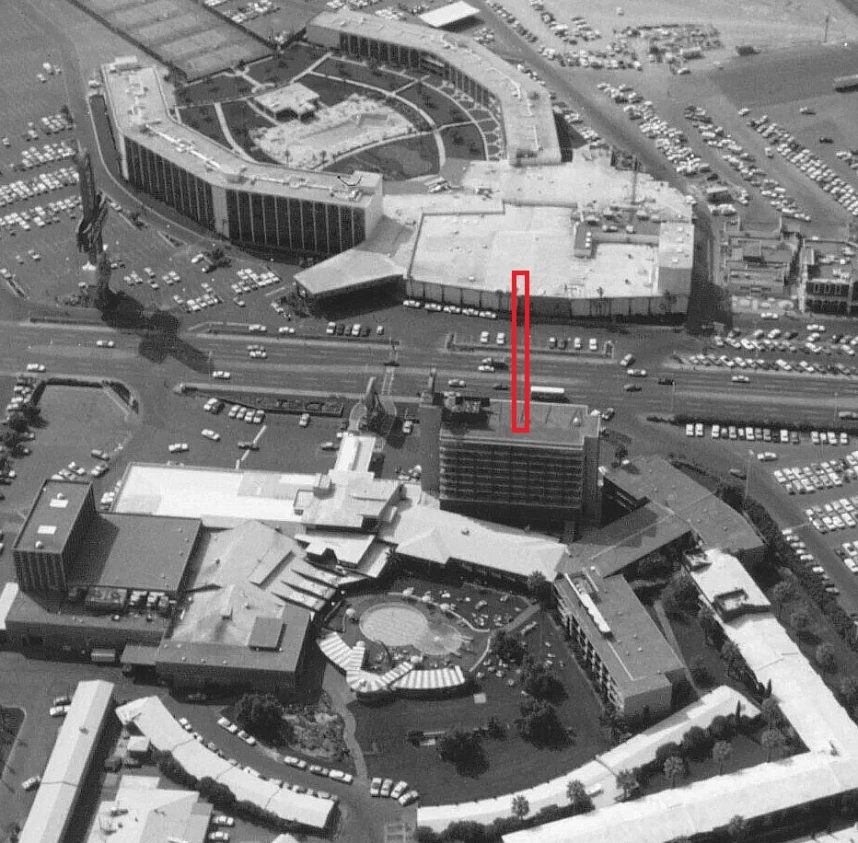
Following the purchase of the Desert Inn—his residence from late 1966 until late 1970—and the Frontier in 1967, billionaire Howard Hughes reportedly commissioned a hidden tunnel to be built under Las Vegas Boulevard, allowing him to traverse between the two venues discreetly.
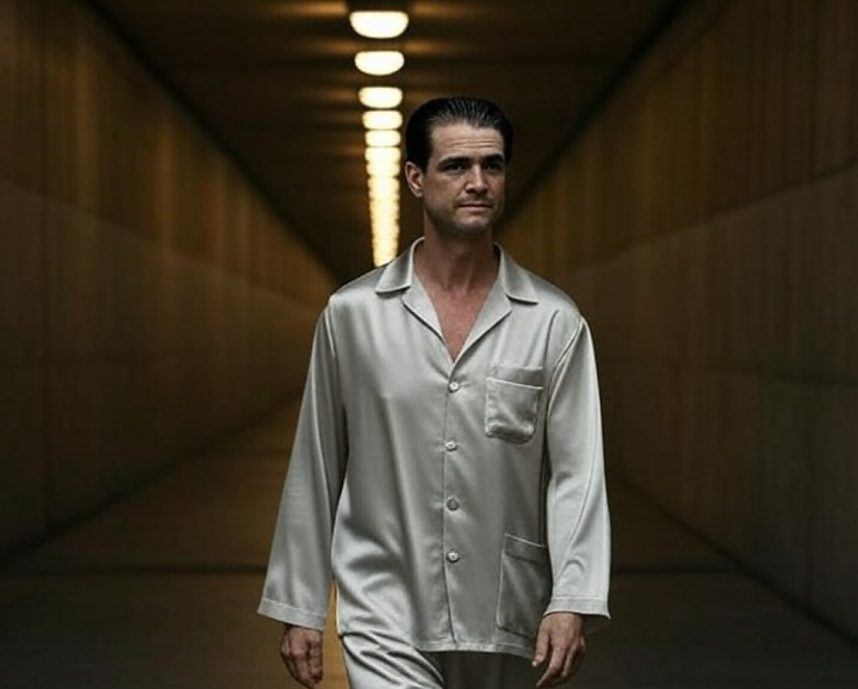
During our exploration into this fascinating myth, we initially believed it stemmed from the enigma surrounding Hughes combined with the Desert Inn Road Super Arterial.
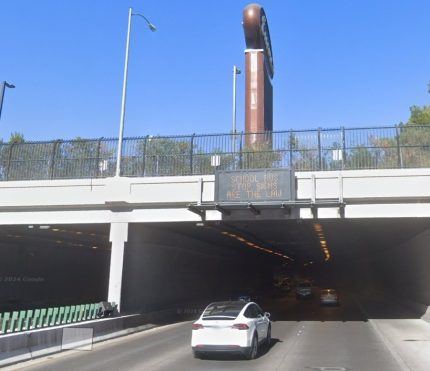
Known for his reclusive nature and intense paranoia, Hughes did modify his environment to ensure privacy. This encompassed the sealed floors and limited elevator access he mandated at the Desert Inn. Additionally, the arterial features an authentic tunnel, operational since 1996, that channels Desert Inn Road beneath the Las Vegas Strip to reduce traffic issues.
However, we were unprepared for the unexpected findings — a hidden facet of Hughes’ life in Las Vegas that had never come to light.
Insights on the Tunnel
The tale of Hughes’ secret tunnel supposedly emerged from a Las Vegas legend who frequently performed at both the Desert Inn and Frontier. An individual in an old Tripadvisor forum, using the handle @vegasallan, claimed in 2012 that “Wayne Newton asserts he utilized” the tunnel.
Yet, an extensive review of Newton’s interviews and his 1994 autobiography reveals no mention of such a tunnel.
Furthermore, a fully functional underground passage beneath Las Vegas Boulevard would have required county permits and excavation documentation — neither of which can be found.
This begs the question: why does the myth endure?
The True Story
At 94, Paul B. Winn stands as the final surviving member of Hughes’ core team. He served as Hughes’ director of corporate records from 1957 until Hughes’ passing in 1976 and previously helped debunk the myth that his boss purchased the Silver Slipper just to dim its sign for a peaceful night’s sleep at the Desert Inn.
When we inquired about the secret tunnel with Winn, his response surprised us.
Winn disclosed that Bill Gay — who became president of Hughes’ Summa Corporation following Robert Maheau’s removal in 1970 — “actually did explore the possibility of constructing a bridge between the Desert Inn and the Frontier.”
This would have been the first pedestrian bridge to span the Las Vegas Strip, but it was never intended to be clandestine; it was designed for public use.
“They aimed to make it spacious enough for slot machines so that people could gamble and enjoy themselves while crossing over,” Winn revealed to Casino.org.
As time passed and the story was reiterated, the bridge morphed into a secret tunnel, a transformation that seems to fit Hughes’ elusive persona much better.
So why wasn’t the bridge constructed?
“It was unfeasible because Las Vegas Boulevard was classified as a federal highway at that time, and building a bridge wasn’t permitted,” Winn clarified.
US Route 91 wouldn’t be decommissioned in the tourist sector until 1974, concurrent with the completion of Interstate 15. Moreover, the county only started to embrace the notion of overhead walkways in the 1990s, with the first pedestrian bridge over the Strip opening in 1993, connecting Caesars Palace and Bally’s.
This, we presume, is how the myth originated.
Catch “Vegas Legends Debunked” every Monday on Casino.org. Click here to discover previously debunked Vegas myths. Have a suggestion for a Vegas myth that needs unraveling? Email [email protected].