


Chip Meyers gazes from his upscale high-rise at a construction site that seemed improbable not long ago — the future location of the Oakland A’s. Each year, Las Vegas surprises everyone with developments that defy expectations: a Major League Baseball team, Formula One racing, and even the Super Bowl. Meyers wonders aloud, if such monumental events can happen here, why not a racetrack?
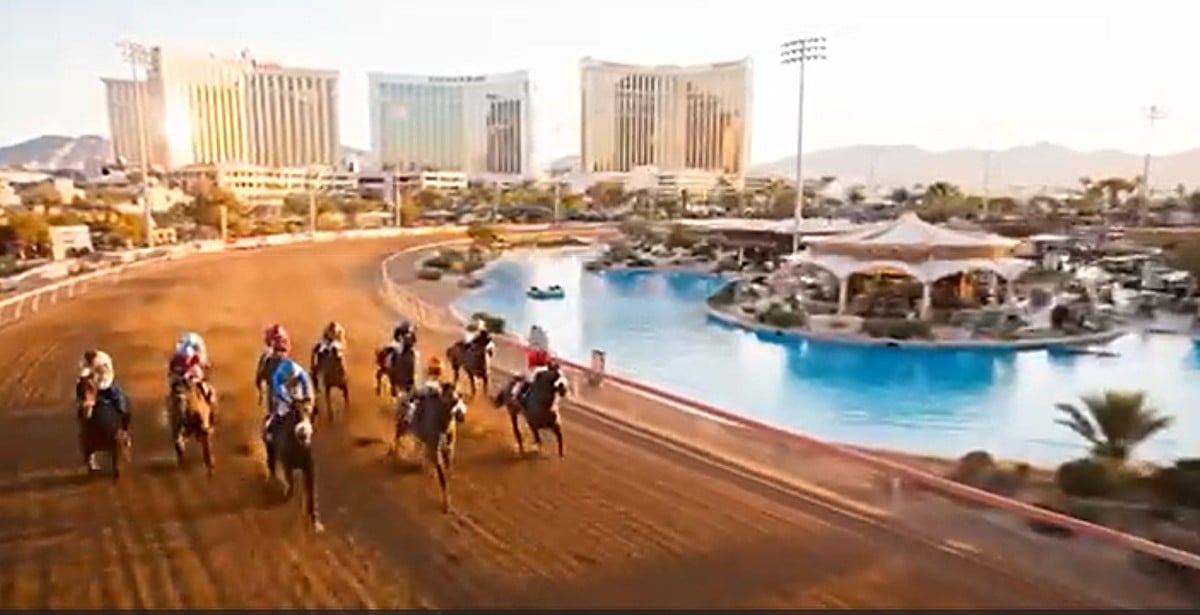
Meyers, known primarily for Hilt—his innovative Bitcoin ATM business that facilitates cash transactions for cryptocurrency—has redirected his focus toward a more traditional venture: establishing Las Vegas Downs, a premier thoroughbred racetrack on Las Vegas Boulevard.
His vision stemmed from discussions with local residents, including friends from his USC days who now lead a significant construction firm.
“We consistently asked ourselves what this city was missing,” he shared with Casino.org on Wednesday. “With a population of two and a half million, it has become the sports capital of the world, boasts some of the finest dining options globally, and offers an abundance of activities.”
Everyone concurred: horse racing was a missing element.
Meyers’ roots trace back to Livingston, New Jersey, where he often visited the Meadowlands with friends. “I watched the Triple Crown religiously,” he recalls. “There were horses gracing the front cover of Sports Illustrated.” His wife, Louise, comes from a family that owned trotters and raced at Hollywood Park, with her mother chairing a California racing organization.
A Racing Opportunity
Meyers is convinced that the West is experiencing a racing shortage. “Racing in California is struggling and significantly retracting,” he comments. “Northern California has lost all tracks, and Southern California is down to three, with Del Mar possibly being the last standing in a few years.”
He warns that Santa Anita and Los Alamitos might not endure long-term, while Turf Paradise in Arizona endeavors to redefine itself amid a dwindling regional racing landscape.
“This presents an opportunity to introduce something new in Las Vegas,” he asserts.
Last August, he dedicated himself fully to researching the city’s racing history, uncovering three past ventures:
- Las Vegas Park (1953) — a thoroughbred track marred by fraud, concluding after just 13 race days.
- Thunderbird Downs (1963–66) — a brief existence as a venue for thoroughbred and quarter horse racing, hindered by constant ownership disputes and conflicts with casino interests.
- Las Vegas Downs (1981–83) — a Henderson greyhound track where horse racing lasted only a month before foreclosure.
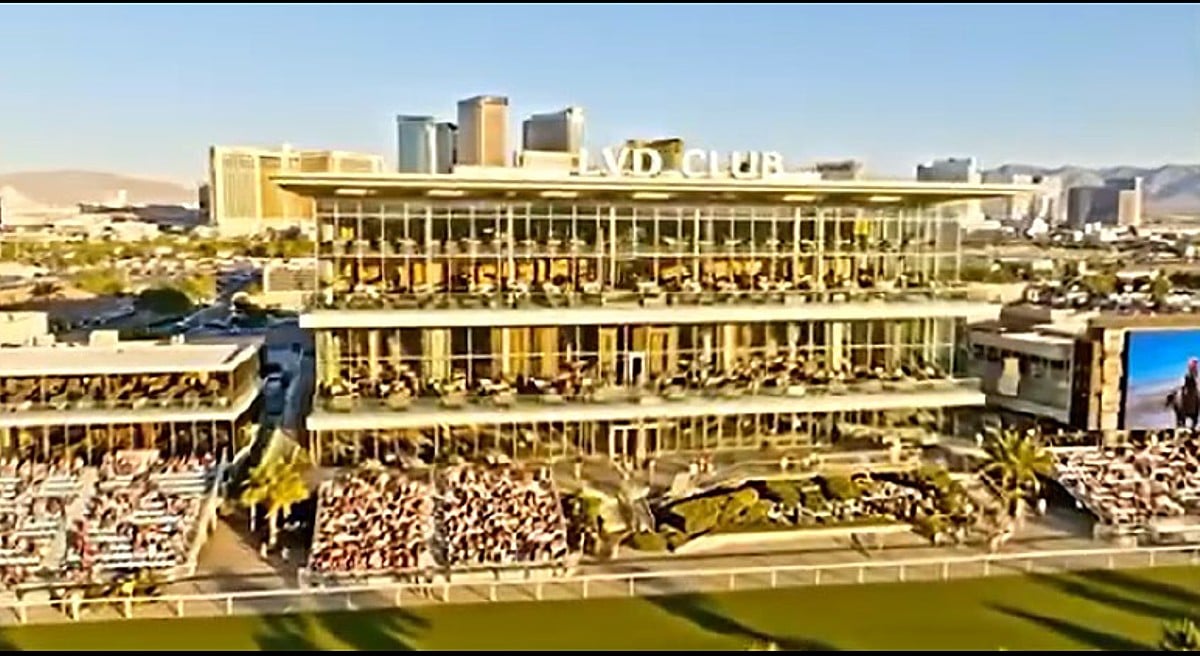
Today, Las Vegas presents a different scenario — wealthier, more diverse, and increasingly focused on sports.
“The ultra-wealthy continue to flock to Las Vegas,” Meyers notes. “The high-end hotels are perpetually sold out, and rates are skyrocketing.”
He aspires to create a venture that caters to this affluent market: a luxurious, globally-inspired racing experience.
Meyers envisions Las Vegas Downs as an essential component of a worldwide racing circuit — associated with the Saudi Cup and Dubai World Cup, forming what he describes as a “desert Triple Crown.”
A Unique Venue
His proposal is daring: a 55-acre racetrack located between Mandalay Bay and the M Resort, occupying one of the few expansive plots available on Las Vegas Boulevard.
“As visitors enter from California, with 40,000 arriving daily, the first sight they’ll encounter is this magnificent track,” he enthuses.
The racing season would encompass 60 race days, running Thursday through Saturday nights from November 1 to April 1 — avoiding conflicts with Las Vegas’ warmer weather. The grandstand would accommodate at least 20,000 spectators, with the potential to expand to 40,000.
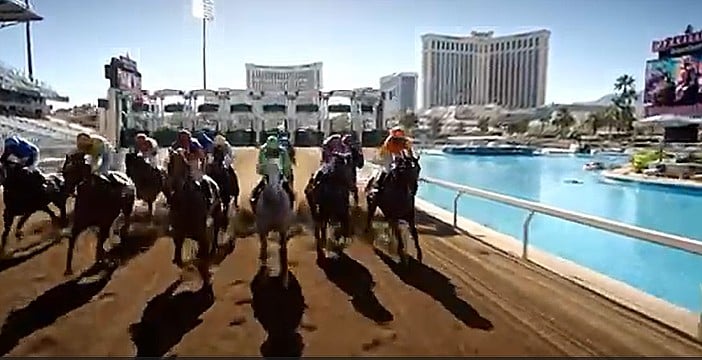
“We are confident in selling 20,000 seats each night,” he asserts. “There’s always a demand for new activities here.”
The nightly purse promises to be substantial: “Approximately $1.5 million each race day,” he states, boasting the highest average purse card in the nation.
Unlike tracks in California, Las Vegas Downs would not operate as a racino. “There will be no casino on site,” he clarifies. “We won’t compete with casino offerings.”
Instead, the track will complement the existing resorts on the Strip, serving as an additional attraction without overlapping with their operations.
“It translates to heads in beds for hotels,” he explains. “These establishments will channel their visitors to us for three hours, ideally their high rollers, before they return to resorts like the Bellagio or the Venetian.”
Horse wagering will be available, but not anything beyond that.
To bring this vision to fruition, significant regulatory hurdles must be overcome. Nevada’s Pari-Mutuel Wagering Act has historically mandated a minimum of 200 hotel rooms for licensing. Meyers mentions he has initiated discussions with casino executives and regulators.
“I believe they will support our initiative,” he expresses. “I am optimistic that the Gaming Control Board will be on our side. We aim to have this integrated into legislation by 2027.”
Financial Framework
The anticipated cost for this project stands at $550 million, which includes a training facility. Meyers indicates that he already has secured half this amount from investors. The remainder would be sourced from a private club emulating Hong Kong’s Jockey Club model, where members invest substantial fees and jointly own horses.
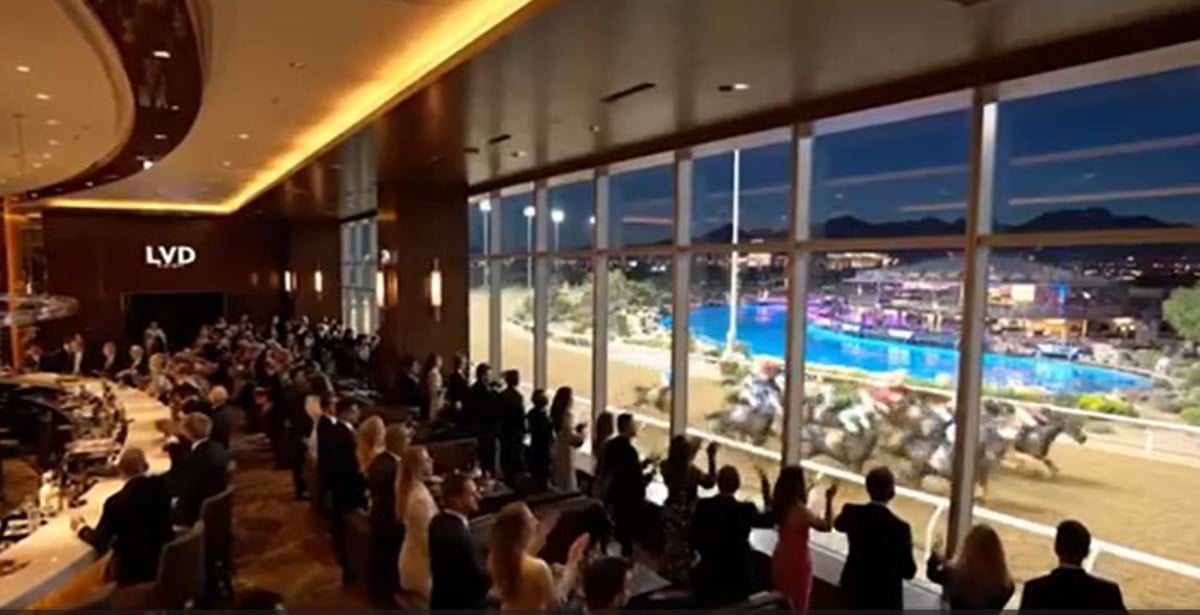
“Our membership will consist of 1,000 participants,” he elaborates. “They would own shares in the track as well as collectively own racehorses.”
Members will enjoy year-round access, even outside the racing season. In summer, the expansive 40-acre infield will transform into an entertainment venue—potentially featuring a surf wave, equestrian jumping area, or tennis facility.
“We’re aiming to develop a year-round experiential site,” he emphasizes.
Meyers also mentions that debt financing could be pursued, similar to the strategy adopted by many major resorts on the Strip that lease their properties from firms like Vici Properties.
“The land’s price is around $125 million,” he notes. “We may explore fundraising options or leasing arrangements for the property.”
In comparison to the A’s stadium—anticipated to be a multibillion-dollar initiative—Meyers contends his approach is reasonable.
“Is $550 million excessive for a uniquely crafted experience in Las Vegas?” he questions. “I don’t believe so.”
Addressing Ethical Concerns
Meyers acknowledges a growing societal perspective that questions the use of animals for human amusement, but emphasizes a commitment to the welfare of the horses involved.
“The newer generations, particularly, are driven by various social considerations that my generation may not have appreciated, thanks to social media,” he observes. “However, I have witnessed how horses are treated in places like Saudi Arabia, Dubai, and Hong Kong—it’s a deeply embedded cultural value where they are revered.”
To support his racetrack, Meyers plans to establish a winter training facility outside the city—in potential locations such as Pahrump, Mesquite, or Cold Creek—where wild horses roam. This facility would feature barns, an equine spa, and a sanctuary for retired thoroughbreds.
“Our commitment is to create the safest racing environment globally,” he states. “Safety for both horses and jockeys is paramount, as is the importance of aftercare.”
Meyers believes that younger demographics can be attracted, not through tradition, but through spectacle.
“In places like Hong Kong, Ascot, Saudi Arabia, and Dubai, half the audience is under 35 years old,” he claims. “It’s a vibrant celebration—an experience.”
He believes that Las Vegas stands as the only location in the U.S. uniquely positioned for such a transformation.
“If we construct it,” he concludes, “they will come.”