


Beginning on August 1, 2026, the operation of sweepstakes casinos will be classified as illegal gambling in Louisiana following the enactment of House Bill 883. This legislative change broadens the interpretation of “gambling by computer” within the state.
In June 2025, Louisiana Governor Jeff Landry (R) vetoed a proposed ban on sweepstakes casinos, labeling it “overly broad.” Lawmakers in Baton Rouge subsequently refined the legislation, resulting in HB 883, which the governor welcomed for its targeted approach to regulating these contentious online casino activities.
Currently, online gambling—apart from mobile sports betting—is prohibited in Louisiana. HB 883 provides clarity that such illegal activities encompass any internet game, contest, or promotion that mimics “any type of gambling,” employing a dual-currency payment model that allows participants to exchange currency for prizes, cash, or equivalents.
Exodus of Sweepstakes Casinos
Despite Governor Landry’s veto in 2025 preventing an explicit ban on dual-currency sweepstakes casinos, major operators began to exit as the regulatory environment evolved. The governor argued that previous legislation was excessive since the Louisiana Gaming Control Board (LGCB) was proactively addressing illegal gambling.
In June 2025, the LGCB issued cease-and-desist letters to numerous online sweepstakes platforms, including Stake, Chumba, Modo, LuckyLand, and Global Poker, prompting compliance from most.
However, several smaller operators persisted in providing access to their dual-currency gaming options. With the introduction of supporting legislation to HB 883, these companies now face significant legal consequences.
The Louisiana State Legislature passed HB 883 along with a complementary measure, House Bill 53, which outlines penalties associated with gambling violations.
As of August 1, 2026, any individual facilitating dual-currency gambling via computer will be committing a racketeering crime. In Louisiana, such offenses are treated severely, with potential imprisonment lasting up to 50 years.

“Louisiana will not tolerate illegal operators who jeopardize our citizens and threaten the integrity of our gaming industry.”
LGCB Chair Christopher Hebert
“We will continue to utilize every enforcement mechanism at our disposal to safeguard the public and uphold legal standards,” Hebert affirmed.
Louisiana’s Correctional Facilities
Racketeering charges serve as deterrents against illicit activities, particularly given Louisiana’s reputation for having some of the strictest prison conditions in the nation.
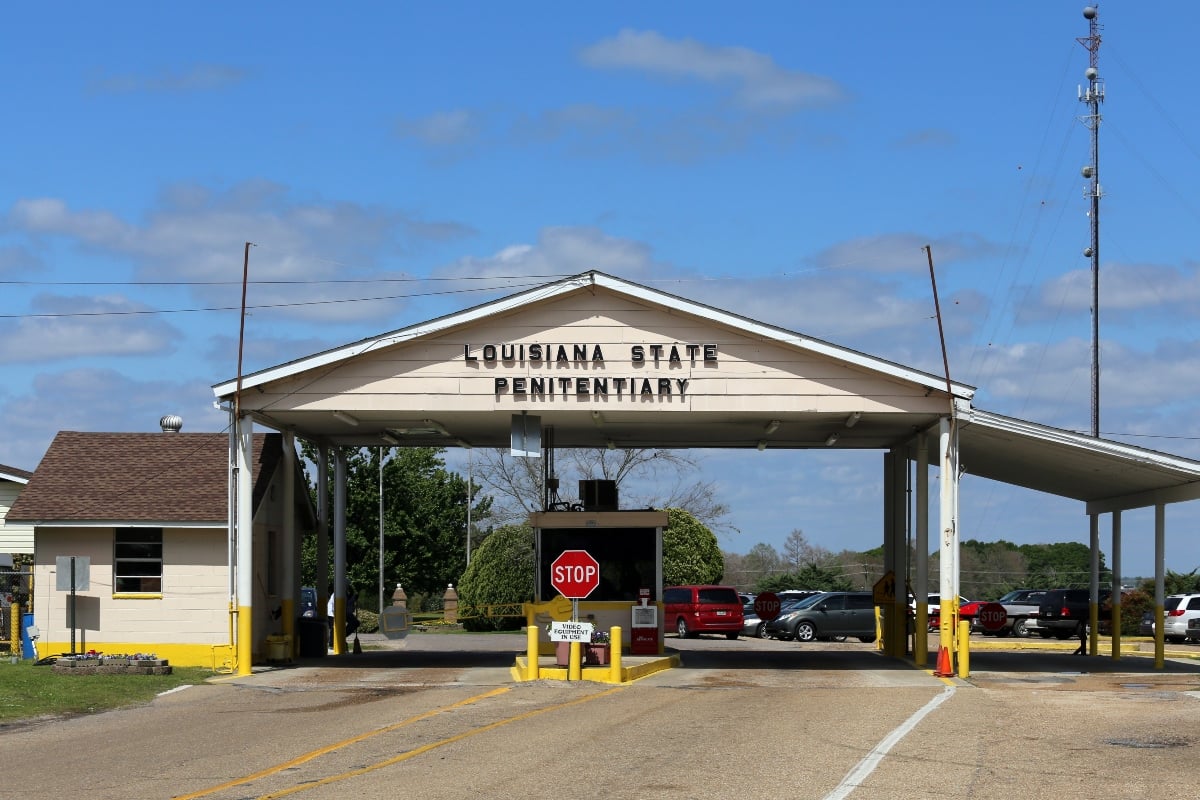
Louisiana is among only seven states that maintains a system of hard labor and compulsory work for prisoners in its state and federal correctional facilities. The Louisiana State Penitentiary, often referred to as Angola, has inmates laboring on farms under extreme conditions.
Known as the “Alcatraz of the South,” Angola is the largest maximum-security prison in the United States, covering 18,000 acres. A significant portion of its population of 6,000 adult male inmates is serving life sentences without the possibility of parole.