


EDITOR’S NOTE: A new “Debunking Vegas Myths” article is published every Monday, with a bonus Flashback Friday edition. Today’s article originally appeared on Jan. 15, 2024.
In the 1960s, during the glory days of Las Vegas’ Meadows Addition neighborhood, showgirls resided there. They enjoyed sunbathing nude by their apartment pools to avoid tan lines.
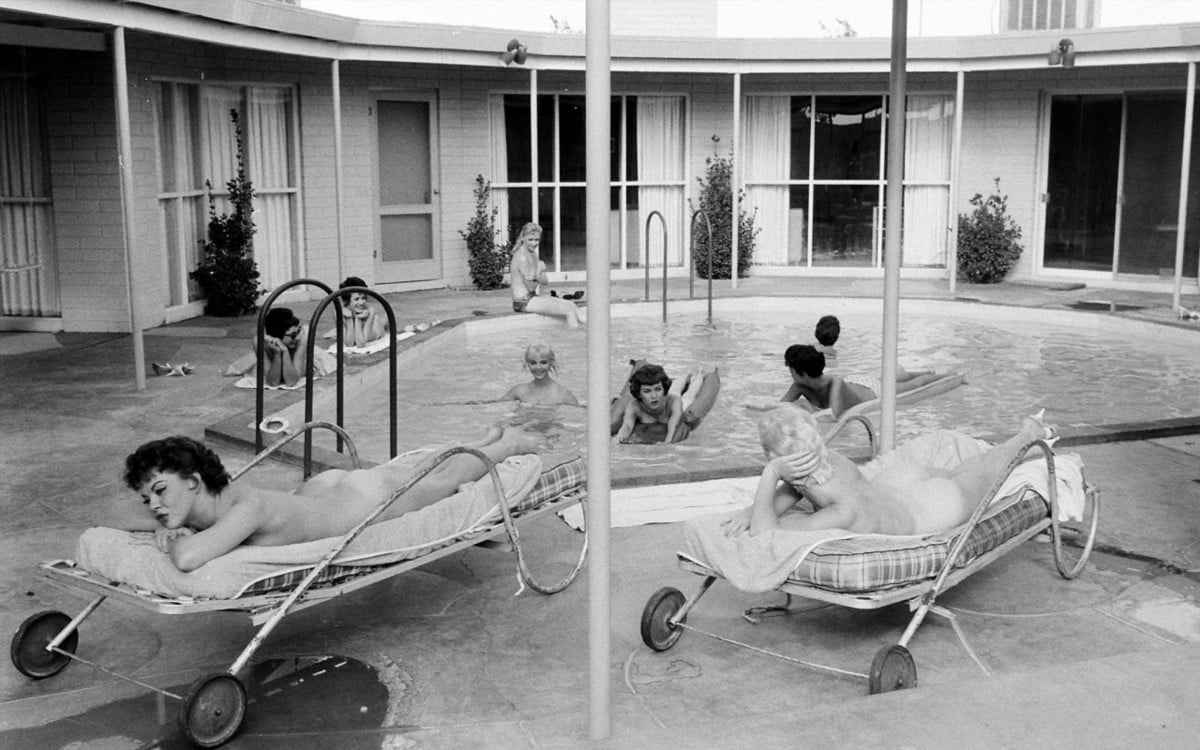
This story is often told as the origins of the nickname “Naked City” for the community of low-rent buildings north of the Strip near the Stratosphere.
And it turns out, that story is untrue.
No Las Vegas newspaper mentioned Naked City before a June 20, 1982, Las Vegas Review-Journal cover story titled: “’Naked City’ a Las Vegas Battleground.”
In that report, Lt. John Conner detailed investigating 10 homicides in the neighborhood over 16 months, mostly linked to drugs.
Myth Clarification
The Meadows Addition, named after the Spanish translation of “the meadows,” was established in the late 1940s with streets named after cities like New York and Chicago. Residents included Strip workers, particularly showgirls, who appreciated the affordable rents and short distances to work.
As Las Vegas expanded beyond the Strip, more housing options became available to hospitality employees and performers, leading them away from Meadows Addition to newer homes suitable for families.
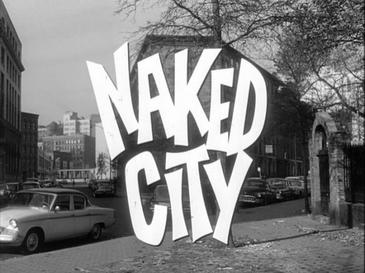
By the late 1970s, Meadows Addition had become a haven for criminals and lost most of its residents. The nickname “Naked City” was adopted, derived from the gritty TV series and film of the same name.
The 1982 article mentioned that the neighborhood is referred to as “Naked City” by Metro police officers.
Local historian Jeffrey Carlson found no evidence of the name “Naked City” in his discussions with past residents of the area.
The True Story
The name “Naked City” was a sore point for property owners like Bob Stupak, who opened Vegas World casino in 1979 on the land and later replaced it with the iconic Stratosphere in 1996.

In the late ’80s, city officials rebranded the area as Meadows Village to shed the negative connotation. They also promoted the story of sunbathing showgirls to distance the nickname from criminal activities.
Several local businesses embraced the revised history, like Naked City Pizza, Naked City Audio, and Naked City Sweets.
Historian Carlson remarked, “The contrast between the glamorous legend and bleak reality of the neighborhood is quite striking. Personally, I am inclined to believe the showgirl anecdote over the grim alternative.”
Stay tuned for “Debunking Vegas Myths” every Monday on Casino.org. For past myths busted, visit VegasMythsBusted.com. Have a myth to debunk? Email [email protected].