


Sports betting is promoted by the gaming industry as an entertaining activity, but for an increasing number of bettors, it plays a crucial role in meeting their financial obligations.

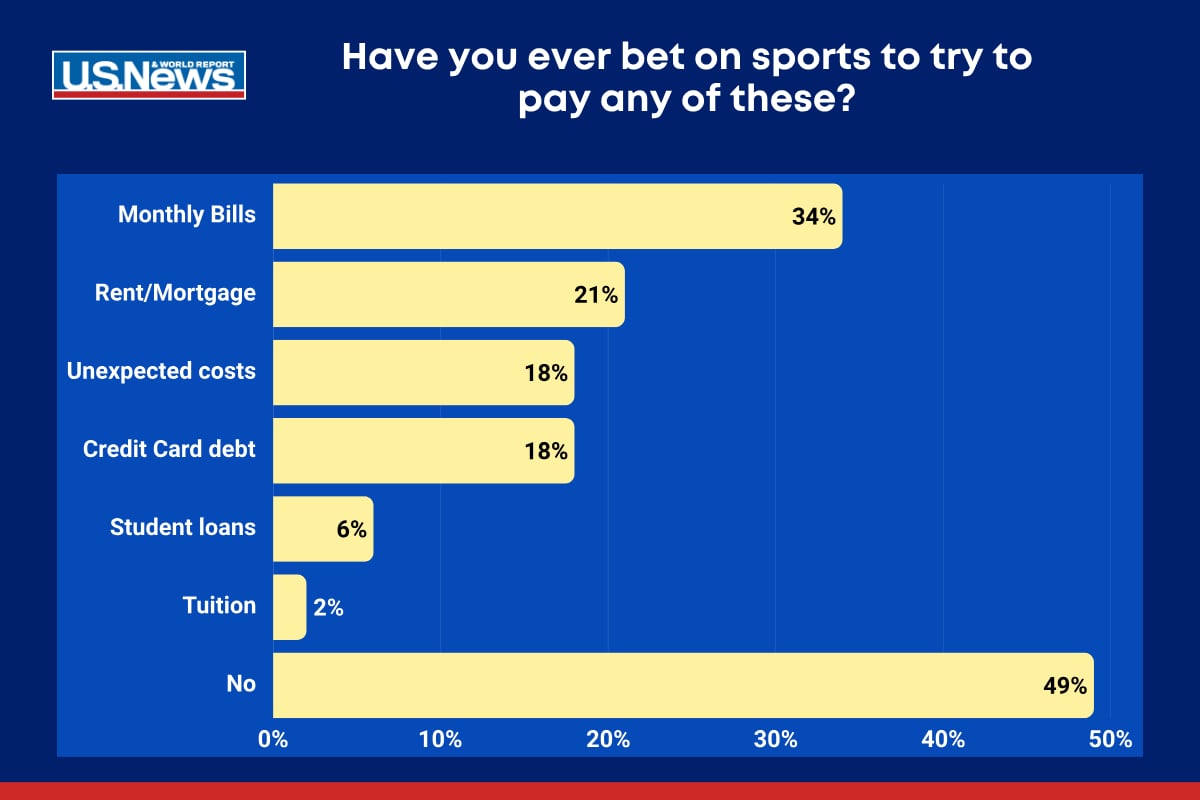
A recent survey by U.S. News highlights the trend of Americans turning to high-risk activities like sports betting to meet their financial needs and pay their bills.
U.S. News interviewed 1,200 Americans who placed sports bets in the past year, with over half (51%) admitting to betting to cover bills, and 21% using their bets to pay for housing expenses.
Of those surveyed, 57% bet on sports weekly, with 17% betting daily. Nearly 19% revealed they have outstanding debts related to sports betting.
Frequent bettors are significantly more likely to report that their betting habits are impacting other corners of their financial lives. Of those who bet daily on sports, 40% say they have debts that they attribute to wagers they made,” the report stated.
“Nearly 45% of respondents admitted to borrowing money for sports betting, with 13% using personal loans and 11% resorting to high-interest payday loans,” the report continued.
Impact of Betting on Finances
Despite the financial risks associated with sports betting, many bettors remain unconcerned about its impact on their finances.
U.S. News revealed that only 17% acknowledged the negative effects of sports betting on their financial well-being, while 34% believed it had a positive impact. About half claimed that sports betting had no effect on their finances.
However, some individuals shared distressing experiences with the researchers.
I have lost money that was meant for my kids’ Christmas presents,” said one respondent. “It led to strain with my spouse after borrowing from her parents to cover the losses.”
Another person mentioned losing not just money but also important relationships due to sports betting.
“Sports betting ended a six-year friendship because I couldn’t repay the loan from my friend,” expressed a bettor. “He stopped talking to me.”
Americans spent approximately $167 billion on sports betting in 2025 through legal channels, according to the American Gaming Association, marking an 11% increase from the previous year.
The merging of financial speculation and gambling has been accentuated by the rise of sports prediction markets, which are considered financial instruments by the government. U.S. News found that over 40% of sports bettors are now engaged in predicting sports outcomes.
Financial experts advise bettors to view sports betting as entertainment and only risk money they can afford to lose.
Overoptimism among Bettors
A study from Stanford University noted that sports bettors tend to be overly optimistic, expecting to break even despite losing 7.5 cents per dollar wagered.
“Overoptimism is most prevalent among bettors who engage in parlay bets. These bets are more likely to be driven by bias compared to other forms of betting,” as per the research.