


Published on: May 28, 2026, at 01:37h.
Updated on: May 28, 2026, at 01:37h.

- Gaming lobby indicates states and tribes have lost over $1 billion in tax revenue from prediction markets.
- Prediction markets are subject to federal regulations.
- States face challenges in determining the correct taxation methods for yes/no exchanges.
Due to a lack of comprehensive tax regulations, states and Native American tribes are forgoing substantial tax revenue from prediction markets.
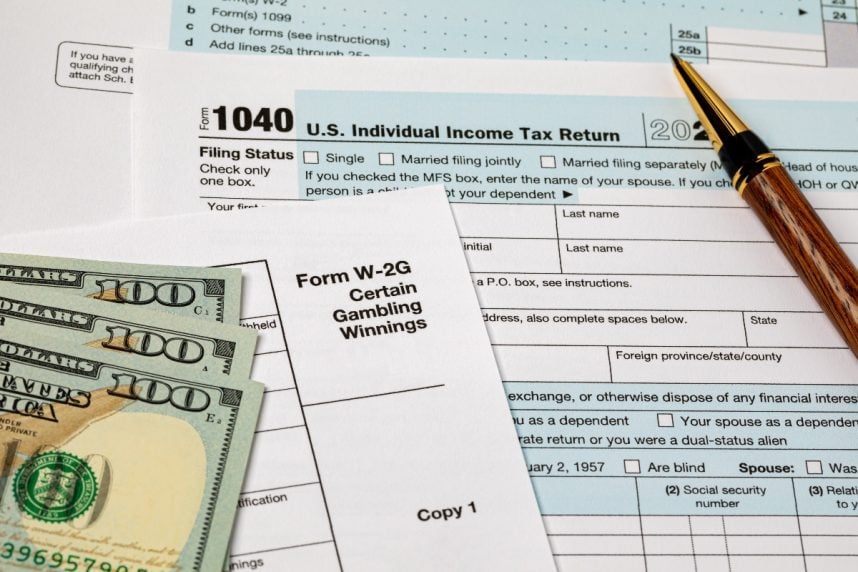
The American Gaming Association (AGA), known for its skepticism towards prediction markets, claims that yes/no exchanges have drained $1 billion from state and tribal revenues—funds that could have been dedicated to essential public services, infrastructure, and local initiatives. The AGA’s live tracker currently shows this lost revenue exceeding $1 billion, with numbers increasing rapidly.
“Recently, 41 Attorneys General from across the nation emphasized the significant role the CFTC plays in the country’s economy; however, they do not regulate national sportsbooks,” stated AGA CEO Bill Miller on CNBC. “This perspective is supported by Attorneys General from all political affiliations. It’s not solely about the AGA or the gaming sector; it’s about states and tribes forfeiting nearly $1 billion in revenue meant for vital community projects and tax contributions to their jurisdictions.”
Miller’s remarks and the AGA’s assessment of lost revenue come shortly after President Trump advocated for the continued regulatory oversight of prediction markets by the Commodities Futures Trading Commission (CFTC), suggesting that states should not obstruct this process.
States Seeking Solutions for Prediction Market Taxation
iGaming and online sports betting taxes have proven lucrative for states, prompting numerous tax hikes in the past two years, yet taxation of prediction markets remains tricky due to their federal regulation and absence of state gaming licenses.
This complexity has led multiple states to initiate legal actions against companies like Crypto.com, Kalshi, and Polymarket, with Minnesota even imposing an outright ban on prediction markets, a decision currently under legal scrutiny by the CFTC.
Some states are actively exploring tax solutions for prediction markets. For instance, Kentucky is contemplating a bill that would impose a 17.25% tax on transaction fees from prediction market operators. Likewise, Iowa is assessing legislation that would require yes/no exchanges to secure $20 million permits, include annual fees of $100,000, and pay a 20% tax on adjusted revenue.
Pennsylvania is also evaluating a potential framework for taxation on prediction markets, considering a bill that would impose specific licensing fees and revenue taxes on yes/no exchange platforms.
AGA Accuses Prediction Markets of Facilitating Illegal Sports Betting
In their ongoing legal disputes with prediction market firms, many states argue that these companies are offering sports betting outside established state regulations. The AGA, representing casino and sportsbook operators, agrees with this assessment.
“Prediction market platforms are engaging in illegal sports betting across the nation, circumventing state and tribal regulatory frameworks that safeguard consumers. They ignore voter decisions, sidestep critical consumer protections, defy state and tribal laws, and evade requisite licensing and taxes,” states the trade organization.
Recent statistics from the Pew Research Center highlight that from July 2024 to April 2026, sports derivatives accounted for a staggering 80% of Kalshi’s trading volume, the leading prediction market operator in the U.S.