


Published on: March 23, 2026, 01:12h.
Updated on: March 23, 2026, 01:12h.

- Recent statistics show retail traders on prediction markets are underperforming compared to sports bettors
- Experienced bettors are effectively leveraging prediction markets
- Analysts find crossover players are not profitable clients for sportsbooks
Recent findings reveal that retail traders in prediction markets are losing more than they would if they placed bets on sports, acting as prey for professional bettors, known as “sharks,” who possess substantial funds.
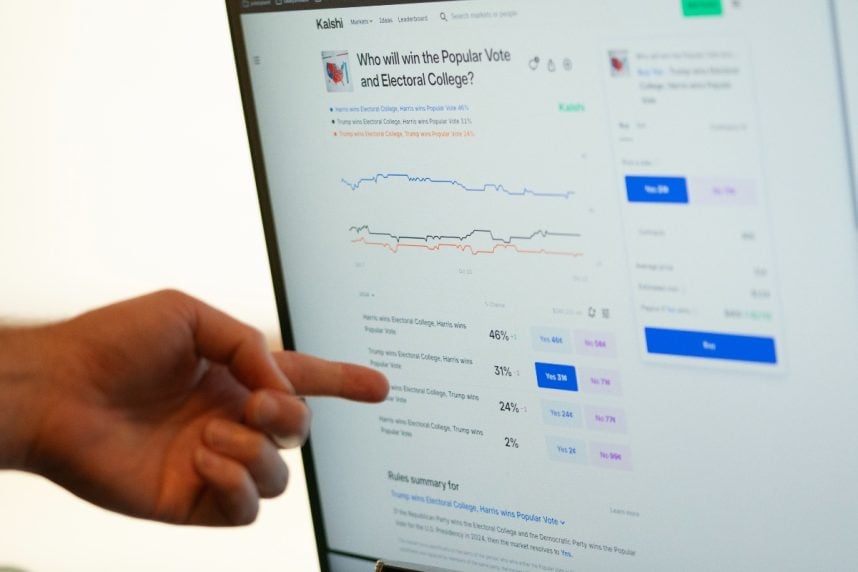
Building on a January report, Citizens Equity Research analyst Jordan Bender, referencing Juice Reel data, highlights an alarming trend: the “median return on investment (ROI) for prediction market participants was -8%” from last July until this report. This represents a decline from the -7% ROI noted in January and falls significantly short of the -5% median ROI seen by bettors using regulated sports betting applications.
“We conducted a more detailed analysis based on total trading volume and handle,” explains Bender. “Users trading over $500K on prediction markets since July recorded a median ROI of +2.6%, which aligns with expected returns from experienced bettors, validated against professional players. However, ROI decreases as account sizes shrink, mirroring trends in legal online sports betting.”
In essence, retail traders with limited funds often find themselves in a similar precarious position as in sports betting. They lack the financial resources to compete against the heavier hitters in the market.
Retail Traders Encounter Sharks in Prediction Markets
High-stakes, skilled bettors are increasingly attracted to prediction markets for several reasons, including the tendency of regulated sportsbooks to restrict or ban large winning players. Furthermore, some yes/no exchanges offer incentives like reduced or waived trading fees in exchange for the liquidity these bettors bring.
Various factors contribute to this landscape. Bender notes that many professional bettors recognize they can operate as market makers within prediction market platforms, consistently achieving positive ROI due to the lack of awareness from retail traders on the other side of their transactions.
“Our goal is to be positioned against the public; that is the dream. Being a market maker is very appealing. Everyone aspires to be like DraftKings and FanDuel,” commented a professional bettor during a recent conference call organized by Bender and Citizens.
In summary, the increased competition from sharp bettors in prediction markets poses a challenge to smaller players.
Positive Insights for Sportsbook Operators
Bender’s analysis brings some encouraging news for sportsbook operators, noting that bettors engaging with both prediction markets and sportsbooks are typically smaller players who aren’t particularly valuable to sportsbooks. He identifies that the median ROI for “crossover” players sits at +1%, which declines to -6% within prediction markets.
He further emphasizes that recent statements from sports betting companies claiming minimal cannibalization from prediction markets hold credibility. This is partly due to the fact that many high-stakes “whale” bettors never engaged with regulated sportsbooks from the onset. In a noteworthy observation for regulators and lawmakers, Bender points out that the demographic for prediction markets trends younger compared to traditional sportsbooks.
“Moreover, the demographic for prediction market platforms skews younger; data from Sensor Tower shows that 24% of Kalshi users are under 25, with a reported median age of 31, contrasting sharply with only 7% for DraftKings and FanDuel,” Bender concludes.