


Published on: January 28, 2026, 07:28h.
Updated on: January 28, 2026, 07:28h.

- Churchill Downs contests Maine’s exclusive tribal iGaming rights in federal court
- Lawsuit claims tribal monopoly infringes on Equal Protection rights
- Company warns that online gaming could threaten land-based casinos and employment
Churchill Downs has initiated legal proceedings against Maine’s gaming regulatory authority, asserting that the grant of an exclusive online gaming monopoly to the state’s federally recognized tribes is rooted in racial bias, thus violating the Equal Protection Clauses in both the U.S. and Maine constitutions.
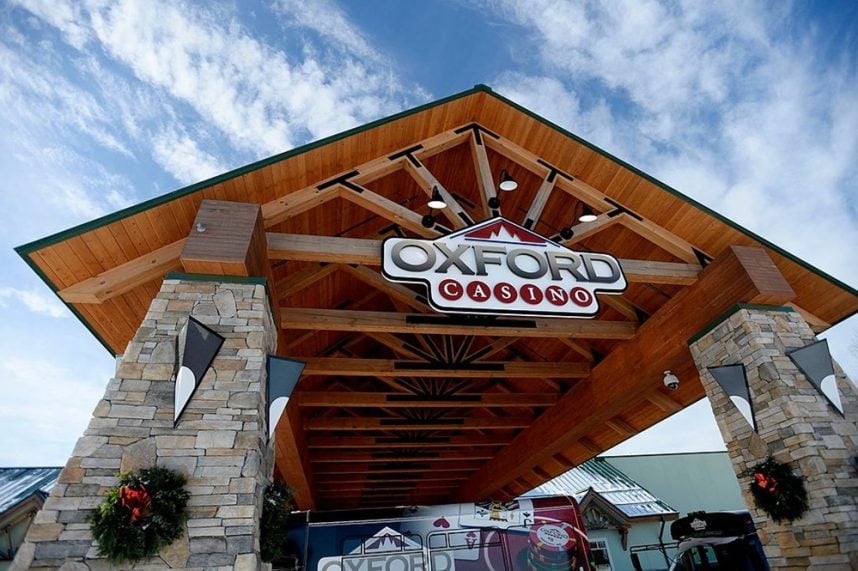
The operator, which manages the Oxford Casino—one of Maine’s two brick-and-mortar gaming establishments—alleges in its federal complaint filed on Friday that if the legislature intends to introduce iGaming in Maine, then it must ensure fair competition for all, irrespective of race or citizenship, in accordance with both U.S. and Maine Laws.
This month, Maine’s Democratic governor, Janet Mills, permitted a bill to be enacted that authorizes the tribes, collectively known as the Wabanaki Nations, to team up with commercial operators to offer iGaming exclusively. The state legislature has already allotted them a monopoly on sports betting.
Understanding the Tribal Gaming Landscape in Maine
Generally, tribes in various states can operate gaming under specific conditions set by the 1988 Indian Gaming Regulatory Act (IGRA). However, the scenario is a bit different in Maine.
According to the 1980 Maine Indian Claims Settlement Act (MICSA), tribes received a more restricted form of sovereignty that lacked the right to conduct gaming on tribal lands. Consequently, tribal reservations are regarded as municipalities, subject to state regulations. The monopolies for iGaming and sports betting were a legislative attempt to correct this disparity.
Nonetheless, Churchill Downs contends that tribal iGaming will undermine the land-based market, citing a recent study by the Innovation Group that indicated a 16% average drop in land-based casino revenues following the introduction of iGaming.
The same research predicts that iGaming in Maine could result in around 378 job losses, $22 million in lost labor income, and a staggering $60 million loss in overall economic value.
Legal Precarity for Tribal Gaming
Tribes in other states have historically withstood challenges to gaming monopolies largely due to sovereign immunity protections and the recognized legal standing of tribal gaming compacts under IGRA. However, as Churchill Downs points out in its lawsuit, Maine’s tribes are on unstable legal ground since state regulations categorize Maine’s Indian Tribes as businesses rather than sovereign entities.
“Promoting iGaming through race-based preferences strikes a devastating blow to Maine businesses like the Oxford Casino, which have significantly invested in both the state and its residents,” asserts the lawsuit.
In 2003, Maine voters decisively rejected a public referendum aimed at authorizing a $650 million tribal casino in southern Maine, turning it down by a 2–1 ratio. That same election saw the approval of a separate measure allowing slot machine gaming at the Bangor racino, a result that continues to upset Maine’s tribes, who argue that the differing outcomes reflect a racial bias.