


Published on: August 26, 2025, 05:25h.
Updated on: August 26, 2025, 05:27h.

In a city where Elvis enthusiasts thrive and pirates once engaged in nightly battles, some quintessential elements of American culture often go unnoticed.
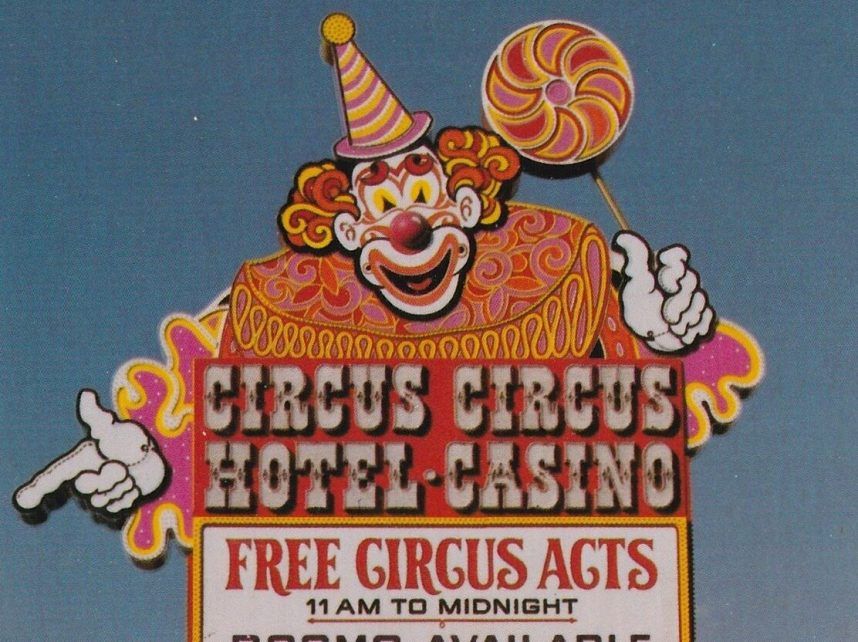
Las Vegas has never been a city famous for clowns—aside from the Las Vegas Convention and Visitors Authority. However, the few clowns we have, from fictional mascots to real circus performers, have been cherished. (And depending on individual fears, they may also be a source of anxiety.)
1. Lucky the Clown, Circus Circus Sign
This smiling icon has welcomed guests to its casino since 1976, becoming one of Las Vegas’s most distinguished neon attractions. Designed and crafted by YESCO (the Young Electric Sign Company), Lucky embodies the carnival spirit and family-friendly appeal of Circus Circus. Towering at 123 feet above the Strip, it has featured in numerous Hollywood films showcasing the city.
Inspired by mid-20th century American circus aesthetics found in Ringling Bros. and Barnum & Bailey, the sign remains the original despite several restorations over the years.
2. Jocko the Clown, Boardwalk Casino Sign
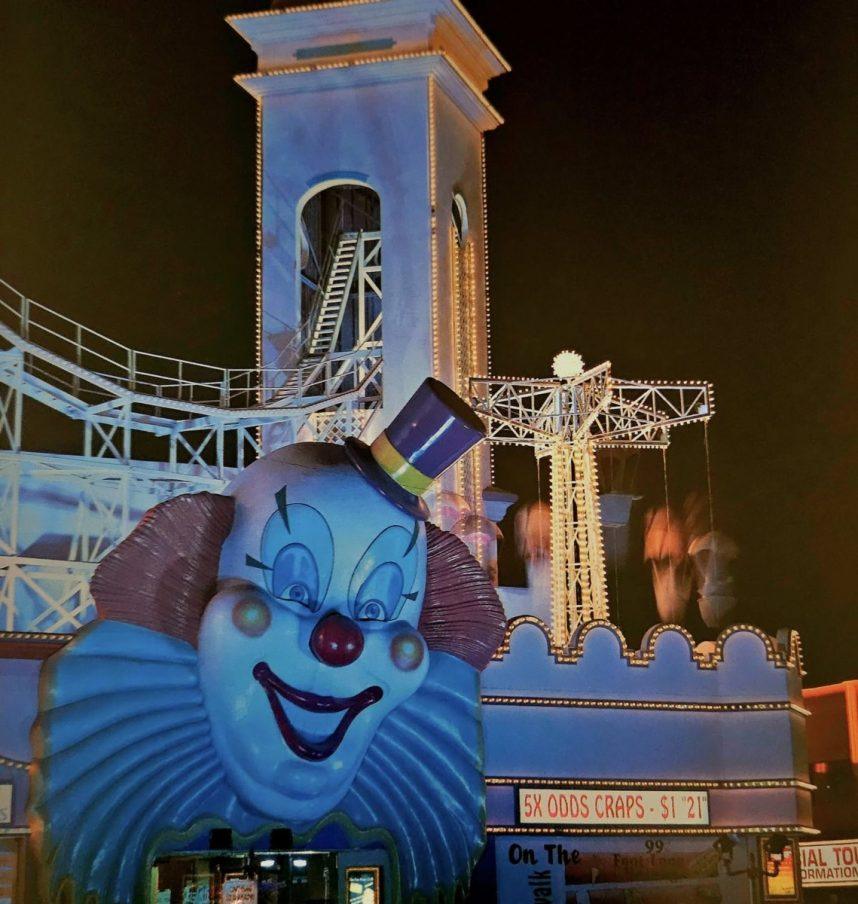
Another iconic clown, Jocko, represented the Boardwalk Casino from 1988 to 2006, offering a whimsical atmosphere with its faux roller coaster and amusement park charm, standing in stark contrast to its more opulent neighbors.
The property was ultimately demolished to make way for what is now CityCenter. Sadly, Jocko wasn’t preserved for display at the Neon Museum—oh, the struggles of being second best—but his image endures on collectible silver strike tokens from special slot machines in the 1990s.
3. Blinko the Clown, Circus Circus Performer
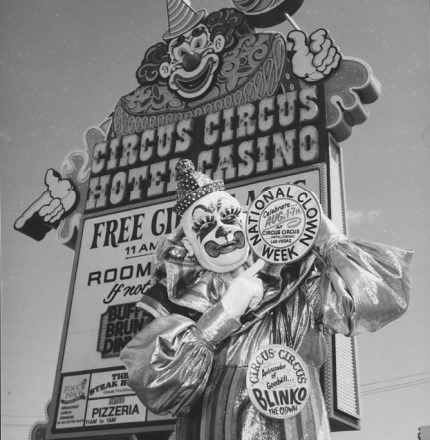
Ernie Burch, famously known as Blinko the Clown, was an endearing figure in American performance, blending traditional circus artistry with the glamour of the Strip.
Starting his career in 1923 with the Daily Bros. Circus, Blinko gained renown for his expressive visage and lighthearted humor. His remarkable abilities caught the attention of Hollywood’s Cecil B. DeMille, who cast him in his 1952 masterpiece, “The Greatest Show on Earth.” (It was DeMille who bestowed the name “Blinko” upon Burch, a title he carried with pride ever since.)
Burch’s most notable contribution came in the late 1970s when he became Circus Circus’s clown ambassador, donning full clown attire as he greeted guests, posed for photographs, and made balloon animals for children and adults alike. He eventually retired to Sarasota, Florida, passing away at 70 in 1993.
4 & 5. Wayne Hronek & Brian Dewhurst, the Old Clown in “Mystère”
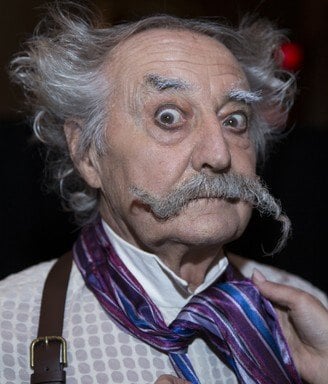
Wayne Hronek was a crucial force in defining the essence of Cirque du Soleil’s clowning scenes. When “Mystère,” the first Cirque show in Las Vegas, debuted at Treasure Island in 1993, Hronek not only performed the clown role but also invented it.
His portrayal was that of the trickster, the fool, and the observer. Instead of just providing comic relief between aerial performances, he represented the emotional core of the entire production.
After wrapping up his time in 2000, Hronek passed the red nose to Brian Dewhurst, a British circus veteran who transformed the character into a profound exploration of aging, joy, and resilience.
At the age of 89, Dewhurst took his final bow in 2022, making him the oldest performer in Cirque’s history.
6. Mr. Whimsy, Painting
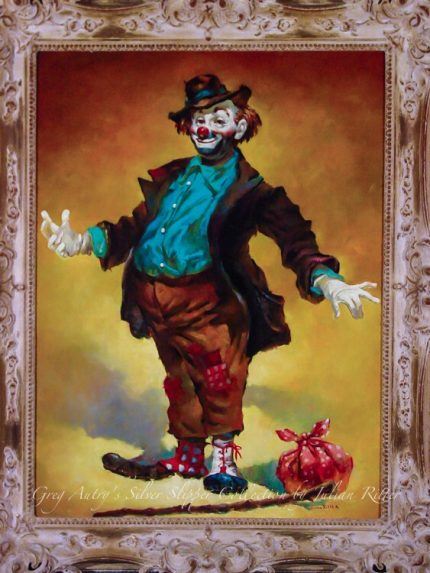
Mr. Whimsy, also known as the Hobo Clown, is the most famous of the many paintings created by esteemed realist Julian Ritter for the Silver Slipper.
Created in 1968, this 39” x 30” oil painting greeted guests at the casino for thirty years.
The Silver Slipper strategically used Ritter’s emotive clowns and evocative nudes to set a theatrical and sensuous tone right at the entrance.
Howard Hughes admired the Silver Slipper’s collection of 33 Ritter paintings so much that he purchased the casino in 1968.
In the past year, Casino.org investigated how these paintings came to be owned by collector Greg Autry in 1988, who is now selling Mr. Whimsy on eBay.