


Published on: March 23, 2026, 08:17h.
Updated on: March 23, 2026, 08:17h.

- New legislation in South Dakota aims to increase casino revenue for Deadwood
- Deadwood is the sole location in South Dakota permitted to operate commercial casinos
The casinos in Deadwood are set to enhance the local revenue for this historic Gold Rush town nestled in the Black Hills of South Dakota, after Governor Larry Rhoden (R) enacted a new law that ensures a greater portion of gaming funds remains in the city.
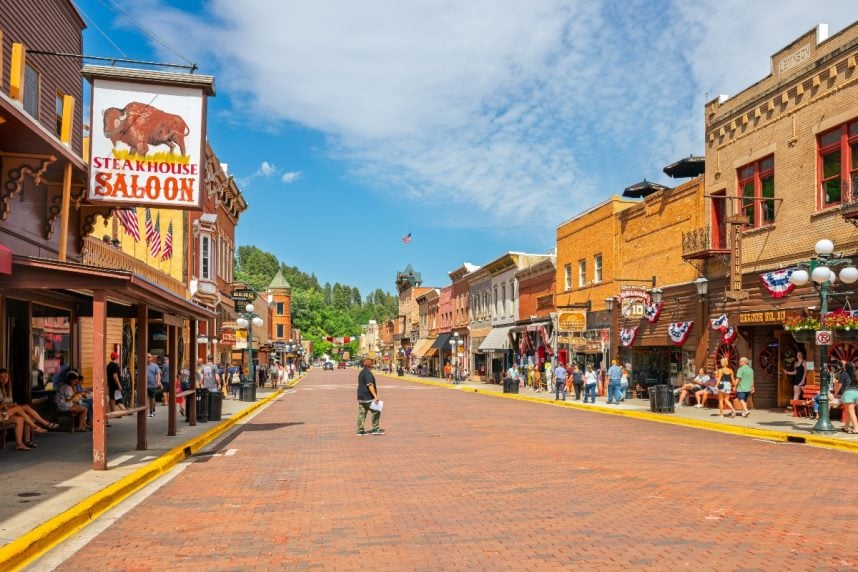
Senate Bill 102, which was passed by the state Senate on February 24 with a vote of 31-2 and by the House of Representatives on March 9 with a 64-5 vote, revises the way the state handles tax revenues from commercial casino operations in Deadwood. As the only city in South Dakota where commercial casinos are legalized, Deadwood will receive a greater portion of the 9% gaming tax collected by the state.
“I am dedicated to strengthening our communities and ensuring that South Dakota remains ‘Open for Opportunity.’ This legislation is a step toward that goal,” Rhoden said in a press statement. SB102 is one of three bills aimed at increasing financial support for local municipalities by decreasing the state’s share.
The newly signed SB102 abolishes a previous limit that had restricted Deadwood’s receipt of casino tax funds to $6.8 million annually. Effective July 1, 2026, the law stipulates that 25% of the gaming tax will go to the state’s General Fund, 3.3% to Lawrence County, 0.7% to the Lead-Deadwood School District, and the remaining 71% will be allocated to the City of Deadwood.
South Dakota Searchlight indicates that, had the new revenue distribution been in effect last year, Deadwood would have retained nearly $7.3 million in gaming tax revenue.
Revitalization of Deadwood
The city of Deadwood primarily allocates its share of casino tax revenues toward historic preservation efforts. Through its Historic Restoration and Preservation Fund, Deadwood has developed multiple grant and loan programs aimed at supporting its numerous National Historic Landmarks.
“Preserving these designations is vital for the city’s economic prosperity and the overall quality of life for residents. The goal of our grant program is to encourage quality restoration, protection, and interpretation of buildings and sites that enhance the understanding of Deadwood’s history,” states the city’s official website.
The economy of Deadwood heavily relies on both tourism and gaming activities.
Presently, Deadwood is home to 21 casinos, although the term “casino” is defined quite differently than in Las Vegas. Many of Deadwood’s casinos are small establishments offering a mix of bars and dining options alongside gaming machines and a few table games.
Notable larger casinos such as the Silverado Franklin, Gold Dust, and Mineral Palace each feature between 200 and 400 slot machines.
The gaming sector has seen robust growth in recent years, with Deadwood’s gross gaming revenue (GGR) achieving an all-time high of $151.9 million in 2024. Although revenue cooled slightly last year to just over $150 million, this figure still represented a 36% increase compared to 2019, when casino winnings totaled $110 million.
A Glimpse into Deadwood’s Past
Founded in 1876 during the Gold Rush in the Black Hills, Deadwood holds a significant place in American frontier history. The entire city is recognized as a National Historic Landmark by the National Park Service’s National Register of Historic Places.
For those interested in gambling history, Deadwood is famously recognized as the location of the notorious “Dead Man’s Hand.” On August 2, 1876, Wild Bill Hickok was shot while playing poker, with reports suggesting he held a hand of black aces and eights when he was killed. The identity of the fifth card has remained a mystery.