


Published on: June 22, 2026, 12:19h.
Last updated on: June 21, 2026, 01:24h.

- The Department of Justice (DOJ) has scored a significant victory with the establishment of its new National Fraud Enforcement Division, pursuing California resident Jason Feinman for running an illicit offshore sports betting site from Costa Rica.
- Feinman confessed to neglecting to report $4.2 million in earnings and collaborating with Costa Rican partners to launder gambling profits.
- Feinman has been sentenced to 27 months in prison and must forfeit $3 million.
In a notable early triumph for the DOJ’s National Fraud Enforcement Division, a California man was apprehended for facilitating illegal sports betting operations from Costa Rica.
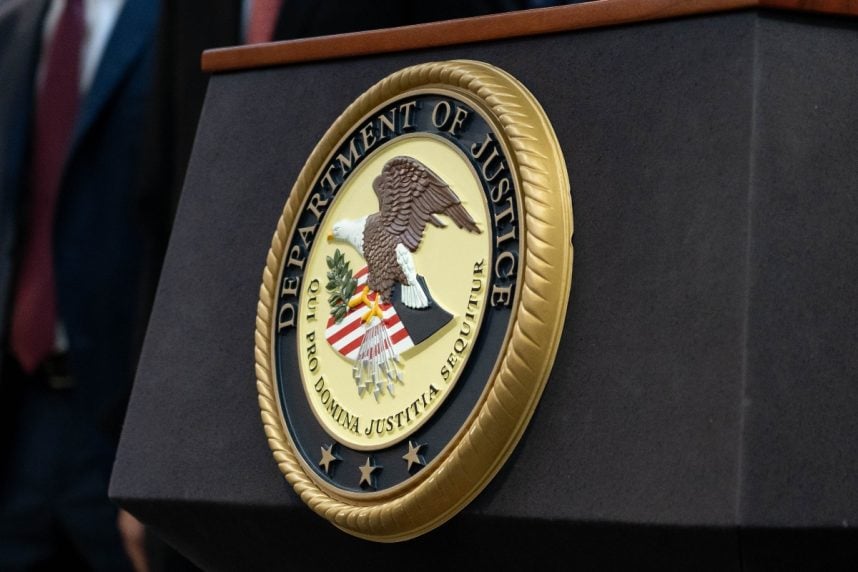
In April, the DOJ launched this fraud unit as part of President Donald Trump’s Task Force to Combat Fraud. Early targets included Jason Noah Feinman, 52, from Calabasas, whose website was linked to unlicensed bookmakers enabling illicit activities.
Feinman pleaded guilty to counts of tax evasion, operating an illegal gambling business, and money laundering, resulting in a 27-month federal prison sentence.
The federal complaint indicated that Feinman managed an online sports betting site from Costa Rica, collaborating with five accomplices based there to launder the enterprise’s profits.
Executive Legal Action
Feinman acknowledged conducting an unauthorized betting operation from 2015 until May 2024.
During this period, prosecutors stated he “financed, managed, and directed an illegal gambling business, operating a website for taking bets on sporting events at specified odds.”
Despite reaping millions, Feinman reported zero federal income tax liabilities from 2018 through 2022, even claiming a $75,503 refund in 2020.
The federal complaint charged, and Feinman admitted in his plea, that he failed to declare $4.2 million in income, assisting Costa Rican associates by exchanging cash for checks made out to him or his businesses.
From May 2018 to January 2024, the complaint noted that an individual identified only as “C.K.” issued Feinman 18 checks, including one for $200,000, in return for $1.5 million in cash.
These checks were often labeled with loan references.
“I am guilty of the charges,” Feinman stated during his plea.
His admission of guilt led to a reduced sentence of 27 months and a forfeiture of $3 million, despite the initial charges carrying a possible maximum sentence of 3.5 to five years.
Veiled Operations
Casino.org reviewed the eight-page complaint and the 36-page plea agreement against Feinman, which failed to disclose the name of Feinman’s illicit bookmaking operation.
The enterprise functioned as a platform for sports betting services, operating without direct consumer interaction. Illegal gambling associates placed bets on behalf of their customers using Feinman’s website, reaching bettors in both California and Costa Rica.
Costa Rica remains a popular location for offshore online casinos and sportsbooks, given its lack of regulatory authority over gaming or licensing requirements for such businesses. Companies only need to incorporate, a process that costs about $4,000, followed by annual renewals of around $3,000.