


The competition for one of three highly sought-after casino licenses in downstate New York reached its concluding stage on Friday, as eight candidates presented their bids to the state’s gaming commission prior to the firm deadline of June 27. A slice of what might evolve into a $4.4 billion annual gambling market in the nation’s largest city is at stake.
This quest for authorization from the New York State Gaming Commission features major casino developers, influential investors, and heavyweights in real estate, including MGM Resorts International and Genting, alongside prominent personalities like Mets owner Steve Cohen and real estate titan Silverstein Properties.
Each proposal aims to revitalize urban areas by converting racetracks, office buildings, parking lots, and golf courses into vibrant entertainment zones centered around casinos. The submission deadline marks the culmination of a decade-long effort that began with a 2013 amendment allowing commercial casinos in New York.
Legislators purposely postponed the granting of downstate licenses for a decade to enable upstate locations to solidify their presence. Now, with that freeze lifted and favorable political conditions, applicants are energetically advocating for one of the most lucrative gaming ventures in the United States.
The final eight bids, reduced from an initial 11, encompass diverse proposals across five boroughs and adjacent regions. Among these submissions are three projects in Manhattan, two in Queens, and one each in Brooklyn, the Bronx, and Yonkers.
Rendering of Freedom Plaza
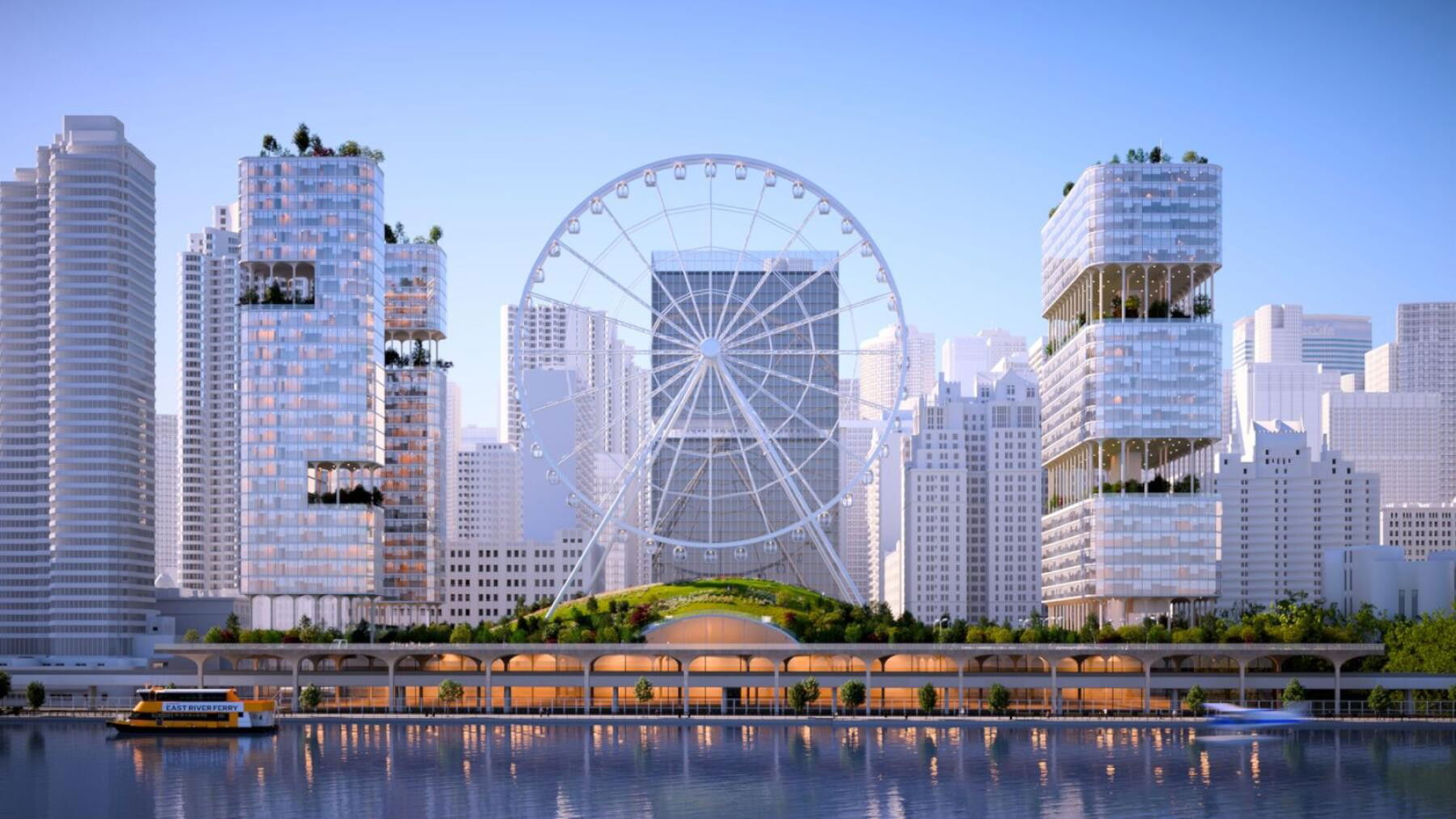
In Midtown Manhattan, the ambitious $11.1 billion Freedom Plaza plan from the Soloviev Group and Mohegan entails a hybrid model featuring an underground casino beneath a five-acre public park, integrated with 1,250 hotel rooms and over 1,000 housing units.
The proposal incorporates a community reinvestment fund and a commitment to directing 2% of annual gaming revenue toward workforce and housing initiatives.
Rendering of Avenir
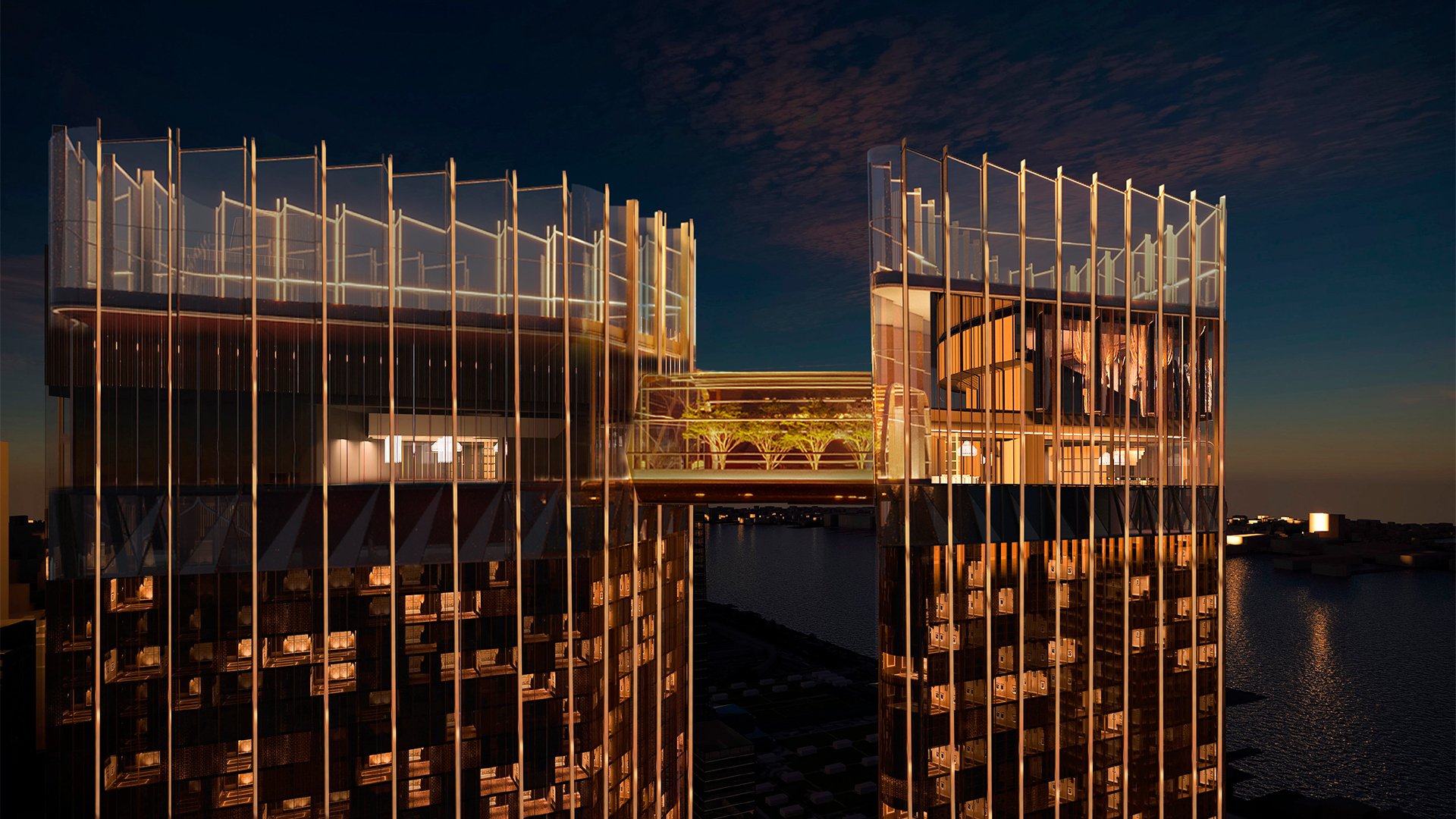
Silverstein Properties’ $7 billion Avenir plan, situated near the Javits Center, features a 1,000-room Hyatt, entertainment venues, and a food hall, all within a 785-foot tower. The developer intends to transform nearby vacant office spaces into 2,000 apartments to tackle housing issues.
Caesars Palace, Times Square

Simultaneously, Caesars Entertainment and SL Green are partnering with Roc Nation and Live Nation on a Times Square bid that seeks to convert an aging office building into a casino, a 992-room hotel, and a Nobu-branded boutique outlet.
Despite receiving support from over 200 local stakeholders, critics, including state lawmakers, express concerns about the potential increase in traffic congestion in the already bustling theater district.
Genting Group’s Resorts World in Queens
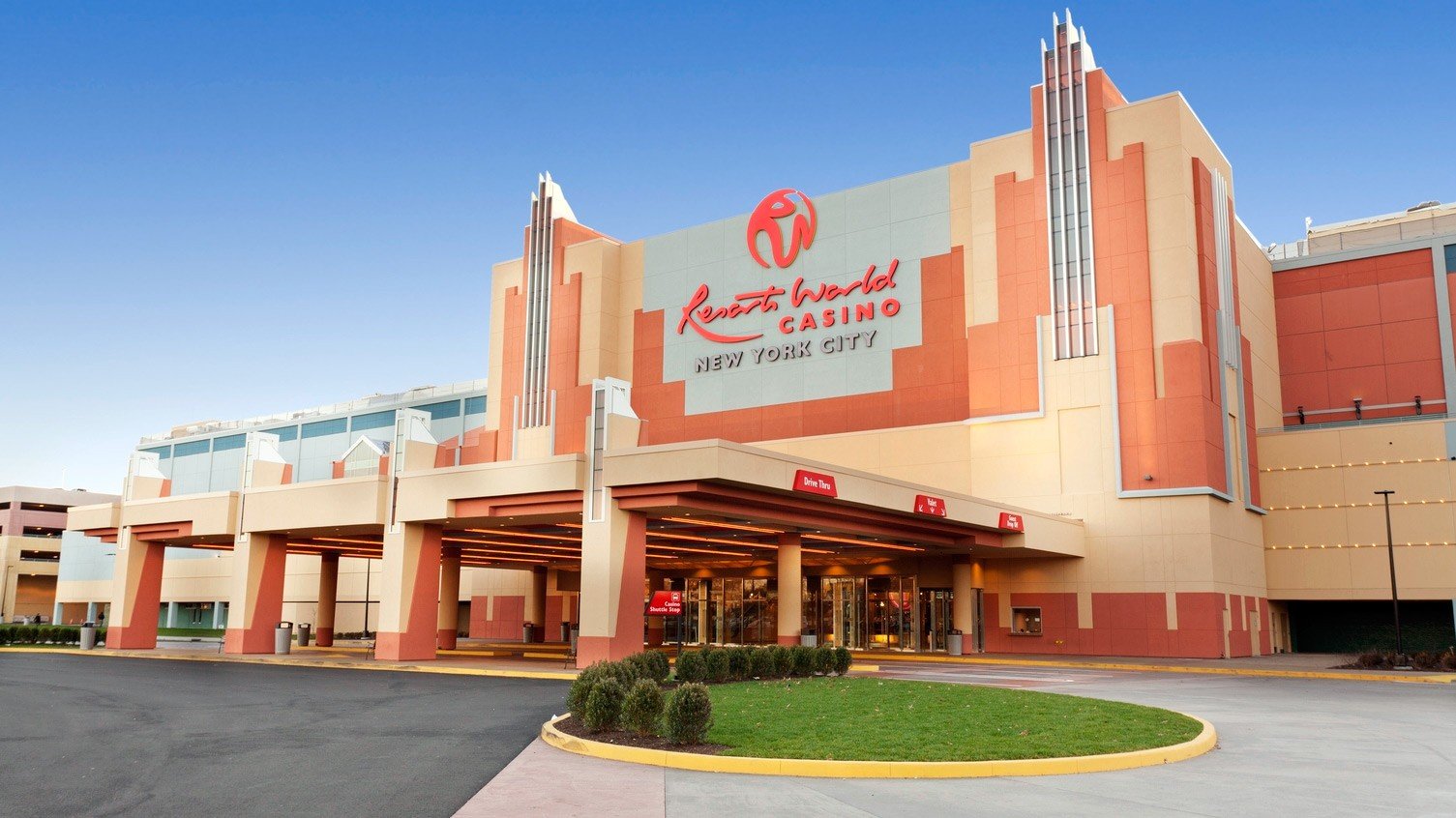
Outside of Manhattan, larger proposals appear to capitalize on existing infrastructures. Genting Group’s Resorts World in Queens aims to expand its existing racino at Aqueduct into a $5 billion mega-complex featuring 2,000 hotel rooms, a 350,000-square-foot casino floor, a 7,000-seat arena, and 30 dining establishments. The venue is already home to one of the top-performing slot parlors globally, and Genting indicates that table games could be introduced within months post-licensing.
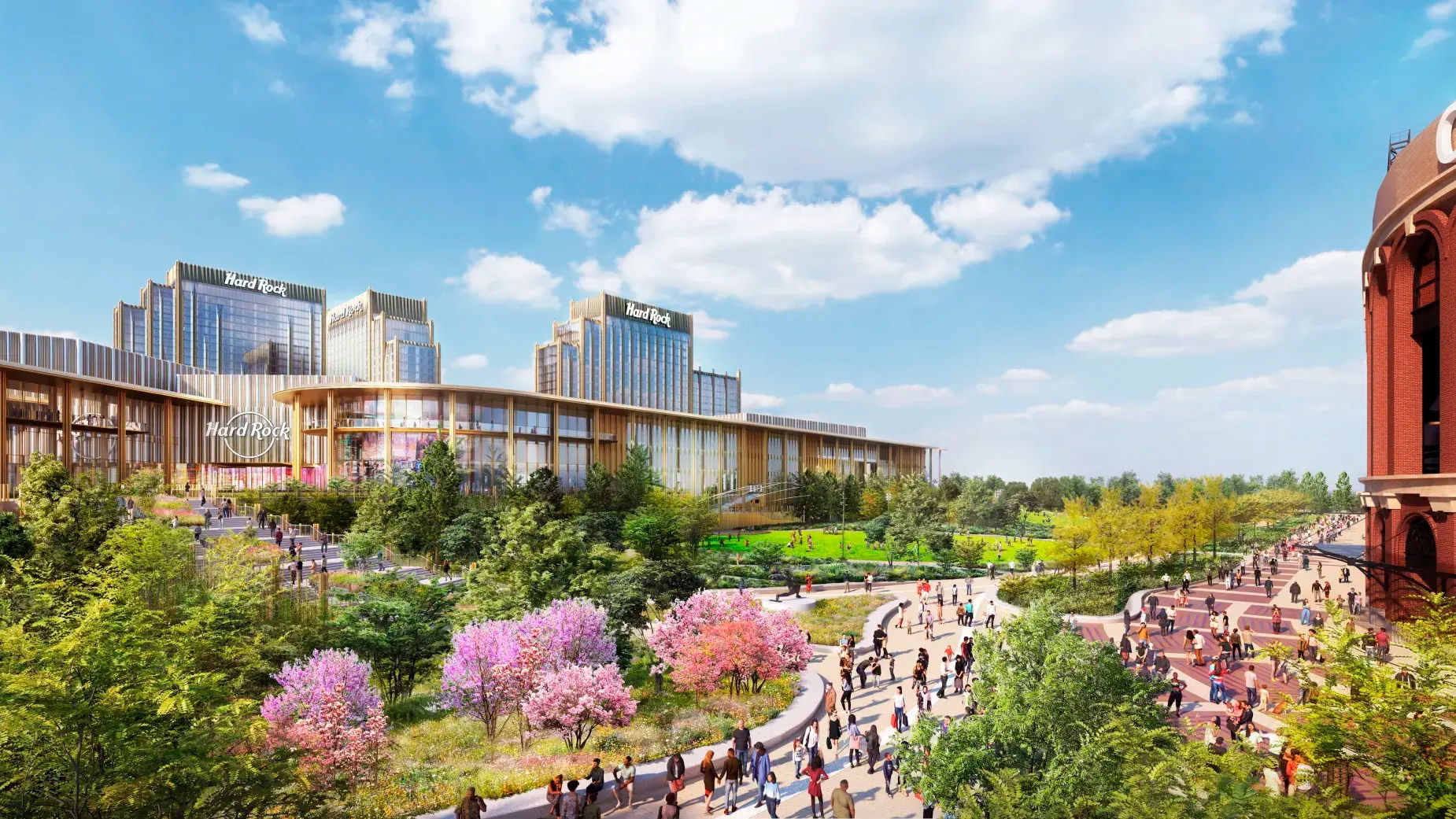
Merely two miles away, Steve Cohen and Hard Rock are endorsing the $8 billion Metropolitan Park near Citi Field. Their proposal encompasses a Hard Rock hotel, a music venue, a food hall, and public athletic spaces, alongside plans to transform a 50-acre parking lot into an entertainment center. The initiative has gained political favor, though concerns persist regarding the use of parkland.
Metropolitan Park near Citi Field
MGM’s Empire City Casino in Yonkers plans a $2.3 billion expansion, adding table games, three new restaurants, a 5,000-seat concert venue, and a high-stakes gaming area. The proposal has garnered support from local authorities, including Mayor Mike Spano, and could be completed by mid-2029 if greenlit.
Empire City Casino in Yonkers

In the Bronx, Bally’s is pursuing a $4 billion redevelopment of the former Trump Links golf course into a casino-hotel complex featuring a spa, a 2,000-seat event hall, and retail options. While a local community board voted against the initiative earlier this year, Bally’s obtained crucial legislative backing this month, which allows it to utilize adjacent public parkland.
Former Trump Links golf course

Brooklyn’s submission takes shape with The Coney, a $3.4 billion project by Thor Equities Group and the Chickasaw Nation. The proposal aims to transform the famous amusement area into a year-round destination featuring a casino, a 500-room hotel, and designated spaces for local enterprises.
The Coney

All eight submissions will now progress to the next evaluation phase, overseen by newly established Community Advisory Committees (CACs), which are required to review and vote on the proposals by September 30. Licensing decisions are anticipated by December 1, with final approvals expected from the New York State Gaming Commission by December 31. Nevertheless, delays extending into early 2026 are still a possibility.
Opposition is particularly vigorous in Manhattan, where several state senators have explicitly voiced their disapproval of casino developments. The financial implications are immense. In accordance with state regulations, selected bidders will each be required to remit a $500 million licensing fee.
Tax rates on revenue will be proposed by the bidders themselves in a strategic assessment, balancing rates that entice the state while ensuring long-term profitability. Apollo Global Management’s Spectrum Gaming Group forecasts that the three chosen casinos could collectively yield $4.4 billion in gross gaming revenue annually.