


Published on: December 10, 2025, 09:30h.
Updated on: December 10, 2025, 09:31h.

- The Fairfax County Board of Supervisors officially opposes casino development
- Since 2023, legislation regarding a casino in Tysons has been under consideration by state lawmakers
The local government of Fairfax County has officially expressed its opposition to any legislative efforts aimed at establishing a casino resort either in Tysons or any other area within the county.
On Tuesday, the Fairfax County Board of Supervisors voted narrowly, 5-4, to formally include a statement in its 2026 Legislative Program that opposes any casino projects. This program outlines the county’s legislative priorities to officials in Richmond.
Since 2023, discussions within the Virginia General Assembly have revolved around possibly allowing a casino within Northern Virginia. State Senators David Marsden (D-Fairfax) and Scott Surovell (D-Fairfax) have actively supported bills advocating for a casino in Fairfax County. Meanwhile, State Delegate Wren Williams (R-Stuart) has been a key figure in leading Northern Virginia’s casino legislation in the House of Delegates.
As conversations are expected to resume in January with the commencement of the General Assembly’s long session, Fairfax officials want to clarify their stance on gaming, including slot machines and table games.
Opposition to a Casino in Tysons
With a slim margin, the Fairfax County Board of Supervisors has made it clear that they do not wish to welcome a casino.
The formal statement declares:
“We oppose any legislation introduced in the General Assembly that would enable a casino in Fairfax County without a formal request from the Board of Supervisors, without a statewide Gaming Commission, and without a tax revenue allocation that significantly favors Fairfax County over the state. The identification and placement of a casino constitutes a significant land-use decision, and intervention by the General Assembly in the county’s land-use policies would disrupt decades of established community consensus and economic prosperity.”
Unlike Norfolk, Portsmouth, Bristol, Danville, and Petersburg—entities that actively sought casino licenses through state legislation—Fairfax County, or any of its municipalities, has not pursued gaming privileges.
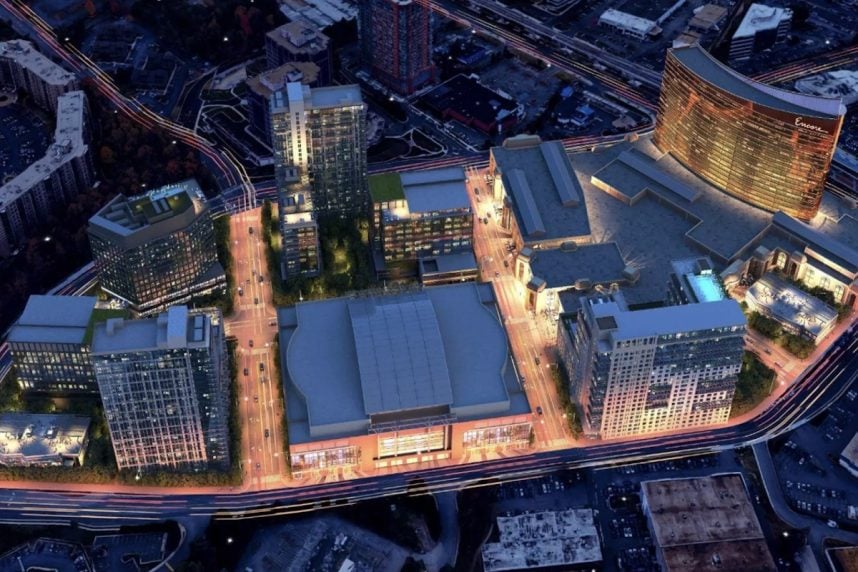
Marsden, alongside fellow proponents and real estate developer Comstock Companies, has suggested placing a casino near the Spring Hill Metro Station adjacent to the Adaire apartment complex in Tysons.
Chairman’s Concerns
Chairman of the Fairfax Board Jeff McKay cast the deciding vote in favor of the casino resolution, despite being personally opposed to the concept. He expressed concern that the county’s strong official stance might lead to negative repercussions.
“From the outset, my concern has not focused solely on support or opposition; it is crucial we ensure that the necessary protections for county residents are embedded in any legislation,” McKay remarked, advocating for a position that would guarantee a referendum for local voters to decide.
According to the gaming law enacted in Virginia in 2020, cities including Norfolk, Bristol, Danville, Portsmouth, and Richmond had to schedule local referendums to present resort development plans to city voters prior to receiving state gaming licenses. A straightforward majority approval was required for construction to commence.
After Richmond residents rejected casino proposals on two occasions, lawmakers subsequently passed legislation to include Petersburg, which also required a local referendum.
McKay fears that Fairfax’s resolute opposition declaration might be perceived as “arrogant,” potentially provoking state lawmakers from southern Virginia to impose a casino on the county. Analysts believe that a casino in Northern Virginia could generate substantial tax revenue, possibly surpassing the combined revenues of the other five cities with established casinos.