


Published on: March 3, 2026, 08:11h
Updated on: March 3, 2026, 08:12h

- A recent federal court ruling indicates that states hold specific powers concerning prediction markets.
- Legal experts suggest this controversy may escalate to the US Supreme Court.
As the federal landscape surrounding prediction markets evolves, several states are aiming to clarify that specific trading markets are prohibited within their jurisdictions.
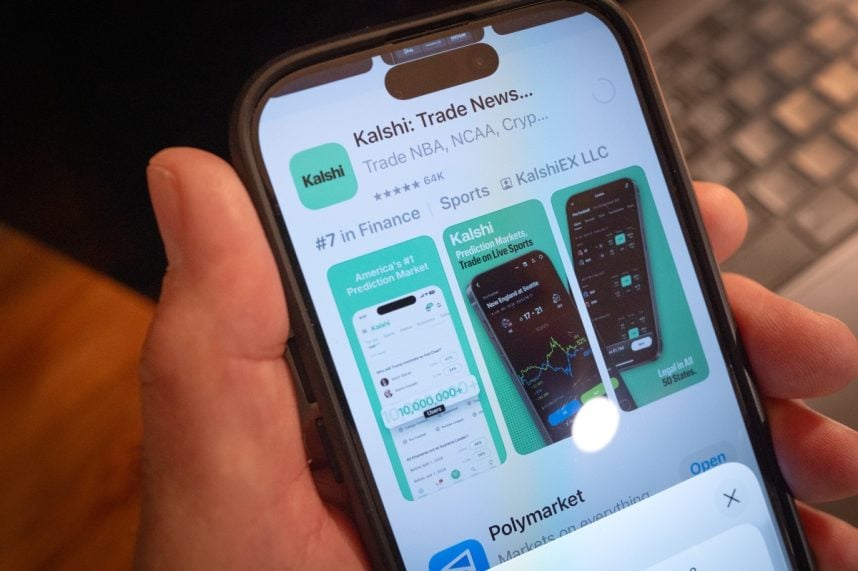
Prediction markets fall under the purview of the US Commodity Futures Trading Commission (CFTC) as per the Commodity Exchange Act. Consequently, platform operators argue that their trading contracts do not fall within state gambling laws.
CFTC Regulation 40.11 asserts that speculative trading platforms for buying and selling shares of potential future outcomes must not encompass “terrorism, assassination, war, gaming, or any unlawful activities as defined by State or Federal law.”
However, during Donald Trump’s presidency and under Chairman Michael Selig, the CFTC has shown intentions to permit prediction markets to facilitate swaps tied to sports outcomes, a move that states argue amounts to sports betting.
State Authority over Prediction Markets
The wording in Regulation 40.11, indicating that states maintain certain powers within the confines of federal regulations, has prompted various jurisdictions to pursue legislation that would prohibit sports event contracts unless an appropriate state-sanctioned sports betting license is obtained.
In October, the Nevada Gaming Control Board alerted licensees that only non-restricted gaming entities with sports pool approvals are permitted to handle sports event contract trading. The regulatory body, recognized as a benchmark in gaming regulation, classified these contracts as forms of sports gambling.
“Wagering occurs irrespective of whether the contract is traded on a CFTC-regulated exchange or elsewhere,” stated the Board.
Kalshi, a major player in the prediction market sector, initiated legal action alleging that Nevada lacked the jurisdiction to outlaw its sports contract activities. A state court upheld the NGCB’s ruling.
This week, a federal judge in the Nevada district court rejected Kalshi’s request for a federal trial, sending the Nevada Gaming Control Board’s case against the prediction market, which seeks a permanent injunction, back to state court.
“The Court concludes that the NGCB’s claims are grounded in state law, meaning the Commodity Exchange Act does not fully supersede the Board’s assertions,” wrote Judge Miranda Du.
Noted gaming lawyer Daniel Wallach claims this decision undermines Kalshi and similar platforms, indicating that the Commodity Exchange Act grants states the authority to restrict specific trading events.
“This ruling could encourage other states to take legal action against Kalshi in state courts and seek injunctions to halt event contracts. This tactic has already proven effective in every instance thus far, and states might increasingly adopt this approach,” Wallach explained.
Proposed Bans on State Sports Event Contracts
Various states, such as Hawaii, Illinois, Iowa, Massachusetts, New Jersey, Vermont, and Utah, are exploring legislation to prohibit event contract trading related to sports.
The proposed laws differ across states, with some requiring prediction markets to secure a sports betting license to continue operations. Other proposals, like those in Illinois, aim to ban not just sports trading but also betting on the outcomes of political scenarios.
“Given the size and intricacies of this litigation, paired with the emerging circuit splits, Supreme Court review may be essential to delineate the jurisdictional boundaries between federal derivatives regulation and state gambling laws,” remarked Johnny ElHachem, a litigation and regulatory lawyer focused on gaming law at Holland & Knight.
“For the time being, the prediction market industry will have to navigate through a complex landscape of contradictory legal requirements, although increasing judicial backing for the platforms’ interpretations hints that the question of federal preemption is very much alive,” ElHachem concluded.