


Published on: February 27, 2026, at 03:34h.
Updated on: February 27, 2026, at 03:34h.

- Indiana’s recent legislation aims to introduce a 14th gaming license, securing passage through the state legislature.
- The casino’s location will be restricted to Allen, DeKalb, or Steuben counties.
- Should local voters support gaming, Full House Resorts is expected to submit a bid for the project.
Indiana House Bill 1038 has successfully passed the state General Assembly and awaits Governor Mike Braun’s signature.
Should the governor approve the bill, HB1038 will facilitate the introduction of a 14th casino in Indiana. The counties eligible for the Northeast Indiana gaming license are limited to Allen, DeKalb, or Steuben.
The legislation empowers the Indiana Gaming Commission to launch a competitive bidding process for the casino license, allowing any licensed casino operator in the U.S. to participate.
The winning bidder will be required to pay a one-time fee of $150 million and must invest at least $500 million in the casino resort within five years. A minimum of $300 million, or 60%, must be invested within the first two years of receiving the license.
Of the initial license fee, $100 million will be allocated to the Indiana General Fund, while $50 million will be set apart for a “shuttered riverboat fund,” benefiting counties that have casinos closing after the new facility opens.
Will Other Companies Collaborate with Full House?
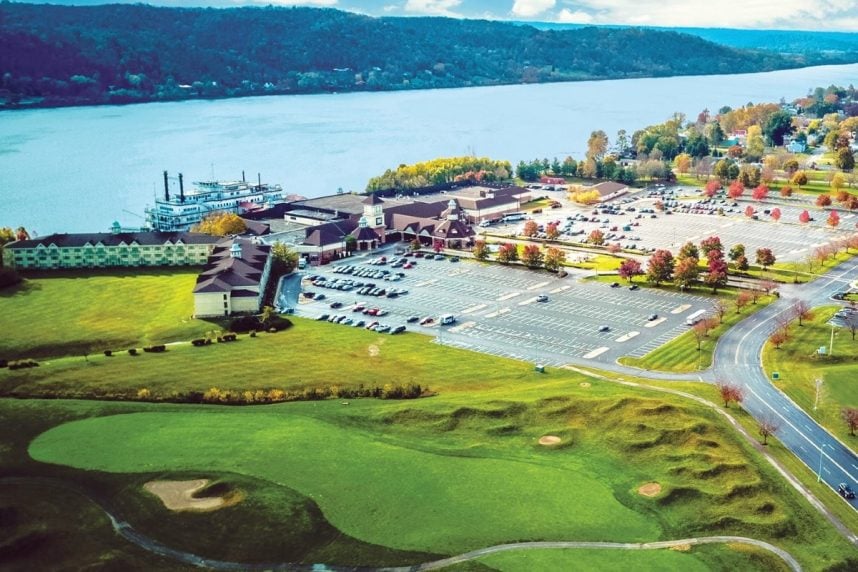
Full House Resorts is the driving force behind the Indiana casino initiative, spearheaded by Rep. Craig Snow (R-Warsaw). The Las Vegas-based gaming operator is considering the closure of its Rising Star Casino Resort.
The company claims that the town in Ohio County has lost its allure as a gaming destination, especially with Hard Rock operating a casino in nearby Cincinnati and Kentucky approving slot-like historical horse racing machines. Recent financial data shows Rising Star ranked at the bottom among Indiana’s 13 casinos in terms of revenue for 2025.
Initially, Snow proposed an $80 million upfront fee in HB1038, but this figure increased during legislative discussions, which could potentially benefit Full House by limiting the number of bidders.
Previously, Full House expressed interest in a site in New Haven, Allen County. In November 2024, they revealed potential designs for the new casino.
As a suburban extension of Fort Wayne, the proposed designs featured a 90,000-square-foot casino accommodating 1,400 slot machines and 50 table games, along with a sportsbook, a grand atrium, two full-service restaurants, a food hall, and four bars and lounges.
Future development phases envision a 200-room hotel complete with a luxury spa and salon, as well as an events venue and various dining and entertainment options. Local opposition prompted Indiana lawmakers to conduct a market feasibility study, which indicated that Fort Wayne presents a highly promising market for a new casino project.
County Referendum
Throughout the legislative process, HB1038 was revised to exclude Wayne County from the eligible locations for hosting a casino. A local referendum requirement was also introduced.
This referendum enables local governments in Allen, DeKalb, and Steuben counties to decide if they wish to seek feedback from constituents regarding a potential casino. Should they choose to proceed, each county must include the following question on its 2026 general election ballot:
Should inland casino gaming be permitted in ______ County?
If a majority supports allowing slot machines, table games, and sports betting, the county can advance its casino initiative. However, if the referendum fails, the county will be excluded from HB1038 and will be unable to present the casino proposal to voters.