


Publication Date: November 14, 2025, 08:00h.
Updated on: November 13, 2025, 09:42h.

- Trade organization representing sports betting entities claims per-bet fees reduce wagering
- Total handle increased year-over-year, contrary to expectations
- Operators implemented per-bet fees and minimums in response to tax hikes
The Sports Betting Alliance (SBA) of Illinois announced on Thursday that bettors in the region placed five million fewer wagers in September compared to the previous year, attributing this decline to newly implemented per-wager fees and minimum bet requirements by sportsbooks.
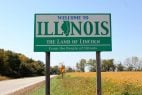
September marked the first full month during which bettors faced transaction fees and minimum betting amounts as a result of the state’s latest sports betting tax increase — a fee of 25 cents per bet for the first 20 million bets, escalating to 50 cents for every subsequent wager.
According to the Sports Betting Alliance of Illinois, comparing data from September 2024 to September 2025 reveals a drop of 5 million bets in Illinois, representing a decline of 15%, as referenced from the Illinois Gaming Board (IGB).
Most operators in Illinois have adopted minimum bet sizes, generally modest in nature, while DraftKings, Fanatics, and FanDuel are charging bettors on a per-bet basis.
Illinois Sports Betting Tax’s Impact on Handle
Previously, the SBA voiced strong opposition to Illinois’ tax hike, arguing it could drive bettors to unregulated markets, which would ultimately reduce state revenue. Although the overall number of bets placed in September was lower, the total handle, or the aggregate dollar amount wagered on sports, did not see a decrease.
Data from the IGB highlights that September’s tier one and tier two online sports betting handles were $434.5 million and $782.3 million, respectively. In comparison, those amounts in September 2024 were $416.8 million and $676.7 million.
Nevertheless, the SBA’s claim holds truth as the tax structure of Illinois, featuring a graduated tax implemented in 2024, alongside the current per-bet levy, has positioned the state’s online sports betting taxes among the highest nationally.
“With the combined impact of Illinois’ graduated tax from 2024 and the per-wager tax, the taxation on legal sports betting customers here ranks among the highest in the nation, all while the unregulated, illegal market continues to grow — lacking any consumer protections and oversight,” stated the trade association.
The financially challenged city of Chicago is considering a localized sports betting tax to enhance its revenue, though it appears that legislators in Springfield are not in favor of this initiative.
The Role of Prediction Markets
Interestingly, in their communication, the SBA of Illinois did not address prediction markets, leaving it uncertain whether the five-million drop in wagers was influenced by platforms offering event contracts.
Nonetheless, industry insiders speculate that with DraftKings and FanDuel preparing to introduce sports event contracts in states that do not permit traditional sports wagering, this might compel high-tax states like Illinois to consider more favorable tax policies or engage in discussions regarding iGaming. At this point, though, it remains mere speculation.