


Date of publication: March 23, 2026, 09:24h.
Last revised on: March 23, 2026, 09:24h.

- The syndicate invested $25 million to secure nearly all lottery combinations
- Operation produced millions of tickets throughout Texas in just 72 hours
- The scheme ignited a political uproar, leading to the dissolution of the lottery commission
A clandestine professional gambler, known as “the Joker”, has confessed to funding a scheme to purchase nearly all tickets for a Texas Lottery draw in 2023—effectively ensuring a share of the $95 million jackpot.
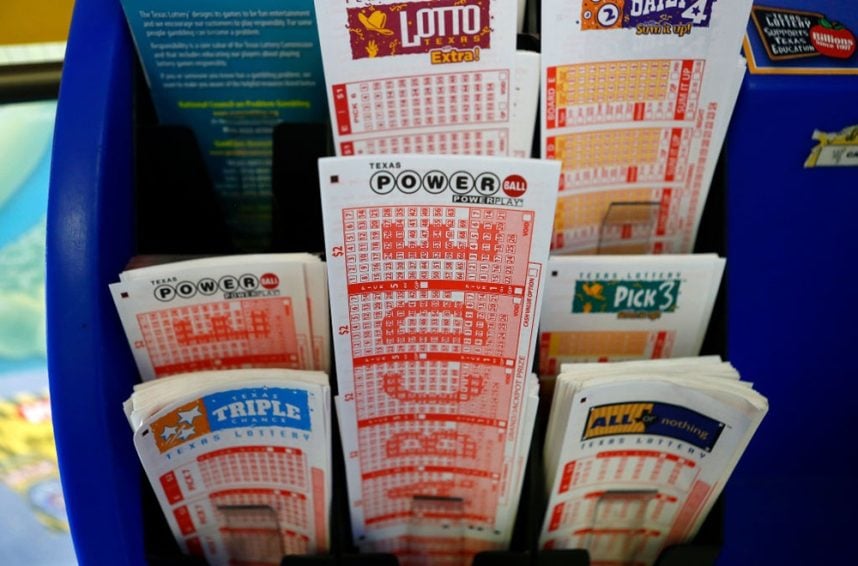
The name Zeljko Ranogajec emerged in relation to the scheme last year when various sources spoke to The Houston Chronicle, and this marks the first time he has openly acknowledged his involvement.
“I financed the Texas lottery play,” he revealed to The Sydney Morning Herald last week, noting that the initiative came with its own risks.
“The Texas Lottery Commission aided the operation by supplying terminals, paper, and ink. It would have been impossible to execute on such a scale without complete cooperation,” he stated.
Jackpot Vulnerable
The jackpot for the Texas Lottery draw on April 22, 2023, had soared to $95 million following 93 rollovers, rendering it mathematically vulnerable for anyone capable of acquiring the maximum number of combinations.
Ranogajec’s syndicate invested over $25 million in tickets to cover about 99% of the combinations. This significantly increased their chances of winning the jackpot.
If the syndicate had to share the jackpot with other winners, it could have faced losses. Ultimately, the group chose to accept a lump sum payment of $57 million (before taxes) instead of opting for the full amount, which would be paid over 30 years. Consequently, they spent approximately $25 million to gain something between $10 million and $12 million after taxes, possibly supplemented by a few million more in secondary prizes.
Loch Ness Monster
The Australian gambler Ranogajec, affectionately dubbed “the Loch Ness Monster” for his rare public appearances, is recognized as one of the most prosperous gamblers globally, with an estimated net worth in the billions. David Walsh, a fellow wealthy Australian gambler and longtime collaborator in Ranogajec’s betting syndicate, previously claimed that they placed around A$10 billion (approximately US$7 billion) in bets annually.
Ranogajec informed SMH that he was merely the financier, not involved in the logistical aspects of the massive operation; that responsibility lay with Bernard Marantelli, a partner in Ranogajec’s London-based online pool-betting firm, Colossus Bets. Marantelli also shared his insights with SMH last week.
Over approximately 72 hours, the syndicate meticulously coordinated multiple licensed lottery couriers across Texas, established numerous terminals, and employed pre-generated QR codes on devices to expeditiously print tickets at a rate nearing 100 tickets per second.
Workers operated around the clock in makeshift printing locations (including a fishing shop and a former dental office), organizing and packaging millions of tickets as they were produced.
By the end of the operation, they printed more than $25 million worth of entries, all while racing against the impending draw deadline and managing logistics, staffing, technology, and data tracking at a significant scale.
Political Controversy
The revelation of this scheme ignited a political controversy in Texas, ultimately resulting in the dissolution of the Texas Lottery Commission, which was accused of facilitating the win by allowing large ticket purchases through lottery couriers. Texas Lt. Gov. Dan Patrick denounced it as “the greatest theft from the people of Texas in its entire history.”
However, Marantelli seems unconvinced by Patrick’s perspective.
“Referring to it as ‘theft’ seems more a political narrative than an economic description,” he conveyed to SMH, “especially considering that the lottery itself is a state-operated initiative designed to extract funds from Texans.”