


A federal judge denies dismissal of fraud lawsuit against Elon Musk regarding his $1 million election “lottery,” suggesting the selection process may not have been random.
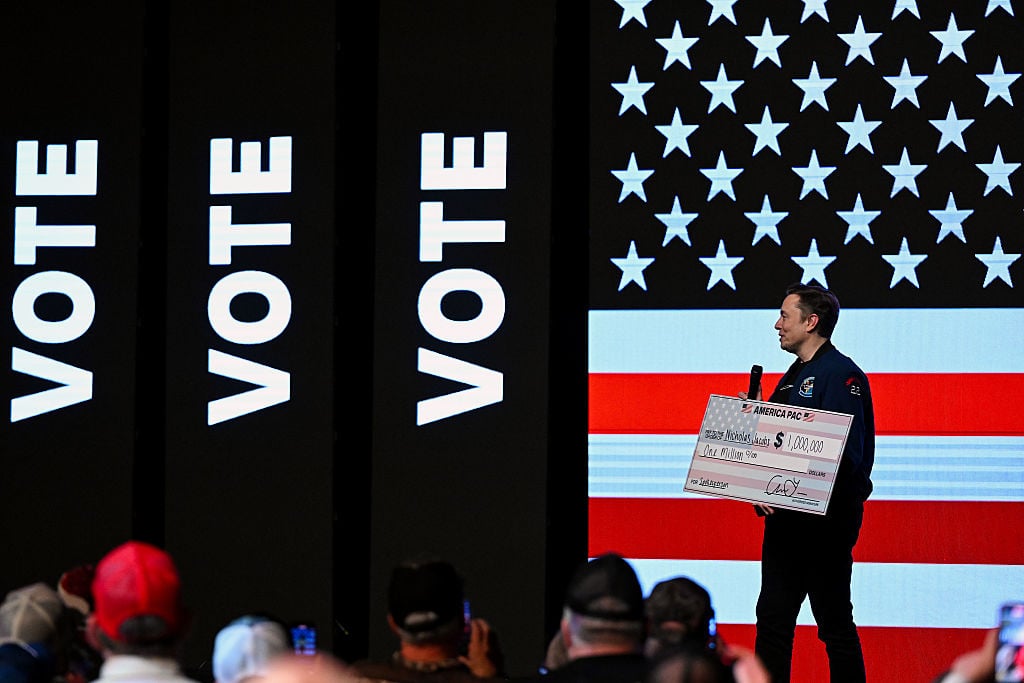
U.S. District Judge Robert Pitman in Austin, Texas, on Tuesday (August 18) denied summary judgment to Musk and his pro-Trump political action committee, America PAC, on plaintiff Jacqueline McAferty’s fraud claim.
Swing States Sweepstakes
In the run-up to the 2024 presidential election, Musk and America PAC promoted what appeared to be a $1 million-a-day lottery for registered voters in seven swing states, with Musk saying recipients would be chosen “randomly.”
Entrants had to provide personal information and sign a petition supporting free speech and gun rights.
The Philadelphia District Attorney’s Office subsequently sued Musk and America PAC to block the giveaway, accusing it of running an illegal lottery.
The judge ultimately declined to intervene, but the case provided insight into the workings of the so-called lottery.
No Chance
Musk lawyer Chris Gober acknowledged that the $1 million recipients were not chosen by chance but were selected in advance based on their suitability to serve as America PAC spokespeople. The payments, he argued, were not lottery prizes but compensation for recipients who signed contracts and performed duties for the PAC.
McAferty and fellow Arizona resident Joy Harvick subsequently brought proposed class actions accusing Musk and America PAC of inducing voters to surrender personal information by promoting a random competition they had no genuine chance of winning.
Both allege they were tricked into handing over their data after hearing through news and social media that petition signers had a random chance of receiving $1 million.
McAferty argues she would never have signed up had she known there was “actually no chance to win.”
Pitman adopted a June recommendation from U.S. Magistrate Judge Susan Hightower, who found there were genuine factual disputes over whether Musk misled voters by claiming $1 million recipients would be selected “randomly.”
Musk and America PAC objected, arguing, among other things, that the word “randomly” was too indefinite to be objectively proved true or false.
“This argument warrants little analysis,” Pitman wrote.
Ideological Vetting
The judge noted that potential recipients were subjected to a vetting process designed to find someone ideologically aligned with America PAC, examining factors including criminal history, age, marital status, children, and social media activity.
“A jury could surely conclude” that such a process was “far from random,” Pitman wrote.
Pitman also found there was enough evidence for a jury to infer that Musk knew recipients would not be chosen at random or was at least reckless when he said they would be.
The billionaire participated in high-level discussions about establishing America PAC and discussed the concept behind the $1 million spokesperson program with PAC officials, according to evidence cited by the court.
Pitman dismissed McAferty’s breach of contract claim with prejudice, however, agreeing with Hightower that the promotion did not create an enforceable contract.
Hightower earlier ordered Musk to sit for deposition in the case.