


Date Published: June 15, 2026, 10:01 AM
Last Modified: June 15, 2026, 10:06 AM.

- Lake Mead is expected to drop to a record low elevation of 1,040 feet by July, with federal forecasts indicating this could become the standard state.
- Discussions have reached an impasse among the seven states holding Colorado River rights, despite efforts from federal authorities.
- Las Vegas maintains a buffer from immediate danger by utilizing only 63% of its allocated water through intensive conservation, while Lake Mead hovers at 29% capacity.
Lake Mead is poised to reach another concerning milestone in approximately six weeks, hitting its lowest level since the reservoir was filled in the 1930s. New federal models published this Monday suggest that this decrease won’t just be temporary; it could establish a new norm.
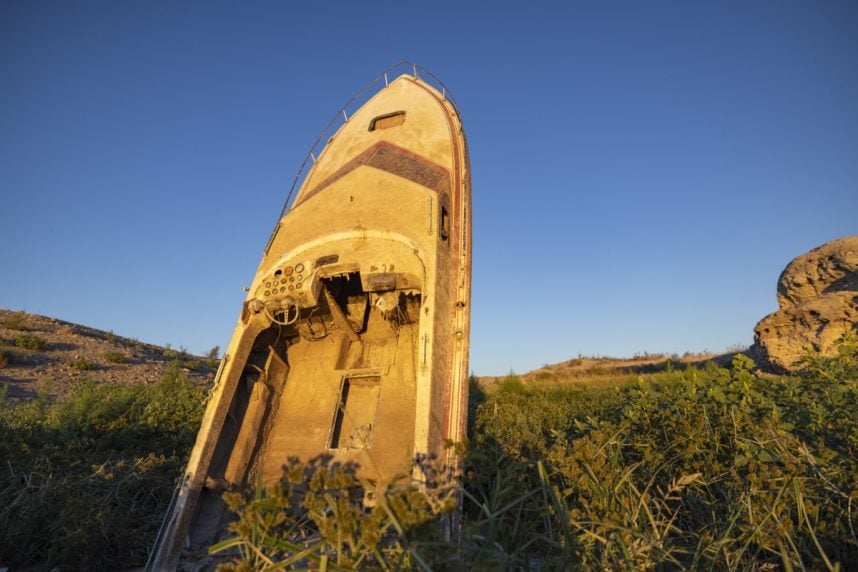
The latest forecast from the U.S. Bureau of Reclamation (BOR) signals that Lake Mead will drop to 1,040 feet above sea level, matching its all-time low from July 2022, but with no projections for an exceptionally wet winter that could provide relief.
Following this, forecasts indicate that the lake will likely remain beneath that level for the majority of the next two years. By next summer, levels could decline to approximately 1,015 feet, and by May 2028, it could dip just below 1,012 feet.
Escalating Water Crisis
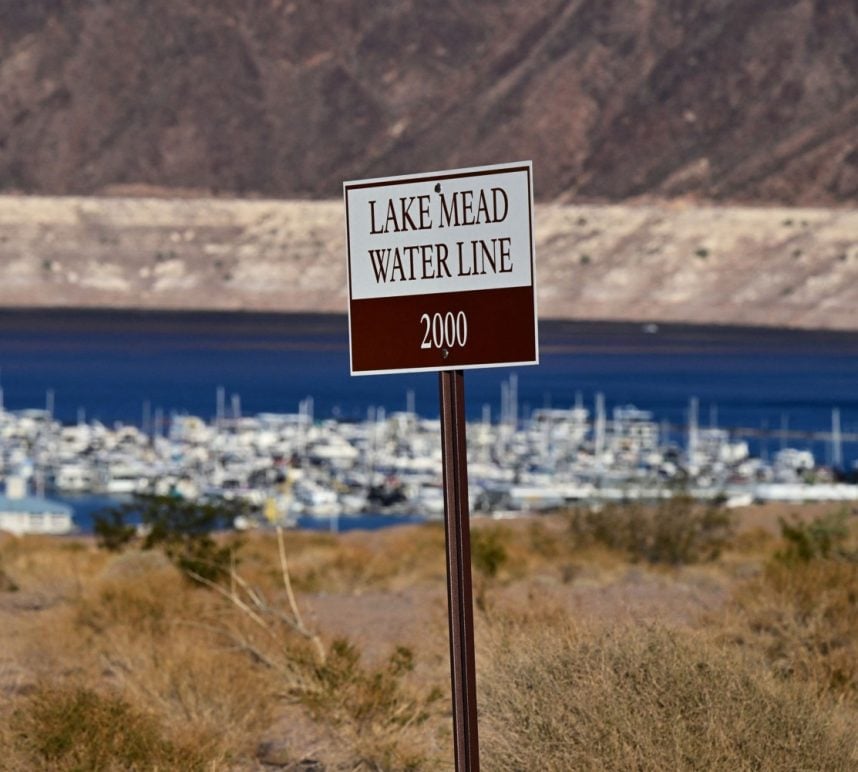
These projections highlight the worsening situation on the Colorado River, which serves as a vital water source for approximately 40 million individuals across seven states—this includes Las Vegas, home to 2.4 million residents and 40 million tourists annually. The two main reservoirs continue to shrink: Lake Mead is now at 29% capacity, while Lake Powell is at 24%.
The BOR’s report indicates that the federal government is maintaining additional water in Lake Powell, situated 281 miles upstream, to preserve hydropower generation at Glen Canyon Dam. The objective is to keep Lake Powell around 3,525 feet, which is essential for reliable power production.
To mitigate the effects of a notably low snowpack in the Rockies—which serves as the river’s primary supply—more water is being released from Flaming Gorge Reservoir. Without this intervention, the BOR warns that inflow to Lake Powell in June would only be 7% of what is considered normal, following an 18% rate in May.
Negotiating Solutions Among Seven States
The New York Times reported on Monday that the seven states within the Colorado River Basin—Nevada, Arizona, and California in the Lower Basin; Colorado, New Mexico, Utah, and Wyoming in the Upper Basin—are struggling to reach an agreement regarding the federal government’s upcoming long-term strategy expected to be unveiled this summer.
After more than six months of discussions, negotiations have stalled, despite repeated attempts from the Trump administration to facilitate progress through high-level meetings among state governors.
Following the endorsement of an agreement earlier this month aimed at assisting Nevada in reducing Southern California’s water draw from Lake Mead through increased desalination in San Diego, Scott Cameron, the BOR’s acting commissioner, expressed optimism. However, he later remarked at a water conference in Colorado, “I think we’ve managed to make everyone unhappy, and possibly even angry.”
Las Vegas Sustains Its Water Management
Even with the possibility of a 40% reduction in Nevada’s Colorado River allocation under some federal scenarios, the Southern Nevada Water Authority continues to present the situation as manageable. Las Vegas has already shown its capacity to reduce water consumption through effective conservation and reuse measures.
The BOR estimates that Nevada will consume 0.188 million acre-feet of Colorado River water this year—around 63% of its full allocation, excluding water used downstream of Hoover Dam.
Models suggest that 2027 may mirror 2024: not disastrous, but also far from a full recovery.