


The Coushatta Casino Resort located in Kinder, Louisiana, is currently navigating a “critical” financial challenge, as reported exclusively by Casino.org.
This situation comes on the heels of the sudden exit of General Manager Nathan Tanner.
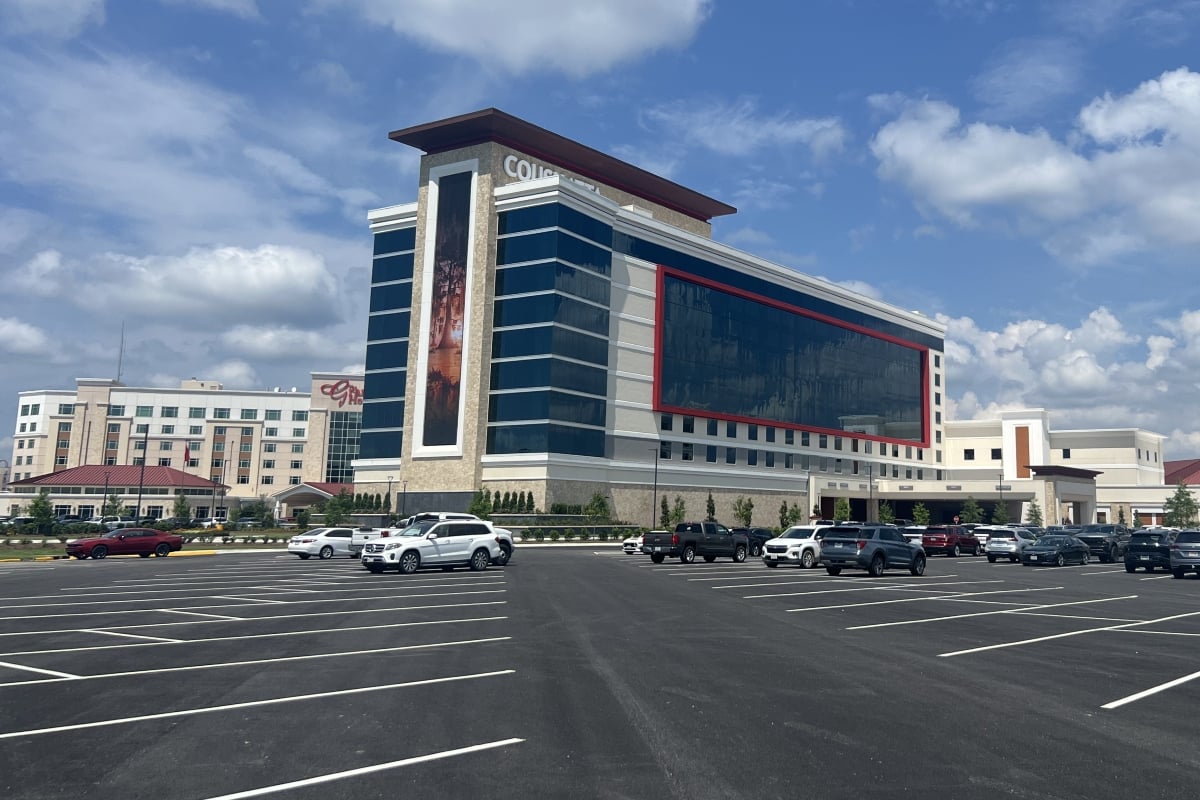
On May 15, Coushatta Casino Resort unveiled its Legacy Tower, a substantial $150 million investment primarily funded by Wells Fargo.
This eight-story establishment features 204 rooms, including 100 luxurious suites. Legacy enhances the lodging offerings at Coushatta, providing guests with a more upscale arrival experience through its porte-cochere.
Nonetheless, Casino.org has uncovered alarming concerns among the resort’s management and the Coushatta Tribal Council regarding the financial strains stemming from budgeting around the Legacy Tower. There are apprehensions that the resort may breach the leverage ratio set forth in its loan agreement with Wells Fargo.
In securing its financing from Wells Fargo, Coushatta committed to maintaining a target leverage ratio of 1.25x. This debt-to-EBITDA ratio is crucial for long-term financing management aimed at minimizing capital costs while maintaining financial security.
Liquidity and Compliance Challenges
It is important to note that Coushatta Casino Resort continues to be a profitable entity. Internal projections indicate an expected 2026 EBITDA (earnings before interest, taxes, depreciation, and amortization) of $86,800,625, according to documents reviewed by Casino.org.
However, those same documents point to a short-term cash deficiency that places the tribe at risk of defaulting on its loan agreement with Wells Fargo.
CFO Tanya Duhon acknowledged in a memo to the Tribal Council that overseeing the Legacy Project was her first experience with such a large-scale endeavor.
Duhon elaborated that she did not adequately consider the cash flow needs associated with debt obligations and the additional funding necessary to finalize the Legacy Tower beyond what the lender provided.
While the Tribal Council has not publicly explained Nathan Tanner’s sudden departure, Duhon admitted in her memo that her failure to effectively communicate essential cash flow details to Tanner left the operational leadership uninformed about the impending financial responsibilities.

“That lack of communication limited our ability to proactively address these challenges before they became critical.”
— Coushatta Casino Resort CFO Tanya Duhon to the Coushatta Tribal Council
The Coushatta Casino Resort currently has a debt balance of $136 million. The tribe requires between $40 million and $44 million in additional cash flow to finish the construction.
Duhon recommends that the Coushatta Casino Resort freeze all hiring, except for essential operational roles, and suspend all overtime payments unless “properly justified and approved.” Additionally, all discretionary capital expenses should be paused, according to her advice.
Duhon is also urging the tribe to consider an immediate $200 million debt consolidation and refinancing strategy to rescue the project. This plan would involve drawing down the remaining $14 million from their revolving credit line and reallocating $3 million monthly from June to December 2026.
If refinancing fails, Duhon’s fallback strategy includes reallocating $2 million monthly directly from tribal distributions between June 2026 and March 2027 to address the Wells Fargo loan and prevent exceeding the 1.25 leverage ratio.
In 2027, Duhon suggests that capital expenditures should only cover essential maintenance of the resort. Non-essential upgrades and discretionary projects should be postponed until the casino can “return to a more robust financial standing.”
“Although the situation is serious, I believe that a disciplined spending approach, debt reduction strategies, refinancing endeavors, and a renewed focus on cash flow management can stabilize our organization and lead to the successful completion of the Legacy Project,” Duhon stated.
Controversial Legacy
The financial issues surrounding the Coushatta Legacy Tower add complexity to the hotel’s already fraught development timeline.
Scrutiny first arose when former Coushatta Tribal Chairman Jonathan Cernek resigned amid allegations of misappropriating tribal funds during the project’s early planning phases. Following these allegations, the National Indian Gaming Commission (NIGC) found that former GM Todd Stewart had failed to promptly report Cernek’s suspected misuse of funds. The NIGC further noted that Stewart had withheld information about the alleged fraud from Wells Fargo during the $150 million construction loan process.
In response, Tribal Council Chairman David Sickey proposed ending a lucrative consulting contract with Stewart. During this turbulent period, the tribe faced a daunting incident when a stranger fired a single gunshot into Chairman Sickey’s home, striking a bedroom window where his child was sleeping. Local and federal investigators are looking into the shooting, but no suspects have been identified, motives established, or links to the tribal contract disputes confirmed.
Casino.org reached out to the Coushatta Tribal Council for commentary, including Chairman Sickey and Council Members Kristian Poncho, Crystal Williams, and Kevin Sickey, but received no response by the time this article was published.