


Date of Publication: December 29, 2025, 10:32h.
Last Updated: December 29, 2025, 10:41h.

- MGM Resorts plans to extend its brand licensing agreement with MGM China
- MGM will see an increase in its monthly licensing revenue from MGM China starting in 2026
MGM Resorts International, headquartered in Las Vegas, has finalized an agreement to continue providing its prestigious brand to MGM China for the duration of the company’s gaming concession in Macau, which expires in 2032.
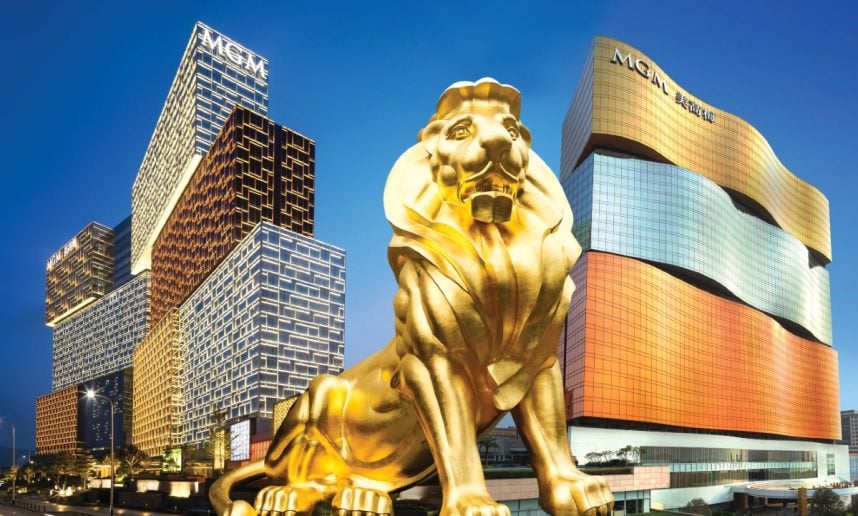
MGM China, co-owned by MGM Resorts and Hong Kong billionaire Pansy Ho, will increase its monthly licensing fee to MGM Resorts from 1.75% to 3.5%. This fee is calculated based on MGM China’s adjusted consolidated net revenue.
These updated terms remain valid throughout the current concession period and until December 31, 2045, if the license is extended further. MGM China, along with five other operators in Macau, received 10-year casino concession renewals in December 2022.
MGM Resorts possesses approximately 55.95% of MGM China’s issued share capital, while Ho holds about 22.49%. Ho serves as chairperson and executive director of the MGM China Board of Directors.
MGM China operates two integrated resort casinos in Macau, namely MGM Macau and MGM Cotai.
Market Share Growth
In conjunction with the announcement of the branding deal extension, MGM China indicated that its share of the Macau gaming market has escalated from around 9% before the pandemic in 2019 to approximately 16% in 2025. MGM Resorts claims that the new agreement removes the necessity for renegotiating every three years, thereby ensuring protection for MGM China’s shareholders by safeguarding its key intangible asset.
However, analysts express concerns that the increased monthly fee could be detrimental for MGM China in the short run, with Morgan Stanley lowering its EBITDA forecasts for the company by 7%.
The royalty payments now constitute about 15% of MGM China’s corporate EBITDA, double the previous amount, and significantly higher than its competitors,” the brokerage reported.
For comparison, Sands China, a leading operator in Macau, pays a 1.5% revenue fee to its parent company, Las Vegas Sands, while Wynn Macau compensates Wynn Resorts with a 3% fee.
We see no justification for any company to increase payouts,” concluded the Morgan Stanley report.
These elevated payouts follow MGM and the other five casino operators in Macau being mandated to invest over $16 billion in non-gaming initiatives to secure their 10-year gaming license extensions. MGM individually committed more than $2 billion to projects beyond its casino offerings.
Benefits for MGM Resorts and Ho
Both MGM Resorts and Ho are poised to reap significant benefits from the elevated monthly licensing fees. CBRE Equity Research estimates that the fees for 2026 could reach approximately $166 million.
Under the revised branding agreement, 66.6% of the monthly licensing fee will be allocated to MGM Resorts, with Ho receiving the remainder. The monthly fees amounted to $55.18 million in 2023 and increased to $70.39 million in 2024.
In 2024, MGM China was responsible for $4 billion of MGM Resorts’ total $17.24 billion in net revenue, with casino revenue from MGM’s Macau operations nearly $3.5 billion, significantly surpassing the $2 billion generated by MGM’s venues on the Las Vegas Strip.