


Published on: June 15, 2026, 11:17 AM.
Updated on: June 15, 2026, 11:17 AM.

- Bally’s has unveiled plans to acquire Evoke
- This acquisition serves as crucial support for the heavily leveraged owner of William Hill
- Moody’s reports that this deal mitigates Evoke’s refinancing vulnerabilities
Earlier this month, Bally’s subsidiary Bally’s Intralot (ATHEX: BYLOT) declared its $328 million purchase of Evoke (OTC: EIHDF), a transaction that Moody’s Investors Service indicates dramatically lowers Evoke’s refinancing risk.
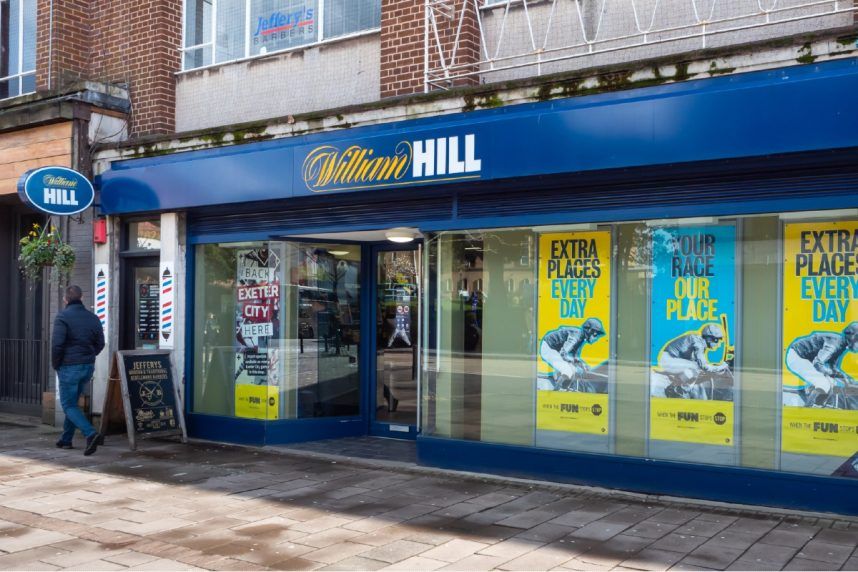
By the end of the preceding year, Evoke was burdened by $2.5 billion in debt, suggesting that Bally’s effectively rescued the company through its acquisition proposal. With this acquisition, the owner of Mr. Green secures $1.19 billion in new financing commitments, rendering the agreement “credit positive,” according to Moody’s.
“Bondholders of the firm’s existing notes due in 2030 ($536.22 million) and 2031 (€600 million) have approved a change of control, allowing the transaction to proceed without Evoke needing to redeem these instruments,” states the research firm. “Additionally, lenders to the current $268.11 million revolving credit facility have also consented to a $26 million increase in commitments.”
Moody’s assigns a B3 rating to Evoke with a “stable” outlook, which is one notch lower than its rating for Bally’s Intralot, which also has a “stable” outlook.
Finding a ‘Savior’ in Bally’s
The majority of Evoke’s debt stems from its 2022 acquisition of William Hill’s international business from Caesars Entertainment (NASDAQ: CZR), highlighting Bally’s role as a potential lifeline for the financially strapped company.
This substantial debt load likely prompted Evoke to enlist Goldman Sachs and Morgan Stanley last December to explore strategic options. Such movements often indicate a willingness to engage in discussions regarding potential sales—an avenue Evoke appears to be pursuing. With the Bally’s acquisition, Evoke is poised to benefit from refinancing its debts due in 2028.
Moody’s emphasizes that the acquisition, slated for completion in the fourth quarter or the first quarter of 2027, will not instantly alter the target’s credit rating; however, an upgrade may occur post-deal finalization.
“Given the six to nine months until completion and the fact that Evoke’s capital structure will largely remain unchanged, the transaction will not have an immediate effect on Evoke’s credit metrics,” Moody’s adds. “However, an upgrade of the existing senior secured notes due in 2030 and 2031 is possible at closing, considering the presence of $1.91 billion of newly committed debt ranking behind the notes. The evolution of Evoke’s financial policies under new ownership will be a significant factor in our analysis, although no substantial changes are currently anticipated.”
A Strategic Win for All?
Clearly, Evoke stands to gain significantly from this deal, as Bally’s along with its financing partners, undertakes the target’s existing debt, yet potential advantages exist for all parties involved.
“In the long run, merging Evoke’s extensive player database with Bally’s Intralot’s specialized customer data and analytics platform, coupled with the cost and capital synergies from Evoke’s integration into Bally’s Intralot framework, will enhance Evoke’s profitability and free cash flow generation,” states Moody’s.
Bally’s is primarily recognized in the U.S. as a regional casino operator adept at reaping value from underperforming venues acquired from other operators.