


Published on: October 9, 2025, 08:27h.
Updated on: October 9, 2025, 08:27h.

- College student-athletes may soon bet on professional sports
- Presently, NCAA rules prevent college athletes from participating in any form of sports wagering
The prospects are promising for the NCAA to approve changes allowing student-athletes in Division I, II, and III to engage in wagering on professional sports.
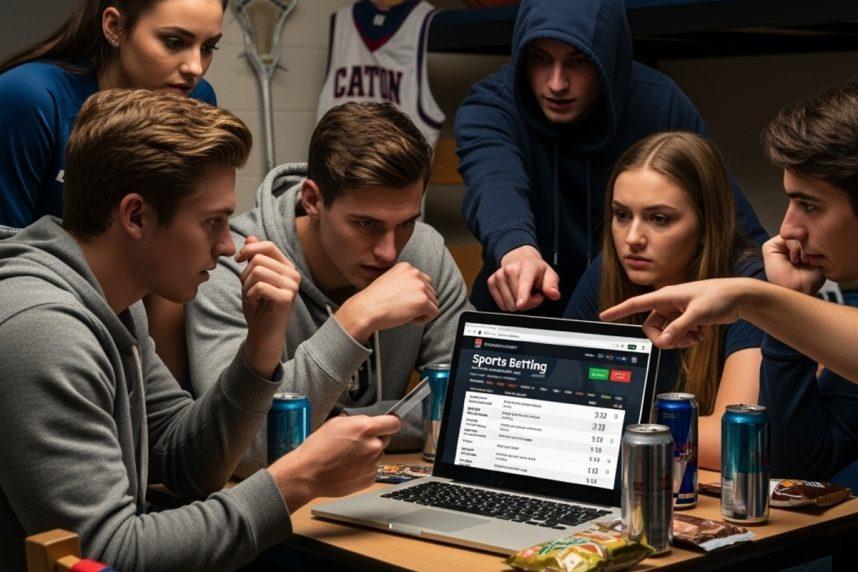
Casino.org’s Todd Shriber disclosed in May that the Division I Board of Directors had almost unanimously approved a proposed rule change for D-1 Council’s review. This proposal aimed to modify the NCAA’s prohibition on student-athletes wagering on professional sports, with violators facing penalties, including loss of eligibility.
On Wednesday, the NCAA Division I Administrative Committee endorsed a proposal enabling college athletes and athletics department staff to partake in legal sports betting pertaining to professional sports. Should Divisions II and III adopt the rule in their upcoming meetings this month, college players could start betting on professional sports as early as November 1, 2025.
“During the discussion today, the Administrative Committee clearly expressed its concerns regarding the risks linked with all forms of sports gambling but ultimately voted to ease restrictions for student-athletes to better align with their fellow peers on campus,” affirmed Josh Whitman, committee chair and Athletic Director at the University of Illinois.
Under existing NCAA regulations, all student-athletes and athletic department personnel are prohibited from engaging in any sports betting activities.
‘Promoting Responsible Practices’
Monitoring over 540,000 NCAA student-athletes across more than 1,000 member institutions in 24 various sports is a challenging undertaking. The NCAA has collaborated with multiple third-party monitoring agencies utilizing diverse technologies to ensure adherence to its sports betting policies.
Removing the ban on professional sports betting would alleviate the strenuous monitoring tasks. Whitman asserts it would also enable college athletes who enjoy betting to do so through regulated operators that incorporate responsible gaming measures, in contrast to unregulated offshore sportsbooks.
“This change allows the NCAA, its conferences, and member schools to prioritize preserving the integrity of college sports while encouraging healthy habits for those student-athletes who opt to engage in professional sports gambling,” said Whitman.
The NCAA’s medical team has also expressed support for permitting college athletes to engage in regulated sports betting.
“Abstinence-only approaches to social issues faced by college-age individuals often yield less success than methods emphasizing risk education and open discussions. This harm reduction strategy provides institutions an opportunity to assist student-athletes in making informed choices, avoiding risky behaviors, and seeking help without fear of jeopardizing their eligibility,” stated Dr. Deena Casiero, NCAA’s chief medical officer.
Gambling in College Culture
The growing acceptance of legal sports betting has made gambling a significant aspect of college life.
A study commissioned by the NCAA in 2023 revealed that 67% of college students engage in sports betting on a somewhat regular basis.
Over 40% of college students have placed bets on their own institution, and approximately 16% have participated in at least one risky behavior associated with their betting activities.