


Published on: December 10, 2025, 06:13h.
Updated on: December 10, 2025, 06:27h.

- A recent proposal from the Trump Administration could further discourage international travel to Las Vegas
- The initiative requires foreign visitors to disclose five years of social media activity, including those from visa-waived nations
- International tourism to Las Vegas is already down approximately 12% compared to 2024
Las Vegas, which welcomed around 5 million of its 40 million annual visitors (12.5%) from abroad between 2022 and 2025, is preparing for the potential adverse effects of a Trump Administration proposal aimed at significantly increasing scrutiny at US borders.
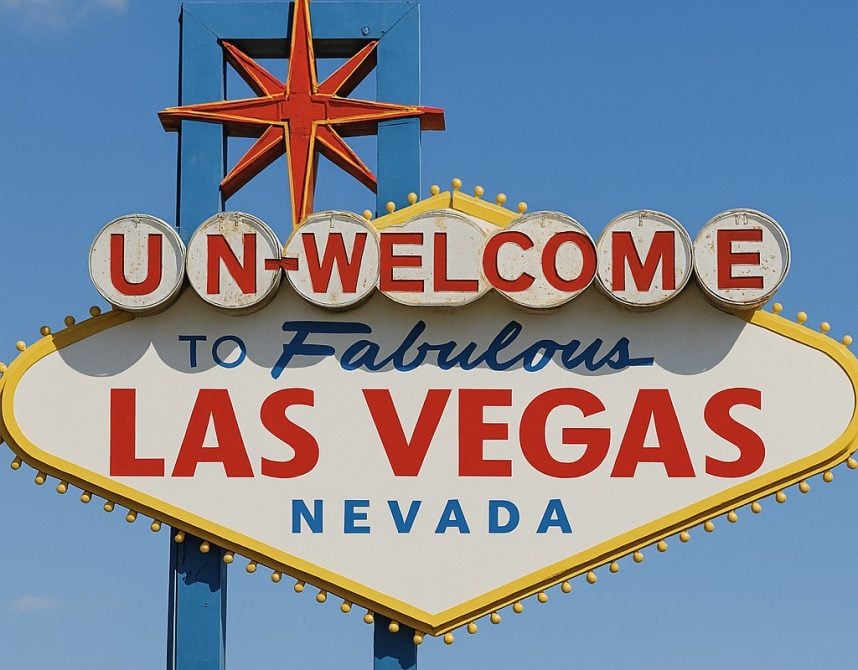
The proposed regulations, published by US Customs and Border Protection in the Federal Register, would require almost all incoming travelers to provide five years of social media history prior to entry into the US. This requirement extends even to visitors from 42 visa-waived countries, including the UK, Israel, Germany, Japan, South Korea, and Australia.
Previously, the Electronic System for Travel Authorization (ESTA) used by citizens of these nations for short stays included an optional social media inquiry that applicants could choose to bypass without any negative consequence.
Under the new regulations, however, this social media disclosure will be required to board any flights or vessels heading to the US.
The proposal also demands the submission of email addresses, phone numbers, and family information, such as names, birth dates, and birthplaces of relatives. Moreover, it holds the potential for the collection of biometric information, including facial recognition, fingerprints, iris scans, and even DNA samples.
Supporters of the measures assert that they are essential for enhancing national security and preventing potential dangers. Conversely, critics warn that such extensive requirements could inhibit free expression, infringe on privacy, and deter genuine tourism.
Sophia Cope, a senior attorney at the Electronic Frontier Foundation, a digital rights organization, remarked to the New York Times that these rules could “worsen violations of civil liberties.”
Challenges Ahead for Las Vegas
This development comes at a precarious time for Las Vegas. International visitor numbers have already dropped by 12% year-over-year (around 600,000 fewer visitors) compared to 2024. The new restrictions threaten to further hinder recovery efforts for a Strip that heavily relies on international conventions, entertainment, and casino patronage.
The public will have 60 days to offer feedback on the proposal before it is finalized.