


Published on: April 27, 2026, 05:14h.
Updated on: April 27, 2026, 05:24h.

- Online gambling may be contributing to the increasing personal bankruptcy rates.
- Personal bankruptcy filings have surged by nearly 12% over the past fiscal year.
- Many individuals engaged in sports betting report significant financial difficulties.
Could online gambling be a significant factor behind the surge in personal bankruptcy cases? Legal experts and financial consultants indicate a noticeable rise in debt levels.
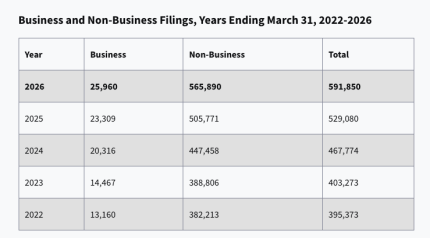
The latest statistics reveal that the U.S. government recorded a staggering 11.9% increase in non-business bankruptcy filings for the 2026 fiscal year, totaling 565,890 cases. This marks the highest level of personal bankruptcy filings since 2019.
Experts argue that the expansion of online sports betting, coupled with the advent of contentious prediction markets for sports wagers, is exacerbating these financial crises.
Research indicates that young males are especially vulnerable to gambling addictions, resulting in profound financial consequences.
Chad Van Horn, a bankruptcy attorney based in Florida, highlighted, “The accumulation of debt occurs rapidly since individuals often gamble not with cash but with borrowed funds.”
Van Horn noted instances where credit card balances skyrocketed from zero to $25,000 within just a few months.
“Gambling is really on the rise,” commented Ed Boltz, a bankruptcy lawyer in North Carolina. “We’ve observed clients accumulating $20,000, $30,000, or even $40,000 in credit card debt very swiftly.”
Are Gambling Debts Discharged in Bankruptcy?
Personal bankruptcy cases usually involve Chapter 7 or Chapter 13 proceedings. This legal framework enables individuals to either discharge or reorganize debts through judicial oversight, granting them a chance at a financial fresh start.
Such filings serve as a barrier against creditors’ collection pursuits, with Chapter 7 involving the liquidation of assets.
Typically, gambling debts can be discharged alongside other personal debts like credit card obligations.
“In a Chapter 7 bankruptcy, such debts are generally dischargeable. For Chapter 13, these debts would be considered in the repayment plan, with any outstanding amounts discharged upon plan completion,” explained David Stevens, a bankruptcy attorney from New Jersey, representing Scura, Wigfield, Heyer, Stevens & Cammarota, LLP.
“However, recent gambling histories can raise red flags for the trustee overseeing the case. Instances of excessive gambling may trigger further investigation by the trustee and objections from creditors,” added Stevens.
Research on Gambling Trends
US News & World Report conducted a survey last year revealing that one in four sports bettors has missed a payment due to gambling. The study indicated nearly 30% of bettors acknowledged having incurred debts linked to their betting activities.
Over half (52%) of the surveyed sports bettors reported carrying a balance on their credit cards month after month. Additionally, 25% admitted they are concerned about their inability to manage their wagering.
Commercial sportsbooks accumulated almost $17 billion from bettors within the past year based on total bets of $167 billion.