


Published on: October 8, 2025, 02:55h.
Updated on: October 8, 2025, 03:01h.

- The leading gaming authority in Pennsylvania is against prediction markets that offer sports contracts.
- Kevin O’Toole urges the state’s congressional representatives to push the CFTC to ban sports contracts on regulated trading platforms.
The Pennsylvania Gaming Control Board (PGCB) is alerting the commonwealth’s congressional representatives to its numerous concerns regarding prediction markets that engage with sports trading.
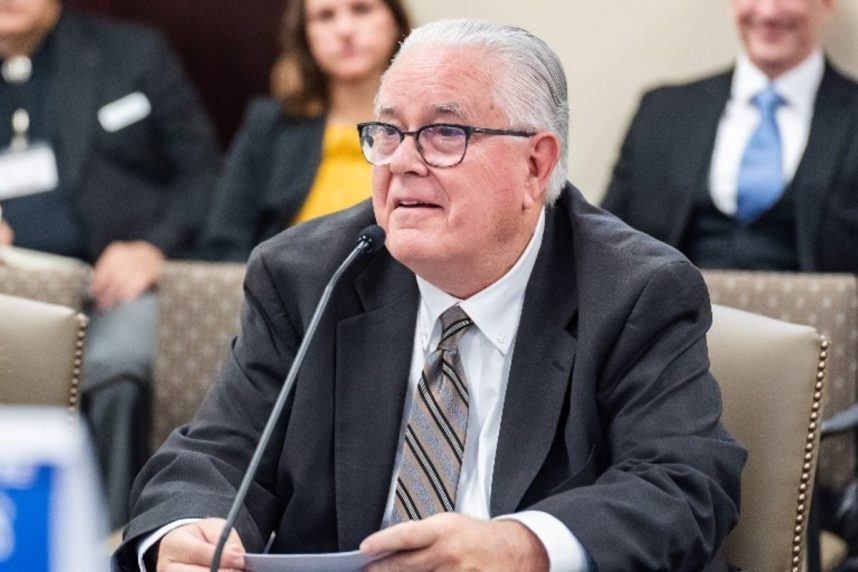
Kevin O’Toole, who has held the position of Executive Director at the PGCB for over 16 years, is a veteran in the gaming sector, with prior roles at the New Jersey Division of Gaming Enforcement and the Oneida Indian Nation Gaming Commission.
He contends that the swift influx of prediction markets into the sports betting sector poses a significant risk to the integrity of Pennsylvania’s meticulously regulated sports wagering landscape. Initially focusing on political and cultural events, these online exchanges are now diversifying into offering financial derivatives based on sports outcomes.
Kalshi, a notable player in online prediction markets, asserts that it operates under the oversight of the Commodity Futures Trading Commission (CFTC) due to its event contracts qualifying as financial derivatives, thus arguing that they do not constitute gambling.
Regulatory Conflicts
In a recent letter to US Senators John Fetterman (D) and Dave McCormick (R), along with 17 other US representatives, O’Toole urged the Pennsylvania congressional delegation to prompt the CFTC to address the conflicts arising from allowing so-called sports futures trading, which undermines state-regulated and legal sports betting.
“These markets claim that they fall primarily under the federal CFTC’s regulatory scope. This stance creates a direct conflict regarding regulatory authority, juxtaposing federal derivatives law against Pennsylvania’s jurisdiction to regulate gambling activities and criminalize illicit gambling,” O’Toole stated.
Prediction futures markets enable users to trade expected event outcomes. For instance, individuals can buy shares pertaining to a game between the New York Yankees and the Toronto Blue Jays. Shares indicating a Yankees’ win are priced at 61 cents, while Blue Jays shares are at 39 cents. Winning shares can be redeemed for $1, meaning a $100 investment on a Yankees win would yield $161, resulting in a profit of $61. Kalshi earns through various deposit, withdrawal, and trading fees.
In contrast, a $100 bet on DraftKings for the Yankees would yield $155.55, netting $55.55 in winnings, with DraftKings setting the Yankees at -180.
Should the Blue Jays win, DraftKings would collect on that bet, contributing $100 in revenue subject to Pennsylvania’s 36% sports betting tax, while Kalshi incurs no state taxes on its contract revenue.
Promoting Responsible Gaming
O’Toole emphasizes that the CFTC does not have the same level of oversight regarding prediction market wagering as the PGCB does.
“Respectfully, it would take the CFTC years to establish the necessary regulatory framework and oversight that state gaming authorities already have in place. This would lead to redundancy for a system that functions exceptionally well. As a financial market regulator, the CFTC lacks the specialized expertise and historical mandate needed to oversee consumer gambling,” O’Toole elaborated.
O’Toole also raises concerns about potential problem gambling stemming from CFTC-regulated prediction markets, as platforms like Kalshi permit participation from individuals aged 18 and over, while most states with legal sports betting require a minimum age of 21.
Moreover, prediction markets do not have to provide responsible gaming tools, display resources like 1-800-GAMBLER, and they face minimal financial consequences for failing to adhere to statutory and regulatory requirements that Pennsylvania’s legal, regulated operators must follow.
O’Toole was scheduled to testify at the CFTC’s Prediction Markets Roundtable in March before the event was unexpectedly canceled. However, he submitted written testimony urging the commission to disallow regulated trading platforms from permitting markets related to sporting event outcomes.