


Published on: November 27, 2025, 05:52h.
Updated on: November 26, 2025, 02:52h.

- The Pennsylvania Supreme Court is assessing the legality of skill games.
- These slot-like games incorporate skill elements, affecting payout ratios.
Recently, the Pennsylvania Supreme Court examined the arguments for and against skill games, devices resembling slots that casino lawyers claim may be deemed illegal gambling.
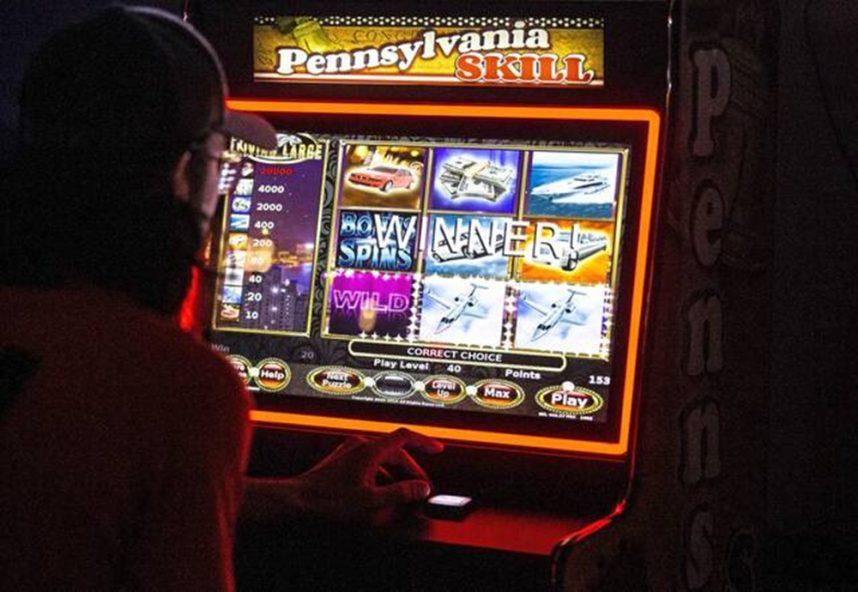
The court’s ruling will clarify whether the skill aspect of these games exempts them from the Pennsylvania Gaming Act.
Advocates for the games, established by Pace-O-Matic in Georgia and assembled by Miele Manufacturing in Lycoming County, argue that players can influence their winning outcomes, illustrating that these machines aren’t solely luck-based like traditional casino slots.
The Supreme Court is evaluating previous rulings from lower courts to see if they appropriately determined that the Gaming Act and the Pennsylvania Criminal Code do not encompass skill games. Following a 2014 decision from a Beaver County judge, these machines have remained operational in venues such as convenience stores, gas stations, restaurants, and bars.
Understanding Gambling
The appeal regarding skill gaming comes from the state Attorney General’s Office alongside the Department of Revenue. During the proceedings, Senior Deputy Attorney General Susan Affronti represented the state, asserting that the notion of gambling encompasses skill games.
“Gambling is the anticipation of receiving more than what was wagered,” Affronti articulated before the justices. “What is the essence of this game? It is not akin to Whac-A-Mole or Skee-ball; this is fundamentally a slot machine.”
Skill games, often recognized as Pennsylvania Skill, enable players to adjust their payout rates by identifying winning paylines, unlike a conventional slot machine that automates this process.
These skill games provide an additional feature called “Follow Me,” allowing players to recover losses by replicating a series of colors, similarly to the classic game Simon from Hasbro.
Lawyers for skill games argue that players who engage in the Follow Me round may achieve a payout rate exceeding 100%. Attorney Matthew Haverstick, representing Capital Vending Company, which faced charges after a 2019 police raid for supplying skill games, noted that while slots must pay out a minimum of 85%, skill games can exceed this threshold, thus distinguishing them from traditional slots under the law.
Haverstick emphasized that skill games are fundamentally different since players can secure a win each time they participate in the Follow Me feature, further asserting that these games can’t be classified as traditional slot machines.
The Pennsylvania Supreme Court is anticipated to release its findings on skill games in the upcoming months.
Regulating Skill Games
The skill gaming sector is urging lawmakers in Harrisburg to enact regulations and impose taxes on their games. Supporters advocate for a fair tax rate, significantly lower than the existing 55% tax on casino slots, to ensure the machines continue benefiting small enterprises.
Gov. Josh Shapiro (D) of Pennsylvania aims to legalize skill games to create new tax revenue, requesting that the General Assembly present him with a bill incorporating a 52% state tax.
Various legislative proposals have suggested lower tax rates, with one bill proposing a mere 16% tax rate.