


Published on: November 13, 2025, 03:23h.
Updated on: November 13, 2025, 03:27h.

Professional poker player Gal Yifrach clinched victory at the 2025 PokerStars North American Poker Tour (NAPT) Las Vegas Main Event on November 12. This news is particularly significant given that Yifrach is currently under federal indictment for his involvement in an illegal gambling operation and the laundering of its profits. His win has heightened concerns regarding the poker community’s tolerance for players with legal issues.
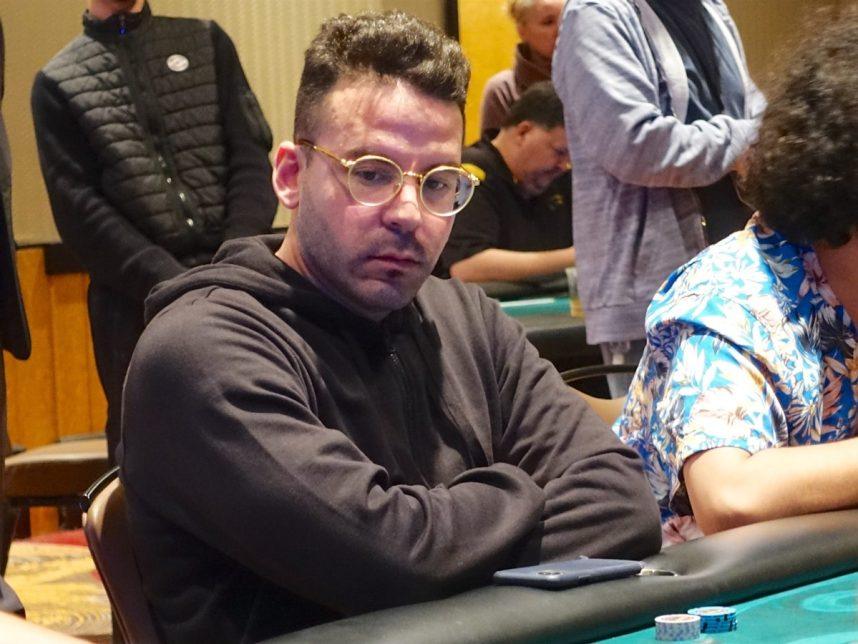
Yifrach, at 39 years old, surpassed a competitive field of 738 players at Resorts World Las Vegas, earning a substantial $543,025, marking his highest tournament earnings to date. This victory elevates his total career winnings to approximately $2.93 million, but it occurs alongside two felony charges resulting from a federal case initially filed in 2022 and expanded in 2025.
The Allegations
Federal prosecutors claim Yifrach was instrumental in coordinating a ring of video slot machines throughout California, laundering the proceeds via casino chip exchanges, real estate investments, and structured bank transactions.
This illegal gambling scheme allegedly commenced in 2018 — the same year Yifrach notably won a World Series of Poker bracelet in a $3,000 six-max event for $461,798. Later, he secured an additional $495,305 with a third-place finish in a $50,000 WSOP event in 2021.
His appearances on high-stakes livestreams such as “Live at the Bike” and “Hustler Casino Live” have made him a well-known personality in the Southern California poker community.
However, the victory of an indicted player in a prominent televised tournament has generated discomfort within the poker world. The industry has long faced challenges in determining how to manage players dealing with criminal allegations.
Unlike organized sports leagues, poker does not have a unified governing authority with the power to impose penalties. Tournament organizers generally rely on legal outcomes, meaning that players under indictment or investigation can compete unless they are convicted or barred by venue policies.
Historical Context
This incident is not unprecedented, as shown in the table below; there have been previous instances of indicted players participating in significant poker events.
| Player | Legal Standing | Tournament Earnings | Additional Information |
|---|---|---|---|
| Daniel Blieden | Indicted in October 2018 for wire fraud and embezzlement; pled guilty in November 2019 and was sentenced in 2021 | Profited from a 2019 WSOP event (exact amount undisclosed); also placed 17th in a 2019 partypoker tournament in Las Vegas, winning $35,000 | Continued to participate in tournaments after charges; confessed to using misappropriated funds for entry fees. Received a 6.5-year prison sentence. |
| Anthony Marsico | Indicted in February 2025 for insider trading | Competed in the 2025 WSOP Main Event, making it several days but did not cash; generated smaller earnings in other mid-range tournaments that year | Continued participating in WSOP/WPT events post-indictment. Legal matters still pending. |
| George Janssen | Pled guilty in August 2025 to financial fraud; awaiting sentencing in December 2025 | Achieved victory in a Mid-States Poker Tour event in October 2025 (prize amount undisclosed); also secured $3,051 in another tournament that August | Claimed a tournament title following his admission of guilt but prior to sentencing. Has earned four championship rings in minor poker circuits. |
Nonetheless, Yifrach’s situation is notably more serious. If found guilty, he faces up to 20 years in prison and fines reaching $500,000. A superseding indictment filed in January 2025 alleges that his gambling operations persisted for 16 months following the initial charges, prompting concerns over the intersection of his tournament winnings and buy-ins with illicit funds until July 2023.
Up to now, PokerStars, the organization behind the NAPT, has not released any statements regarding Yifrach’s eligibility or whether forthcoming NAPT events will implement screening measures.
Industry experts highlight the decentralized nature of poker as a challenge for enforcement. Though casinos and tours can exclude players at their discretion, there is no universal blacklist or ethics committee. Suggestions have been made for a registry of prohibited or indicted players, but concerns over legal issues and privacy have hindered progress.
Currently, Yifrach remains free on bail and continues to play. His win illustrates an ongoing dilemma in the poker realm: balancing the game’s inclusivity — allowing all players, including those with controversial reputations — against the necessity for legitimacy in an increasingly scrutinized environment.