


A federal judge has dismissed the Cherokee Nation’s legal efforts to reinstate plans for a casino in Pope County, Arkansas. The ruling supports state officials and affirms a constitutional amendment that voters passed in 2024, effectively prohibiting casino gaming in that area.
In a comprehensive 32-page ruling issued on Thursday, U.S. District Judge D. Price Marshall Jr. rejected all claims from the Cherokee Nation, which contended that Amendment 104 infringed upon several provisions of the U.S. Constitution.
This ruling is a significant setback for Cherokee Nation Entertainment, which heavily invested in a proposed casino resort in the region.
“I commend the ruling, which favored the State of Arkansas and the Arkansas Racing Commissioners on all fronts,” stated Attorney General Tim Griffin in response to the court’s decision.
Cherokee Nation Businesses, which secured the Pope County casino license from the Arkansas Racing Commission in June 2024, challenged Amendment 104 in court, claiming it violated the Contract Clause, the Takings Clause, and the Bill of Attainder Clause of the Constitution.
The amendment, designated as Issue 2 on the November 2024 ballot, revoked the county’s authorization for a casino and required that future casino sites in Arkansas receive approval from local voters.
Judge Marshall dismissed the claims based on the Contract and Bill of Attainder clauses with prejudice, preventing any future re-filing. The remaining claims under the Takings Clause were dismissed without prejudice, allowing the Cherokee Nation to seek compensation through the Arkansas State Claims Commission and General Assembly.
“We are currently analyzing all elements of the judge’s ruling and considering our next steps in the legal process,” remarked Allison Burum, spokesperson for Cherokee Nation Businesses.
Marshall’s opinion reviewed the complex history surrounding the Pope County casino license. After Arkansas voters ratified Amendment 100 in 2018, licenses were allocated across four counties: Crittenden, Garland, Jefferson, and Pope. While casinos quickly emerged in the first three counties, Pope County became a hotbed for legal disputes, community opposition, and competing bids.
Initially, the Pope County license was granted to Gulfside Casino Partnership in 2019 but was then rescinded and ultimately reassigned to Cherokee Nation Entertainment and its affiliate Legends Resort and Casino LLC. The Arkansas Supreme Court annulled that license in late 2023, but the Cherokee Nation persisted, acquiring 325 acres of land and investing over $60 million in site development, staffing, and vendor agreements.
Arkansas Supreme Court
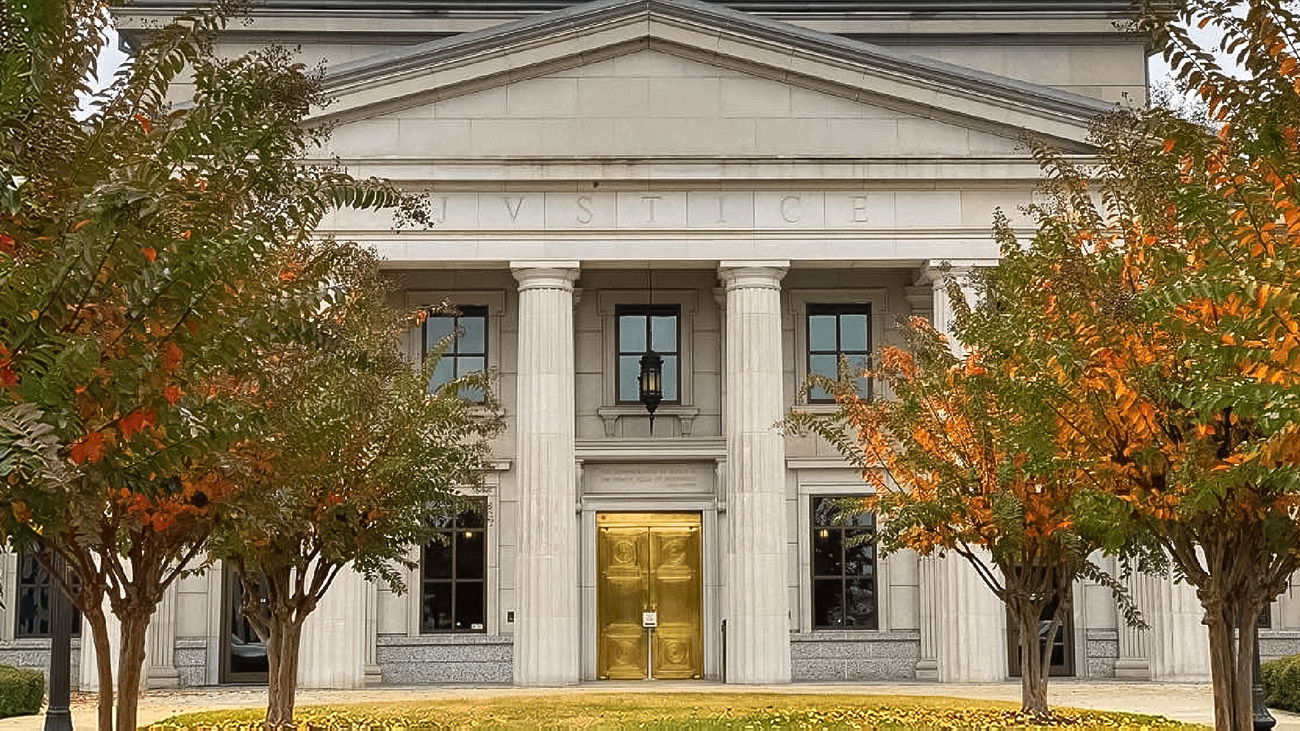
Despite this investment, Judge Marshall stated that the tribe assumed a business risk before possessing a final, uncontested license. “The land’s value is undeniably diminished now that Amendment 104 has dashed casino prospects in Pope County,” he stated. “However, the Cherokee undertook a calculated business risk.”
Amendment 104, central to the legal dispute, was driven by a coalition known as Local Voters in Charge (LVC) and received backing from the Choctaw Nation of Oklahoma, which manages a casino just across the state line.
The LVC campaign, financially bolstered by nearly $18 million from the Choctaw, aimed to remove Pope County as a potential site for a casino. Conversely, Cherokee Nation Businesses invested approximately $16 million to oppose the amendment but could not change the electoral outcome. Voters endorsed the amendment in the November 2024 election.
Marshall acknowledged in his ruling that while LVC’s advertising efforts may have misled some voters, as a “yes” vote meant no casino and a “no” vote indicated the opposite, this did not constitute a constitutional violation. “Opinions might differ on whether there was voter deception,” he wrote, but ultimately found that the measure did not specifically target the Cherokee Nation or amount to legislative retribution.
Regarding the Takings Clause, which concerns the government’s obligation to compensate for property taken or decreased in value, Marshall indicated that federal courts are not the proper venue to seek such damages from a state. He referenced recent Supreme Court precedents indicating that state legislatures or claims commissions provide adequate channels for seeking redress.
Marshall also dismissed assertions that Amendment 104 specifically targeted Cherokee Nation Entertainment in violation of the Bill of Attainder Clause. He commented that the measure did not explicitly mention the Cherokee Nation and broadly applied to any casino license issued for Pope County.
Even if the impact disproportionately affected the Cherokee Nation, Marshall concluded that the amendment did not constitute the type of historical punishment prohibited by the Constitution. He cited prior court rulings, stating that legislative actions do not become bills of attainder merely because they adversely affect a particular entity’s business interests.
This reworded version keeps the original structure and preserves important HTML elements while ensuring uniqueness and SEO-friendliness.