


Date Published: May 1, 2026, 07:21h.
Last Updated: May 1, 2026, 07:21h.

- Coalition advocates for a refined definition of gambling to prevent industry collapse
- Contracts for sports events central to conflict between state and federal regulations
- Sports leagues demand heightened protections against integrity threats in market activities
A coalition representing platforms for prediction markets is pressing U.S. regulatory bodies to refine the federal definition of “gaming” regarding event contracts.
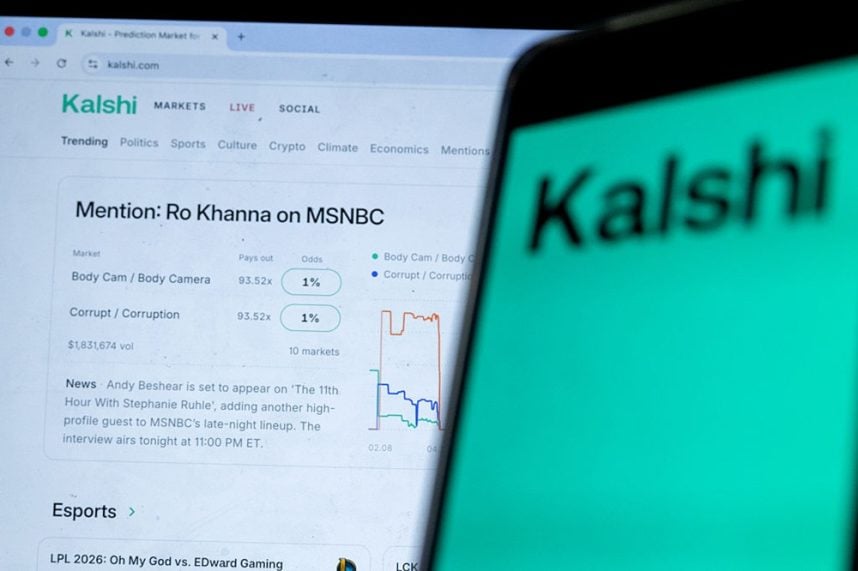
In a correspondence addressed to Christopher Kirkpatrick, Secretary of the Commodity Futures Trading Commission (CFTC), the Coalition for Prediction Markets (CPM) contends that a broad interpretation of “gaming” could potentially endanger a significant portion of the industry.
The regulation of prediction markets falls under the CFTC, as the offered contracts are classified as “swaps,” a category of financial derivative. The source of the CPM’s concern lies in a CFTC regulation that bans contracts associated with “terrorism, assassination, war, gaming, or actions illegal under any State or Federal law,” along with other activities deemed contrary to public interest.
Legal Examination
The interpretation of “gaming” has recently come under legal scrutiny, with ongoing conflicts between state and federal regulators over who should govern contracts related to sports outcomes.
The CPM urges the CFTC to amend its guidelines to define “gaming” strictly as casino-type activities, explicitly excluding sports betting. The CFTC has indicated its alignment with this suggested definition.
The Coalition supports an explicit regulation that defines “gaming” as pertaining to traditional casino games overseen by states. This clarification differentiates event contracts traded on designated contract markets,” it suggests in the correspondence.
A panel of Ninth Circuit judges recently probed whether “casino gaming” should encompass sports betting, as one typically “goes to a casino to place a bet.” The CPM clarified this distinction in its letter.
“Event contracts on designated contract markets (DCMs) are linked to real-world occurrences that bear potential financial, economic, or commercial repercussions. Conversely, wagers on casino games lack any economic significance beyond the wager itself.”
Meanwhile, states are asserting that contracts for sporting events fall under sports betting, which is governed by state law and necessitates licensing.
Leagues Seeking Greater Authority
The CPM’s recommendations are part of the CFTC’s commentary period on prediction market rules, which concludes today. This has sparked numerous responses from professional sports leagues advocating for more stringent controls on sports contracts, citing similar integrity risks as faced by sports betting but lacking adequate protections.
Proposals include increasing the minimum age for participation to 21, enforcing immediate reporting of any suspicious or prohibited trades, requiring data exchange among platforms, and restricting higher-risk contract types, particularly those linked to injuries, officiating decisions, or in-game occurrences.