


Published on: April 2, 2026, 04:21h.
Updated on: April 2, 2026, 04:31h.

- Responsible Gambling Council Hosts Event in Toronto to Launch New PSA Aimed at Young Adult Males
- The Randoms 2025 PSA Achieves Approximately $100 Million in Broadcast Investment
- Ontario’s Regulated iGaming Market Marks Its Fourth Anniversary
Government policymakers are continually faced with a pivotal question regarding iGaming in the region: What is the ideal balance between attracting more operators into the regulated environment and reaping the rewards of a 20% tax on what has evolved into a billion-dollar sector? This challenge is especially pronounced during significant emotional events, such as last fall’s World Series, which spike interest in betting and technological advancements in online gambling.
Accelerated Industry Growth
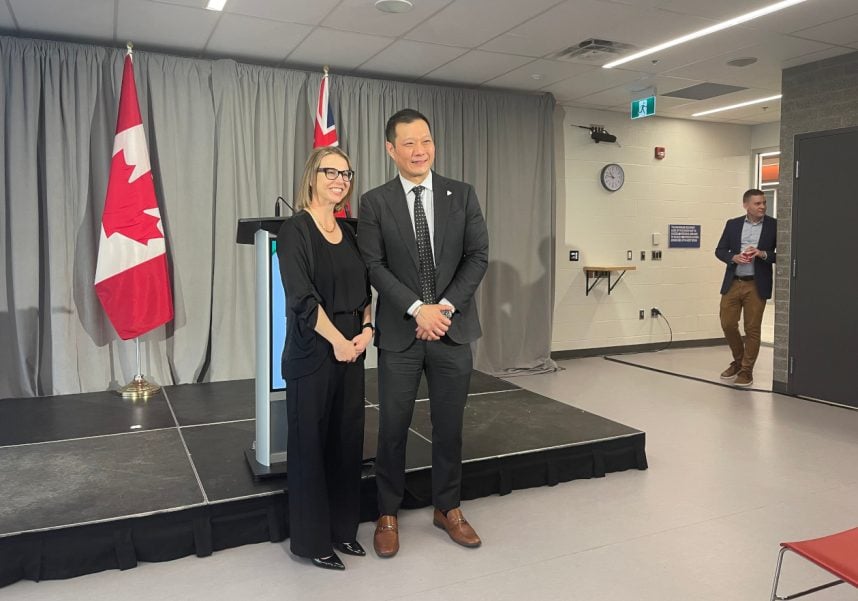
The goal is to ensure player safety and education about responsible gambling, particularly among young, impressionable men, all while achieving this delicate equilibrium. As Ontario’s Minister of Tourism, Culture and Gaming, Stan Cho mentioned this morning, achieving perfection is unattainable. The landscape will continually change as the industry expands, presenting ongoing challenges akin to trying to capture a dancing bear.
However, as Cho emphasized, iGaming is firmly established and showing no signs of disappearing. Channelization rates of grey market operators transitioning into the regulated environment have been remarkable since Ontario’s regulated market launched four years ago, standing at around 85%. The focus now is on enhancing safety measures to foster a sustainable future in this growing industry.
Historically, those struggling with gambling addiction in the grey market often had nowhere to seek help. Cho shared a personal story of someone who lost their home due to gambling and could not find support. This personal connection drives his commitment for iGaming regulation in Ontario.
Market Impact Overview
The Responsible Gambling Council held a press conference in Toronto this morning to unveil a new public service announcement aimed at young males aged 19-24, created with the support of Ontario’s Responsible Internet Gambling Fund (RIGF). The central message is to assist youth in transitioning from instinctive urges to gamble to making informed decisions, equipping them with practical tools and guidance.
McCarthy also discussed a new RIGF Impact Report, sharing metrics that the organization will use to inform its gambling education and prevention programs for young individuals, aimed at reaching them more effectively. As the Ontario industry evolves, protective measures are adapting. Young adult males are identified as one of the most vulnerable demographics for gambling-related harm.
Support Framework
RIGF has access to $3 million in government funding to execute its initiatives. The public service announcement will be distributed nationwide across Canadian broadcasters and digital platforms, including Netflix, Spotify, and Meta.
Key insights from the Impact Report include:
- 6 million individuals reached through a responsible gaming 2025 PSA titled The Randoms via partnerships with MLSE and digital advertising.
- The Randoms PSA garnered roughly $100 million in broadcasting investment or donated airtime (since the regulated market’s inception).
- 65% of those surveyed indicated a marked increase in their understanding of gambling-related risks and harms.
- 601 million impressions generated during MLSE home (316 million) and away (285 million) game broadcasts.
- Professional sports leagues and arena partners committed to promoting safer gambling messages, creating $4.15 million in media value through collaborations and arena activities.
- 49 million individuals reached through TV, media, and outreach initiatives targeting ethnocultural communities.
Prevention Initiatives
“We didn’t stop at spending; we amplified our investment and created additional value,” McCarthy stated. “This ensures a visible counterbalance to the gambling promotions that are currently prevalent. Notably, 12% of viewers confirmed they formulated a concrete plan for safer gambling after being exposed to our messaging. This showcases the effectiveness of preventative measures in practice.
“We recognize that sports betting peaks during major events. Our strategic approach targets players in those heightened moments. During the Super Bowl, we reached approximately 121 million individuals with messages designed to curtail impulsive gambling urges. Prevention is only effective when it is relatable and culturally relevant,” McCarthy added.
She emphasized the need to foster an environment that not only enhances awareness but also encourages open discussions around treatment, working to destigmatize the subject.
Navigating New Challenges
“This is how we ensure our safety net is both inclusive and resilient,” McCarthy concluded. She also highlighted RGC’s digital footprint – reporting 5,773 clicks to support tools on their website in the past year, resulting in an engagement rate 10 times higher than the industry benchmark. Users lingered on their page two and a half times longer than average. Moreover, a training program for student athletes across Ontario schools has had a significant impact.
“Continuous investment allows us to stay ahead in this ever-evolving landscape,” she remarked. “This ensures that gambling innovation never outstrips the safety of Ontario’s residents.”
In Cho’s words: “Government investment in responsible gambling initiatives is meaningless without tangible results. As Sarah noted, 12% of viewers made plans to mitigate problematic gambling behaviors. These actions are significant. Twenty-eight schools participated in the pilot program, all of whom expressed a desire to engage again. Currently, 62% of student athletes are equipped to seek help, showcasing meaningful progress.”