


Published on: September 1, 2025, 08:00h.
Updated on: August 31, 2025, 06:52h.

- Brokerage firm debuts prediction markets for college football and NFL
- ARK Invest highlights Robinhood’s regulatory edge
Robinhood Markets (NASDAQ: HOOD) has recently revealed plans to expand into the realm of sports contracts, informing clients about its new NCAA and NFL prediction markets set to launch throughout the regular season.
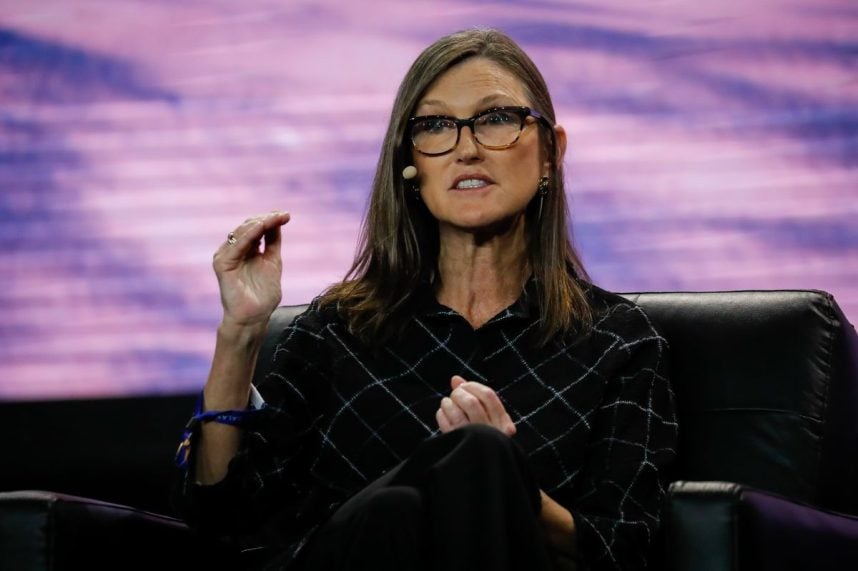
This announcement has raised eyebrows within the sports betting community and may indicate that the brokerage is leveraging regulatory privileges unavailable to traditional gaming operators. According to ARK Investment Management analyst Nicholas Grous, Robinhood’s prediction markets are federally regulated, allowing them to offer these contracts across all 50 states—an advantage not enjoyed by conventional sportsbooks.
“Since the Commodity Futures Trading Commission (CFTC) oversees these new contracts, users can bypass the complexities of varying state gambling laws, as Robinhood’s prediction markets operate more like tradable financial contracts rather than traditional sports wagers,” Grous remarks.
He further notes that the state-by-state regulations faced by companies like DraftKings (NASDAQ: DKNG) create challenges for both operators and legal sports betting consumers. In contrast, Robinhood and similar prediction market firms do not face this intricate web of regulations, simplifying their compliance procedures.
Comparative Aspects of Robinhood vs. Sportsbooks
A continuous debate—often met with skepticism among industry analysts—suggests that prediction markets, including sports derivatives, cannot be directly equated to standard sports betting activities.
Grous from ARK highlights a key distinction between Robinhood and DraftKings. He states that Robinhood imposes a flat fee per event contract traded, while platforms like DraftKings often apply transaction costs through vigorish, which compels a bettor to wager more than their potential winnings. For instance, under -110 odds, a bettor must wager $110 to win $100, with the extra $10 representing the “vig.”
“The economic frameworks of Robinhood and DraftKings differ significantly. Robinhood charges a straightforward $0.02 per contract transaction, with clear fees and outcomes dictated by market probabilities,” Grous explains. “In contrast, DraftKings and traditional sportsbooks incorporate their margins into the odds—a ‘vig’ that generally ranges between 4–6%. This fee structure means bettors need to outperform the sportsbooks’ typical win rate of 52–55% just to break even.”
Nevertheless, critics of prediction markets argue that the per-contract fee mirrors the vig and that these entities are exploiting regulatory gaps to pose competitive threats to sportsbook operators. The gaming sector is not taking this challenge lightly; Flutter Entertainment’s (NYSE: FLUT) FanDuel has recently formed a partnership with CME Group (NASDAQ: CME) to offer event contracts tied to economic and financial markets, sparking speculation on when DraftKings will respond.
ARK’s Investment Stakes
Cathie Wood’s ARK Investment Management holds a significant position as one of Robinhood’s leading shareholders and maintains stock in the financial services company across various exchange-traded funds (ETFs), including its prominent ARK Innovation ETF (NYSE: ARKK).
This support does not imply that the firm’s comments indicate any negativity towards DraftKings, as Wood’s firm is also a long-standing, major investor in DraftKings.
Three ARK funds rank among the top three ETF holders of Robinhood shares, while three of its products are also among the twelve largest ETF holders of DraftKings stock.